
Lieferung heute & morgen

Qualitätsgarantie

Willkommens-Angebote freischalten: KOSTENLOSE Lieferung | Bis zu 80 % RABATT | Kostenlose 30-Tage-JoyPlus-Testphase
App herunterladen
A tidy entryway makes a great first impression and simplifies your daily routine. However, it's often shoes that create clutter and take up valuable space. The right shoe storage can solve this problem. This guide introduces different types of shoe racks and provides guidance to help you find a functional and suitable solution for your home. We focus on objective features and practical use cases to assist you in making your choice.
Before you decide on a model, there are a few key aspects to consider. The right choice depends heavily on your available space, the number of shoes you own, and your personal preferences.
The design of the rack is crucial for making the most of your space.
The material affects not only the look but also the durability and stability.
Also, check the stated capacity and the spacing between the shelves. Make sure there is enough room for taller footwear like ankle boots or hiking boots.
Here, we highlight three different models that, thanks to their design and functionality, are suited for various needs.
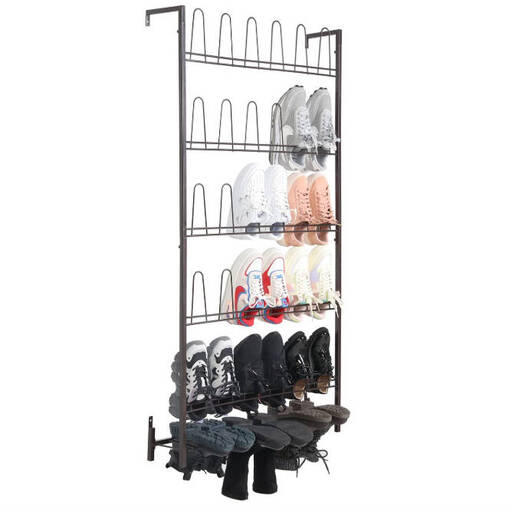
Why It Stands Out This model makes excellent use of vertical space. The metal construction with a dark brown finish is designed for durability. A special feature is its wire loop-style hooks, which are specifically designed to hold various shoe types like sneakers, flats, high heels, and even boots.
Pros
Who It's For For those with limited floor space in their entryway, bedroom, or walk-in closet who are looking for a permanent, vertical shoe storage solution. It's especially practical for collections that include boots.
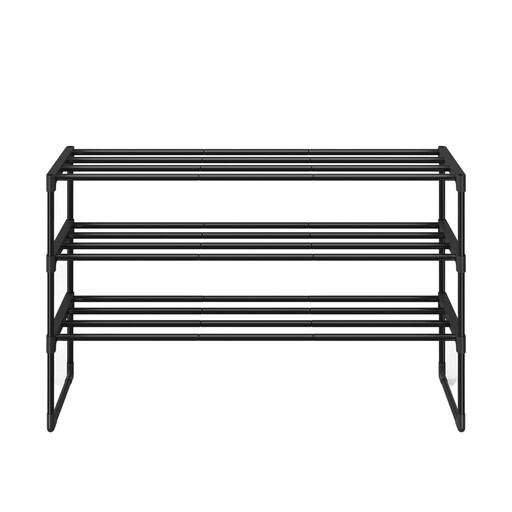
Why It Stands Out This rack's strength lies in its flexibility. It can be used as a single shoe stand or stacked with additional units to expand storage space. Assembly is tool-free, making setup straightforward. At 92 cm wide, it offers plenty of room, yet its 30 cm depth keeps it relatively narrow.
Pros
Who It's For For individuals and families who need a flexible and expandable storage solution. It works well in hallways, closets, or living rooms and is ideal for renters looking for a non-permanent yet sturdy option.
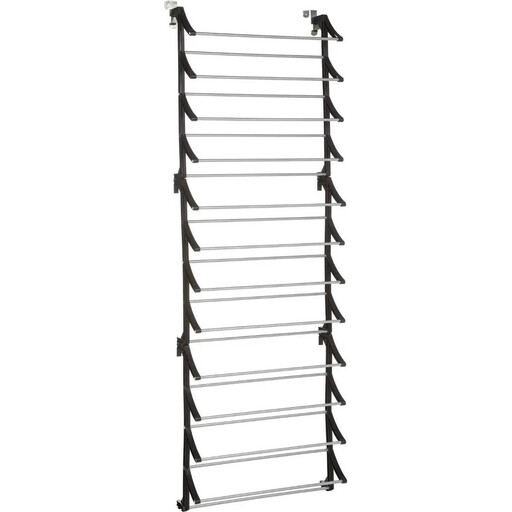
Why It Stands Out This over-the-door shoe rack is a prime example of maximizing space. It simply hangs over a door, transforming unused space into a generous shoe organizer. The hooks are adjustable to fit door thicknesses from 3 cm to 5 cm.
Pros
Who It's For For people living in very small apartments, shared housing, or dorms who need to neatly store a large number of shoes. It's a discreet solution, as the shoes can be hidden behind the door.
The models featured here cover common needs. However, if you prefer a solution with a built-in bench or other metal designs, you might find the right product in our broader selection.
Discover more models in the Metal Shoe Bench Storage category.
1. How can you store shoes to save space? To save space when storing shoes, vertical solutions like a wall-mounted shoe rack or an over-the-door shoe rack are ideal. Tall, narrow racks also use space efficiently. Stackable boxes or organizers that store shoes in pairs, one on top of the other, are also great options.
2. What is the best material for a shoe rack? The choice of material depends on your priorities. A metal shoe rack is very sturdy, low-maintenance, and offers good ventilation with grid shelves. Plastic is lightweight, often modular, and budget-friendly. Wood has a homey feel but may require more care. For damp shoes, an open metal or plastic rack is often a better choice than a closed wooden one.
3. How many shoes fit in a standard shoe rack? Capacity varies widely. A small, narrow rack for a hallway often holds 6 to 9 pairs. Larger freestanding models can accommodate 15 to 25 pairs. Special solutions like over-the-door racks, such as the featured 5five model, can hold up to 36 pairs or more. Always check the product description for specific capacity details.