
Lieferung heute & morgen

Qualitätsgarantie

Willkommens-Angebote freischalten: KOSTENLOSE Lieferung | Bis zu 80 % RABATT | Kostenlose 30-Tage-JoyPlus-Testphase
App herunterladen
A cluttered entryway, overflowing piles of shoes in the hallway—it's a familiar scene in many homes. The right shoe rack promises an immediate fix. But the selection is vast, and not every solution delivers on its promise. Many products turn out to be impractical, unstable, or simply don't fit into the intended space. Before you make a decision, it's crucial to know the most common pitfalls to find a durable and functional solution for your shoe storage.
As your Joybuy Product Recommendation Officer, I'll help you separate the good from the bad. We'll look at the critical features that distinguish a great system from an unsuitable one and find the right option for your needs.
Disappointment after a purchase can often be traced back to three basic, easily avoidable problems:
To make the right choice, you should focus on three core parameters. These will determine the functionality and longevity of your new shoe storage solution.
The type of system depends on your priorities: quick access or maximum protection?
The material has a direct impact on the stability and lifespan of the furniture.
Measure your available space precisely before you buy. The depth is the most critical measurement for a hallway. Models with a depth of less than 30 cm are usually a safe bet. The width and height determine the total capacity. Plan for about 3 to 5 pairs of shoes per shelf, depending on the width. For boots or ankle boots, you will need either taller compartments or a system with removable shelves.
Here are some recommendations tailored to different needs and living situations.
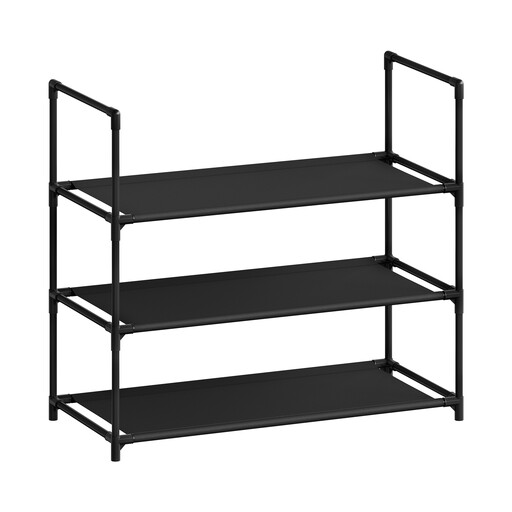
Why This Fits Their Persona: Ideal for renters or those with a limited budget and space. This rack utilises height over depth, and at 28 cm, it fits perfectly into narrow hallways without blocking the path. It offers a simple yet effective solution for daily shoe clutter.
The metal tube frame provides significantly more stability than all-plastic interlocking systems, preventing it from wobbling under load. Its slim depth is specifically designed for narrow entryways.
Tool-free assembly with a simple interlocking system. The non-woven fabric shelves are easy to clean, and tiers can be removed if needed to make room for boots.
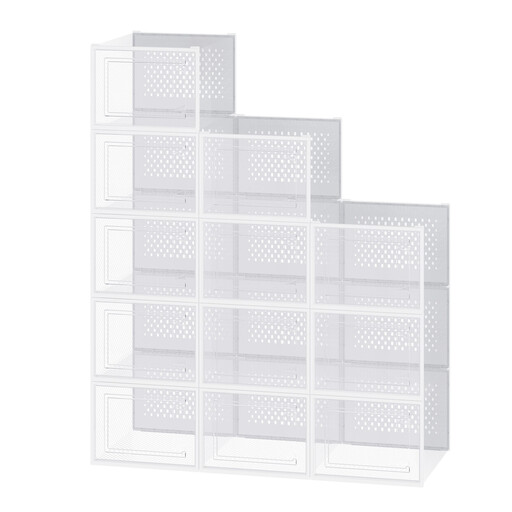
Why This Fits Their Persona: For shoe enthusiasts who want to not only store but also showcase their collection. This system protects valuable sneakers from dust and environmental factors, while the transparent front door allows for quick access and a stylish presentation.
These boxes solve the problem of lacking protection and ventilation. The enclosed design protects from dust, while integrated ventilation holes ensure air circulation and prevent odour buildup.
The modular and stackable design allows for the custom creation of a "shoe wall." The transparent door allows for immediate identification of the desired pair without searching.
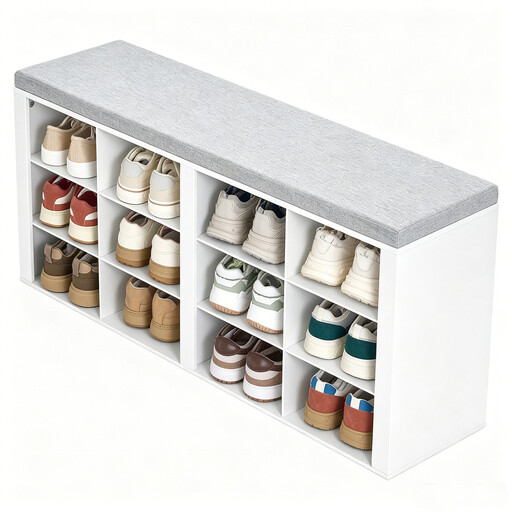
Why This Fits Their Persona: Families need flexibility and multifunctionality. This shoe bench serves not only as a shoe organiser, but also as a practical seat in the hallway—ideal for helping kids put on their shoes. The adjustable compartments adapt to various shoe sizes.
Rigid compartments that can't fit boots or larger shoes are not an issue here. The shelves are height-adjustable and can be removed to flexibly accommodate different types of footwear.
Combines storage space and a seating function. The particleboard construction is designed to support up to 150 kg, ensuring stability for daily family use. The seat cushion is removable and easy to clean.
We've compiled a complete, up-to-date list of products that fully meet these strict selection criteria and safety regulations.
Measure the maximum depth your hallway allows without obstructing the walkway. In most cases, a depth of 24 cm to 30 cm is ideal. Also, consider any doors that open into the hallway. The height and width will depend on how many shoes you need to store and how much wall space is available.
It depends on your priorities. Open shelves are practical for quick access to everyday shoes and ensure good ventilation. Closed boxes or cabinets are the better choice if you want to protect shoes from dust and light long-term or prefer a minimalist, tidy aesthetic. For valuable collector's items, enclosed systems with ventilation are the recommended solution.
Capacity varies greatly. As a rule of thumb, a shelf with a width of about 80-90 cm can hold around 3-4 pairs of adult shoes (e.g., sneakers or low shoes). For narrower racks (approx. 60 cm), it's closer to 2-3 pairs. Children's shoes require less space, while boots or bulky hiking shoes will take up more room. Always check the manufacturer's specifications for capacity.