
Lieferung heute & morgen

Qualitätsgarantie

Willkommens-Angebote freischalten: KOSTENLOSE Lieferung | Bis zu 80 % RABATT | Kostenlose 30-Tage-JoyPlus-Testphase
App herunterladen
By a Joybuy Product Recommendation Officer
A cluttered entryway with shoes blocking the path is a common frustration in many households. Searching for the right pair in the morning can be a waste of time and create a mess. A thoughtful shoe storage solution solves this problem, creating clarity and contributing to a harmonious overall look in your home. This article serves as a practical guide to help you identify the right solution for your needs and living space—from a narrow niche in the hallway to a spacious wardrobe.
The decision for a particular piece of furniture depends on several factors. To make an informed choice, you should consider the available space, the number of shoes you own, and your aesthetic preferences.
The most fundamental decision concerns the type of system. An open shoe rack offers the advantage of having shoes quickly accessible and well-ventilated, which is particularly beneficial after wearing them. Models like a shoe rack for the hallway are often designed to be compact and have an airy feel.
In contrast, a closed shoe cabinet or a shoe chest protects your shoes from dust and ensures a particularly tidy and serene appearance. If you prefer a minimalist and uncluttered look, a closed system is often the better choice.
Measure the intended area precisely before making a decision. For narrow corridors or small entryways, space-saving shoe storage is essential. A tall, narrow shoe rack makes optimal use of vertical space without blocking valuable walkway areas. Wall-mounted solutions are another option to keep the floor completely clear.
The choice of material influences not only the durability but also the style of the furniture. A modern shoe cabinet often combines materials like metal with wooden elements or clean lines. Metal racks have an industrial and robust feel, while wooden furniture exudes warmth and a classic touch. Ensure that the design complements your existing decor to create a cohesive look.
Based on functionality, design, and space efficiency, we have compiled a few options that meet different requirements.
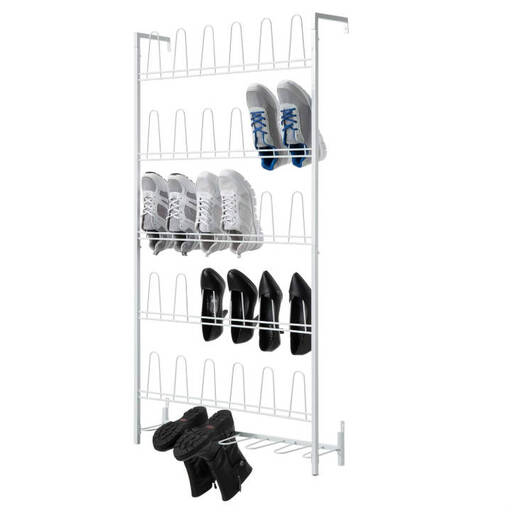
Why it stands out: This wall-mounted rack is a smart solution to keep floor space completely clear. The modern design in matte white metal blends discreetly into various environments and utilizes the wall for storage.
Benefits:
Who it's for? Ideal for individuals with very limited floor space in narrow hallways, small apartments, or for organization within a walk-in closet.
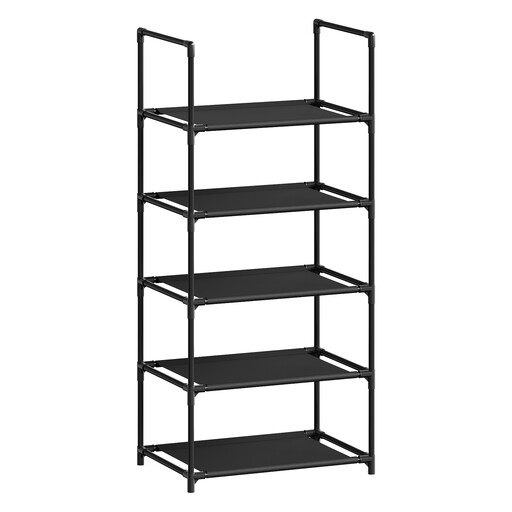
Why it stands out: With its compact dimensions of 41 x 28 x 89 cm, this rack is specifically designed for tight spaces. Its flexibility and tool-free assembly make it a particularly practical option.
Benefits:
Who it's for? An excellent choice for students, renters, or anyone looking for a straightforward, adaptable, and cost-effective solution for a small hallway or bedroom.
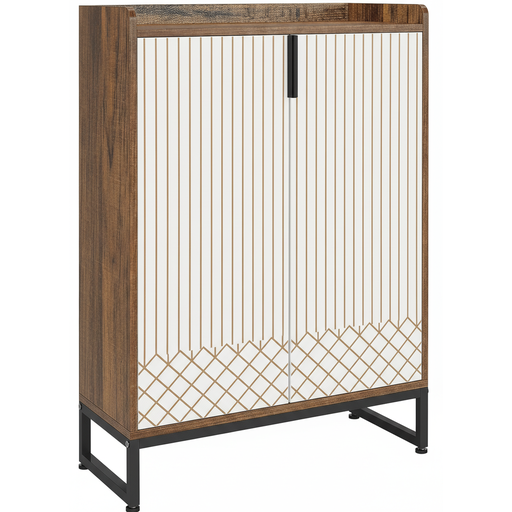
Why it stands out: This shoe cabinet combines high functionality with an elegant design. Behind the two diamond-patterned doors lies ample storage space, while the gold accents give the piece a modern and high-end feel.
Benefits:
Who it's for? Perfect for households that want to store a large number of shoes neatly and dust-free, while also valuing a stylish piece of furniture that visually enhances the hallway.
A tidy hallway draws attention to what matters: your shoes. If you're looking to add a pair with some extra sparkle to your collection, you might find the perfect addition in our selection of gold shoes.
What's better, an open shoe rack or a closed shoe cabinet? That depends on your priorities. An open shoe rack ensures good ventilation for your shoes and quick access. A closed shoe cabinet protects from dust and creates a calmer, more orderly look. For damp shoes, an open system is more suitable, while a closed system is advantageous for long-term storage.
How can I store shoes in the most space-efficient way? To save space, vertical, tall racks, wall-mounted systems, or over-the-door/closet hanging organizers are ideal. These solutions utilize the height of the room or unused surfaces and keep the floor clear.
How many shoes fit in an average shoe cabinet? The capacity varies greatly depending on the model. Compact shoe tipper cabinets often hold 8–12 pairs. Medium-sized shoe cabinets offer space for 15–25 pairs. Large systems or modular racks can accommodate 50 pairs or more. The exact capacity always depends on the size and type of shoes (e.g., boots vs. sandals).