
Lieferung heute & morgen

Qualitätsgarantie
App herunterladen
Kategorien
Consistent water pressure and water quality are crucial factors for an optimal shower experience. In many regions, the water is naturally "hard," meaning it has a high content of minerals like calcium and magnesium. This can lead to limescale buildup in pipes and on fixtures, reduce water pressure, and affect your skin and hair. A filtered shower head offers a technical solution to these challenges. Such models often combine a filtration function with pressure-boosting and water-saving technologies.
Selecting the right shower head is based on an analysis of its technical specifications. The following criteria are relevant for making an informed decision.
The core of a filtered shower head is its ability to reduce unwanted substances from the water. Common systems use multi-stage filter cartridges that combine various materials:
The effectiveness and lifespan of the filter are critical. A replacement interval of three to six months is typical, depending on water hardness and usage.
Low water pressure is a common problem in many households. A pressure-boosting shower head solves this through a technical adjustment of the water flow. Using micro-nozzle technology, the cross-section of the water outlets is reduced. This accelerates the water flow and increases the perceived pressure without actually increasing water consumption. A water-saving shower head can reduce consumption by up to 30%, which is both ecologically and economically beneficial.
Most modern handheld shower heads are made of ABS (Acrylonitrile Butadiene Styrene). This material is lightweight, durable, heat-resistant, and corrosion-proof. A high-quality chrome plating protects the surface and provides an appealing aesthetic. The connection is standardized in Europe: a G1/2-inch thread ensures compatibility with virtually all standard shower hoses, allowing for tool-free installation.
A multi-function shower head offers additional flexibility. Common modes include:
Switching between modes is usually done via a lever or a dial directly on the shower head.
Based on the technical criteria mentioned above, we present three models that address specific needs.
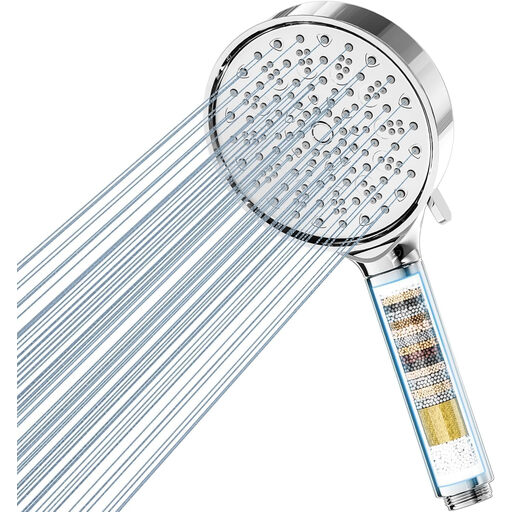
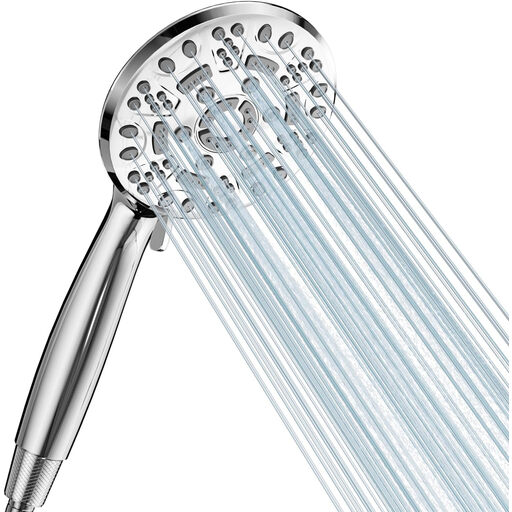
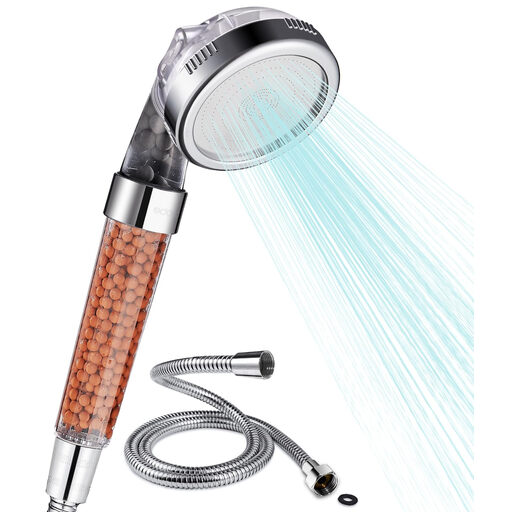
If the featured models do not exactly meet your requirements, or if you are looking for complementary products such as fixtures or complete shower systems, you can find a wider selection in our Bathroom Shower Set category.
1. How often should you change the filter in a shower head? A filter's lifespan depends on water hardness and usage patterns. As a general guideline, replacement every 3 to 4 months is recommended. A noticeable decrease in water pressure is a clear indicator that the filter cartridge is saturated and should be replaced.
2. Can a shower head really increase water pressure? Yes, a high-pressure shower head operates on a simple physical principle. By narrowing the nozzle openings (micro-nozzles), the flow velocity of the water is increased. This creates a stronger, more powerful stream, even if the line pressure itself remains unchanged.
3. What are the signs of hard water? Typical signs of hard water include white limescale spots on fixtures, tiles, and glass doors after drying. Other indicators can be reduced lathering from soap and shampoo, dull hair, and dry or itchy skin after showering. An anti-limescale shower head can mitigate these effects.