
Lieferung heute & morgen

Qualitätsgarantie

Willkommens-Angebote freischalten: KOSTENLOSE Lieferung | Bis zu 80 % RABATT | Kostenlose 30-Tage-JoyPlus-Testphase
App herunterladen
Choosing a shower head is a technical decision that significantly impacts daily comfort, water consumption, and maintenance in the bathroom. Parameters such as existing water pressure, water hardness, and desired spray functions are crucial criteria. This guide analyses the technical aspects of different shower head types and presents a selection of models with specific features.
When selecting a suitable shower head, functional features should be the priority. Compatibility with existing plumbing is generally ensured by the standardised G1/2-inch connection found on most models.
The type of water spray defines the shower experience. Common variations include:
Low water pressure is a common issue in older buildings or on upper floors. A high-pressure shower head model can remedy this. These shower heads use technical principles like a constriction of the water passage (Venturi effect) or special nozzle geometries to increase the water's exit velocity. The result is a spray that feels subjectively stronger, even with low line pressure.
A water-saving shower head reduces the flow of water per minute without significantly compromising shower comfort. This is often achieved by mixing air into the water droplets (air-injection technology) or through finer nozzles. Standard shower heads often consume 12 to 15 litres per minute, whereas water-saving models can reduce consumption to 6 to 9 litres.
The durability of a shower head depends heavily on its material.
For regions with hard, calcareous water, an anti-limescale shower head with flexible silicone nozzles is recommended. Limescale deposits can be removed by simply rubbing the nozzles with your fingers, which secures the lifespan and function of the shower head. A shower head with a filter can additionally reduce minerals and impurities from the water.
Based on an analysis of technical specifications and functional features, we present three distinct shower head models.
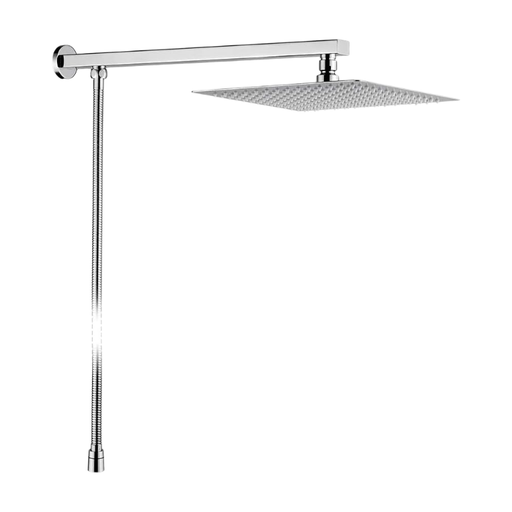
Why we recommend this product: This model is designed as a complete shower head set and, with its 10-inch size (approx. 25x25 cm), offers a comprehensive rainfall shower experience. The stainless steel construction promises durability, while the chrome finish ensures a scratch and tarnish-resistant surface. The air-injection technology creates soft water droplets for a pleasant feel on the skin.
Pros:
Who it's for: Users seeking an immersive, spa-like experience who want to upgrade their bathroom with a large-area rainfall shower. Ideal for those who prefer an all-in-one solution for wall installation.
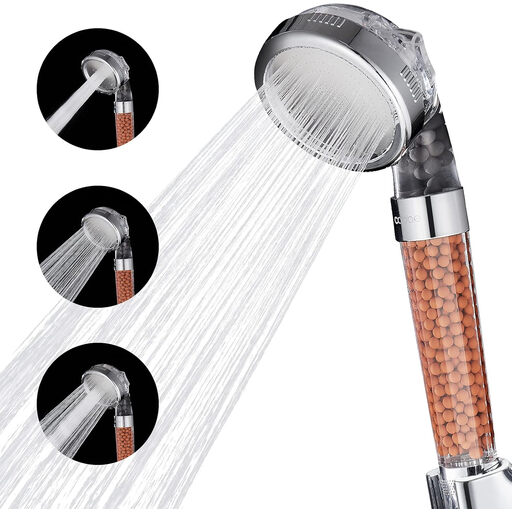
Why we recommend this product: This handheld shower head combines multiple functions: it is designed as a high-pressure shower head, integrates a filter system, and enables water savings. The filter system with bioactive stones is designed to improve water quality, which is particularly beneficial in areas with hard water.
Pros:
Who it's for: People in regions with hard water who would benefit from a filter function. Also for eco-conscious buyers and users with low water pressure who want a flexible handheld shower with various spray patterns.
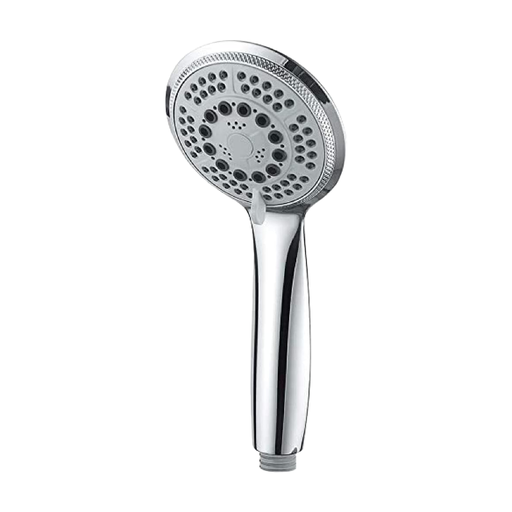
Why we recommend this product: This compact shower head is engineered for performance and versatility. With five different spray patterns and a high-pressure design, it is particularly suitable for retrofitting in bathrooms with insufficient water pressure. Operation is straightforward via a click-button.
Pros:
Who it's for: Users who face low water pressure or are looking for a handheld shower with a wide selection of powerful spray patterns. A pragmatic choice for renters and homeowners who want a simple and effective upgrade.
The products presented cover specific requirement profiles. If your needs differ, or if you are looking for other designs and system solutions, you will find a wider selection in our main category.
Discover more shower heads and shower systems in the Bathroom Showers category
1. How often should you descale a shower head? The frequency depends on the water hardness in your area. With very hard water, cleaning every one to three months is recommended. For models with silicone nozzles, regularly rubbing the nozzles during a shower is often sufficient. A thorough descaling with vinegar essence or citric acid may be useful every six months for heavy calcification.
2. What does "high-pressure shower head" mean? A high-pressure shower head is engineered to increase the flow velocity of the water. This is achieved by reducing the size of the nozzle openings or through internal channel constrictions. This artificially increases the water pressure at the exit point, leading to a more powerful spray sensation, even if the line pressure is low.
3. Do all shower heads fit every connection? The vast majority of shower heads and hoses sold in Europe use a standardised G 1/2-inch thread. Therefore, compatibility is assured in most cases, and replacement is usually possible without adapters or special tools.
Written by: Joybuy Product Recommendation Officer