
Lieferung heute & morgen

Qualitätsgarantie

Willkommens-Angebote freischalten: KOSTENLOSE Lieferung | Bis zu 80 % RABATT | Kostenlose 30-Tage-JoyPlus-Testphase
App herunterladen
We've all been there. A backpack is often too bulky for the daily commute or a short city outing, yet your pockets are far too small for a smartphone, keys, wallet, and headphones. A sling bag, also known as a crossbody bag, offers a functional and stylish solution. It combines the compact nature of a small shoulder bag with the ergonomics of a backpack, keeping your essentials secure and within easy reach.
This article provides an overview of the key features of a good sling bag and presents a selection of models for various needs. Our goal is to give you an objective basis for your purchasing decision.
To find the right bag for you, three central aspects should be considered: size, material, and internal organisation.
The volume of a sling bag is typically measured in litres. Think about what you need to carry on a daily basis.
Since sling bags often carry electronics, the outer material is crucial. Look for durable and weather-resistant fabrics.
A well-designed interior prevents chaos and protects delicate items. Useful features include:
Based on the criteria above, we have compiled a selection of models that stand out for their specific features and use cases.
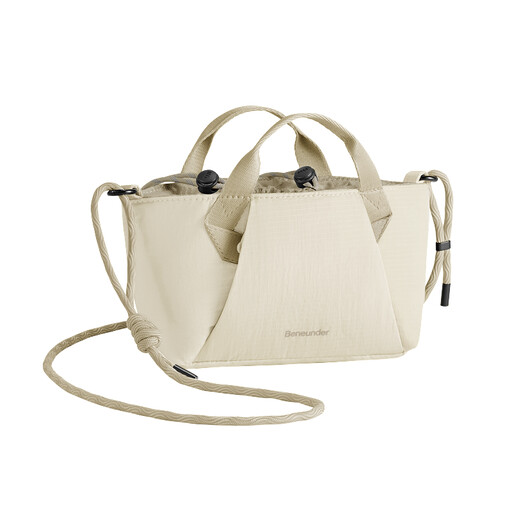
Why it stands out: The standout feature of the Beneunder LC169 is its exceptional versatility. With an empty weight of just 98 grams, it's barely noticeable. When needed, its volume can be expanded from a compact 1.2 litres to a spacious 3.6 litres—tripling its storage space.
Pros:
Who it's for: Ideal for minimalists and travellers who need an extremely lightweight bag for daily essentials but appreciate the option to spontaneously store more—be it a small purchase or an extra layer of clothing.
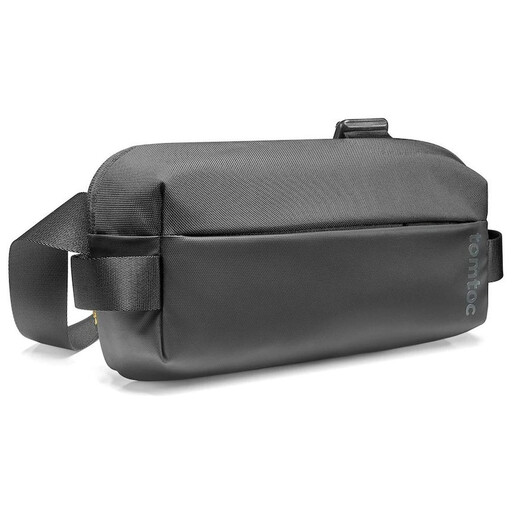
Why it stands out: The Tomtoc Explorer-T21 is purpose-built for organising small tech. With a 4-litre capacity and a dedicated compartment for an iPad Mini (up to 8.3 inches), it's the perfect small shoulder bag for commuters and urban explorers.
Pros:
Who it's for: For anyone who wants to carry their tablet and accessories securely, organised, and compactly. It's excellent for the daily commute to university or the office when a large laptop isn't needed.

Why it stands out: The Tomtoc Navigator-T24 bridges the gap between a classic sling bag and a backpack. With 7 litres of volume, it offers space for a 14-inch laptop (e.g., MacBook Pro) and an 11-inch tablet in separate, padded compartments.
Pros:
Who it's for: For commuters, students, and digital nomads who need a compact solution for their laptop and tablet without sacrificing the comfort and organisation of a full-fledged backpack.
If these models don't quite match what you're looking for, or if you're seeking a bag with a different design, other alternatives are available.
Explore our wider selection of hobo-style shoulder bags to find more options that suit your personal style.
1. What is the difference between a sling bag and a crossbody bag? The terms are often used interchangeably. Technically, a crossbody bag is an umbrella term for any bag worn across the body. A sling bag is a specific type of crossbody bag that is often more ergonomically shaped, sits higher on the body (on the chest or back), and is designed for quick access, similar to a single-strap backpack.
2. How do you wear a sling bag correctly? The most common way is diagonally across the torso, with the bag resting on either your chest or back. When worn on the chest, your items are especially easy to access and protected from theft. Worn on the back, it offers more freedom of movement. Many models can be accessed by simply swinging them around to the front without taking them off.
3. Can a laptop fit in a sling bag? Not in most compact sling bags. However, there are special, larger models designed as sling backpacks that feature a dedicated, padded compartment. The Tomtoc Navigator-T24 is an example of such a bag, which can hold a laptop up to 14 inches. Always check the exact dimensions of the laptop compartment before purchasing and compare them with your device's measurements.