
Lieferung heute & morgen

Qualitätsgarantie

Willkommens-Angebote freischalten: KOSTENLOSE Lieferung | Bis zu 80 % RABATT | Kostenlose 30-Tage-JoyPlus-Testphase
App herunterladen
Choosing a slow juicer is often the first step towards a healthier lifestyle with fresh, nutrient-rich juices. However, the market can be overwhelming, and many appliances don't live up to their promises. As your Joybuy Product Recommendation Officer, I'm here to help you identify the common pitfalls and find a model that truly fits your needs.
Many well-intentioned purchases end up as dust collectors in the kitchen cabinet. This is often due to design flaws that make daily use impractical. Pay close attention to these three points to avoid buyer's remorse.
To avoid the problems mentioned above, you should carefully check three technical features before buying. These are crucial in determining your appliance's performance, convenience, and durability.
The term slow juicer refers to a cold press juicer. Unlike centrifugal juicers, which operate at thousands of revolutions per minute and generate heat, a slow juicer uses an auger to slowly and powerfully press the ingredients.
For daily juicing of fruits and vegetables, the cold press method is the preferred choice for users who value high juice quality.
A juicer with a large feed chute is not a luxury, but an essential time-saver. Models designed as whole fruit juicers often have openings with a diameter of 80 mm or even up to 130 mm. This allows you to process small apples, peeled oranges, or larger pieces of vegetables without tedious pre-cutting. Check this value carefully in the product specifications.
Cleaning the filter is the most time-consuming part of maintenance. Modern appliances are therefore increasingly adopting a filter-free juicer design. Instead of a fine metal sieve where fruit fibres get stuck, these models use smoother components that can be easily rinsed under running water. Look for detachable, dishwasher-safe parts and straightforward disassembly.
Here are some recommendations tailored to different user profiles that meet the criteria mentioned above.
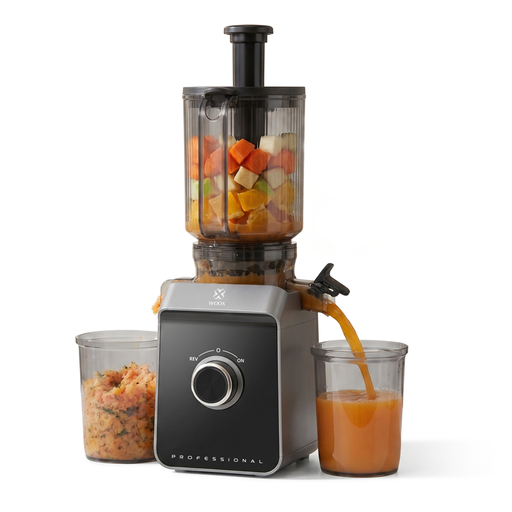
Why This Fits Their Persona: Ideal for families and health-conscious individuals who want to make fresh juice daily without the hassle. The large feed chute significantly minimises prep time.
The 130 mm wide feed chute completely bypasses the 'time-wasting feed chute' trap, as whole fruits like small apples can be processed directly.
150W pure copper DC motor for quiet operation (<72dB) and durability. The detachable parts are easy to clean.
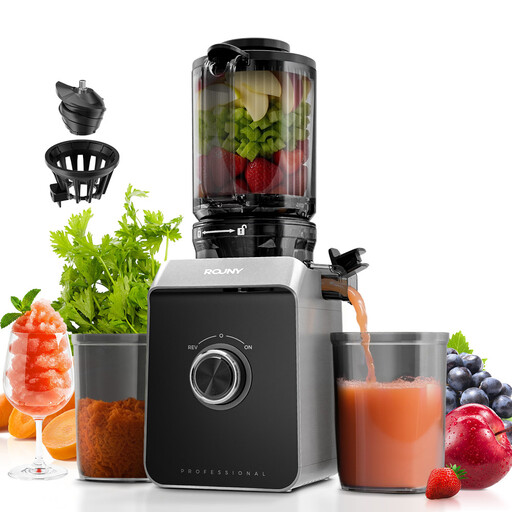
Why This Fits Their Persona: Perfect for users who want to reduce cleaning effort to an absolute minimum. The filter-free design makes the device ideal for quick use and effortless cleanup afterwards.
The filter-free structure solves the 'cleaning trap' problem. Instead of a fine sieve, it uses smoother components that reduce clogging and make rinsing under water significantly easier.
Combines a 130 mm feed chute with the simple cleaning concept. According to the manufacturer, it can also process frozen fruits to make sorbet.
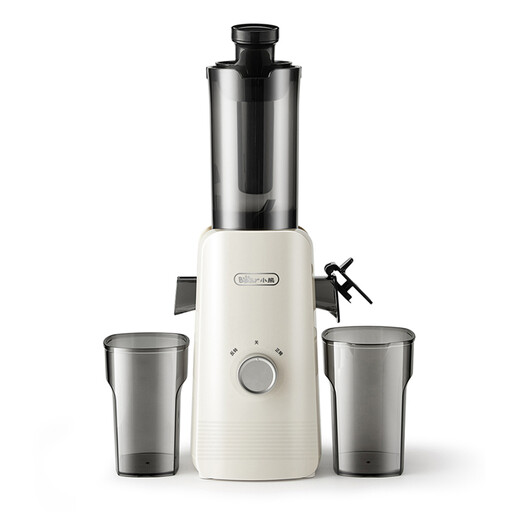
Why This Fits Their Persona: Suitable for individuals or couples with limited kitchen space. Its compact design allows for easy storage without compromising on cold press technology.
According to the manufacturer, it consists of only three main components, which simplifies assembly and cleaning, thus avoiding the 'cleaning trap'.
Compact size and space-saving design. The 80 mm feed chute is sufficient for many types of fruit and is a good compromise for its small footprint.
We've compiled a complete, up-to-date list of products that fully meet these strict selection criteria and all relevant safety regulations.
1. How difficult is it to clean a slow juicer? The effort depends heavily on the model. A filter-free juicer or a model with a few, easily detachable parts can be cleaned in minutes under running water. Models with fine metal sieves often require using the included brush and a bit more time.
2. Can a slow juicer also process hard vegetables like carrots or ginger? Yes, high-quality slow juicers are designed for this. The powerful, slow pressing action efficiently extracts juice from hard vegetables. It is recommended to cut very hard or fibrous ingredients into smaller pieces to protect the motor and prevent jamming.
3. What does the reverse function on a slow juicer do? The reverse function is useful if ingredients get stuck in the auger. It briefly spins the auger in the opposite direction to clear the blockage, allowing the juicing process to continue smoothly.