
Lieferung heute & morgen

Qualitätsgarantie

Willkommens-Angebote freischalten: KOSTENLOSE Lieferung | Bis zu 80 % RABATT | Kostenlose 30-Tage-JoyPlus-Testphase
App herunterladen
A modern smart body fat scale with an app promises much more than just displaying your weight. It's designed to provide insights into your body composition, document progress towards fitness and health goals, and serve as a motivator. However, the market is saturated with models whose marketing promises often create more confusion than clarity. Many users discover after purchase that unreliable measurements, a faulty app connection, or superfluous features defeat the scale's primary purpose.
As your Joybuy Product Recommendation Officer, I'm here to help you navigate these pitfalls. Instead of relying on advertising slogans, we will focus on the crucial technical features that define a high-quality body composition scale.
Before you make a decision, you should be aware of the typical problems that often only become apparent after the purchase:
To make an informed choice, you should focus on three core technical aspects. These determine the accuracy, convenience, and long-term value of your scale.
Every personal scale with body fat analysis uses Bioelectrical Impedance Analysis (BIA). This process sends a very weak, imperceptible electrical impulse through the body. Since fat, muscle, and water conduct electricity differently, the scale can calculate the proportions of your body composition from the measured resistance (impedance).
The accuracy critically depends on the number and placement of the electrodes:
A digital scale with an app must transfer its data reliably. There are two common technologies for this:
Instead of focusing on a long list of irrelevant metrics, a few well-implemented additional features are often more useful. For example, a scale with heart rate monitoring records your resting heart rate during the weigh-in. This value is a recognised indicator of cardiovascular fitness, and tracking its evolution over time can provide valuable insights into your overall health.
Based on these criteria, we have identified models that offer a suitable solution for different user groups.
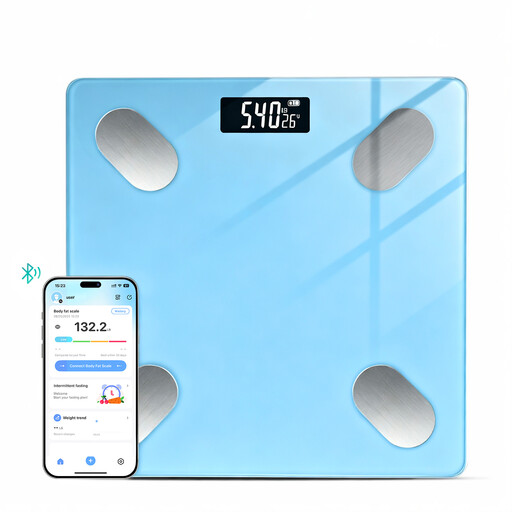
Why it's a good fit: Ideal for users seeking a straightforward and cost-effective solution for tracking key health data. The scale focuses on 13 essential metrics and offers a simple Bluetooth connection to an established app.
This model avoids the "metric overload" pitfall by focusing on the 13 most important body values. Using the widely adopted OKOK app minimises the risk of outdated or unsupported software.
Simple setup and operation; supports multiple user profiles, making it suitable for couples or small families.
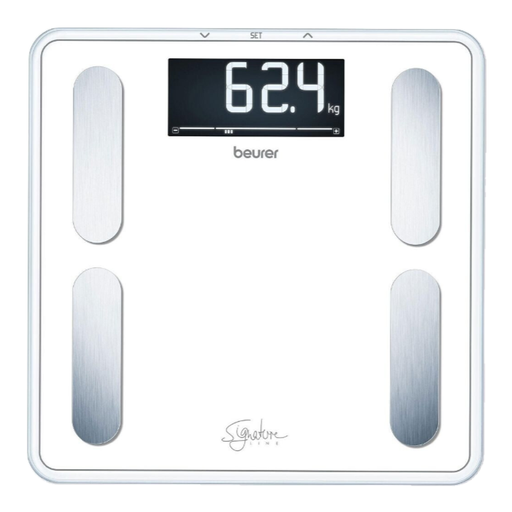
Why it's a good fit: Designed for household use. With 10 user profiles, a high weight capacity of 200 kg, and a large, illuminated display, it is robust and easy for multiple people to use. Beurer is also an established brand in the German health sector.
The automatic user recognition solves the problem of cumbersome profile selection. The XL display shows the most important values directly, so the scale remains useful even without immediate app synchronisation, reducing dependency on the app.
High weight capacity (200 kg) and a large, easy-to-read display. The brushed stainless steel electrodes are durable and ensure good contact.
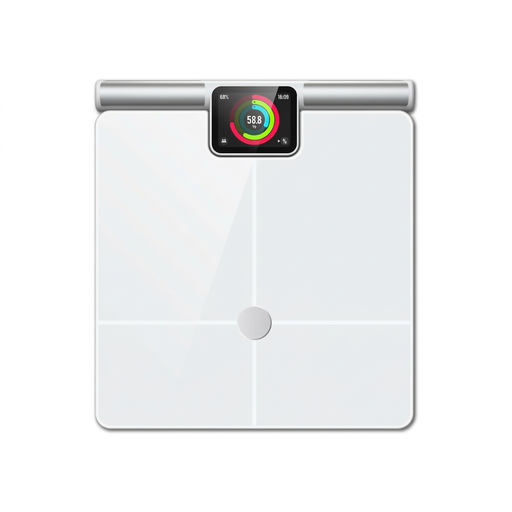
Why it's a good fit: For users who require maximum precision and detailed insights. The 8-electrode technology with handheld grips enables segmental body analysis (arms, legs, torso), providing more accurate data for targeted training and monitoring muscle imbalances.
This model directly addresses the pitfall of inaccurate measurements by using advanced 8-point BIA technology. Its dual Wi-Fi and Bluetooth connectivity also ensures reliable and automatic data synchronisation at all times.
Enables a detailed 5-compartment body analysis and measures resting heart rate. The TFT colour screen attractively and clearly visualises the data directly on the scale.
We have compiled a complete, up-to-date list of products that fully meet these strict selection criteria and German safety regulations.
A BMI scale for home use should not be considered a medical diagnostic tool. Its strength lies in tracking trends over an extended period. For reliable trend analysis, it is crucial to always take measurements under the same conditions (e.g., in the morning after waking up, before breakfast). Models with 8-point measurement generally offer higher accuracy than standard scales with 4 sensors.
That depends on the technology. With a scale that only has a Bluetooth connection, the smartphone must be nearby with the corresponding app open for the data to sync live. Models with additional Wi-Fi functionality can send the data to the cloud independently, allowing you to view the results in the app later without your phone needing to be present during the weigh-in.
No. For a precise measurement, body fat scales must be placed on a hard, flat, and dry surface (e.g., tiles, parquet, laminate). Soft or uneven surfaces like carpets or mats prevent the sensors from distributing the weight correctly, which will severely distort the weight and body composition readings.