
Lieferung heute & morgen

Qualitätsgarantie

Willkommens-Angebote freischalten: KOSTENLOSE Lieferung | Bis zu 80 % RABATT | Kostenlose 30-Tage-JoyPlus-Testphase
App herunterladen
Plants brighten up any room, but proper care can be a challenge in our hectic daily lives. Too much or too little water, unsuitable lighting conditions—the reasons for wilting houseplants are many. A smart plant pot can offer a practical solution by monitoring your plant's needs and providing precise guidance.
This article serves as a guide. We will introduce various concepts, from technologically advanced models to thoughtfully designed planters, to help you make an informed decision.
Before you decide on a model, there are a few functional aspects to consider. These will help you find the right pot for your needs and your plants.
A key feature is the planter with sensors. Basic models measure soil moisture and signal when it's time to water. More advanced versions also track parameters like light intensity, ambient temperature, and soil nutrient levels. This data enables comprehensive and automated plant care by painting a precise picture of the plant's condition.
Beyond pure functionality, aesthetics also play a role. Some models are designed as modern office decor and blend seamlessly into a minimalist environment. Others, like an interactive planter with a face, go a step further by visualising the plant's needs through animated expressions. Such models can also be an original gift for tech fans. Consider whether you prefer a purely functional or an interactive, decorative solution.
The pot's material and its watering system are crucial for plant health. Ceramic pots are breathable, while plastic is lightweight and shatterproof. An integrated drainage hole with a matching saucer prevents waterlogging, one of the most common causes of root rot. A smart planter may also feature a water reservoir from which the plant can draw water as needed.
Here you'll find a selection of products that take different approaches to plant care—from high-tech to classic and functional.
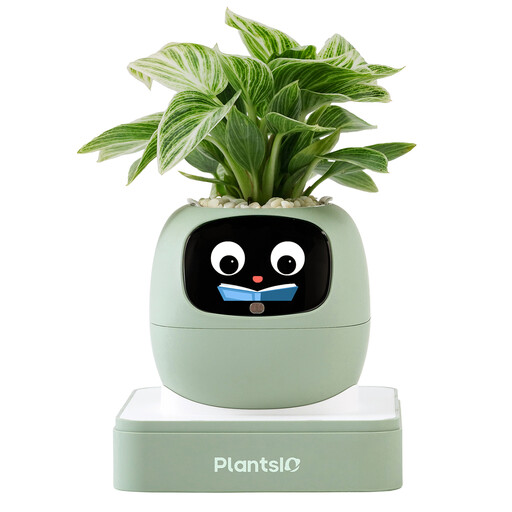
Why It Stands Out: The Ivy AI Smart Plant Pot is more than just a planter; it's an interactive companion. It uses a combination of sensors and a display to show the plant's "emotions." With over 80 different facial expressions, it indicates whether the plant is thirsty, needs more light, or is simply content.
Pros:
Who It's For: This model is ideal for tech enthusiasts, individuals living alone who want an interactive housemate, or as a creative decorative element in the office.

Why It Stands Out: This planter from Premier Housewares focuses on a clean, contemporary design. Instead of electronics, it impresses with its thoughtful construction: the pot rests on an elegant, crossed iron frame that elevates the plant to an appealing height while ensuring a stable base.
Pros:
Who It's For: Ideal for design lovers who are looking for a durable and stylish solution for medium-sized houseplants and prefer to do without technical components.
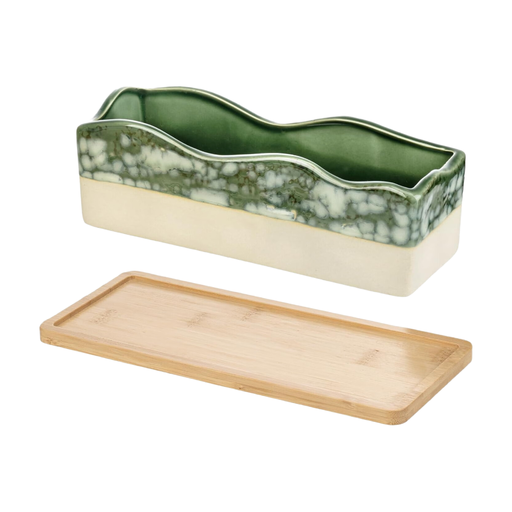
Why It Stands Out: The intelligence of this planter lies in its functional design, specifically tailored to the needs of succulents and herbs. The combination of a glazed ceramic pot with an integrated drainage hole and a removable bamboo tray ensures optimal moisture management.
Pros:
Who It's For: Perfect for lovers of succulents, cacti, or kitchen herbs who are looking for an aesthetic and functional solution without electronics for small spaces.
For anyone who wants to enjoy the aesthetic of plants with zero maintenance, a selection of high-quality artificial plants offers a durable and stylish solution. They require neither water nor light and look fresh all year round.
Discover our collection of artificial green potted plants here.
1. What exactly does a smart plant pot do? A smart plant pot uses built-in sensors to measure key growth parameters like soil moisture, light, or temperature. Based on this data, it gives the user care instructions, for example, through visual signals, sounds, or a notification via a smartphone app. Some models also feature a self-watering system.
2. Does every smart plant pot need an app? No, not all models require an app. Many devices, like the featured Ivy AI Smart Plant Pot, communicate directly via an integrated display or light signals. App-based systems often offer more detailed analytics and the ability to monitor remotely, while app-free models provide simpler, more direct interaction.
3. What types of plants are smart planters suitable for? Smart planters are generally suitable for a wide variety of houseplants. They are particularly useful for plants that are sensitive to improper watering, such as ferns, orchids, or calatheas. When choosing, you should match the size of the pot to the root size of your plant to ensure healthy growth.