
Lieferung heute & morgen

Qualitätsgarantie

Willkommens-Angebote freischalten: KOSTENLOSE Lieferung | Bis zu 80 % RABATT | Kostenlose 30-Tage-JoyPlus-Testphase
App herunterladen
Shaky and unstable smartphone videos can ruin even the most interesting moments. A smartphone gimbal promises to solve this, enabling you to capture cinema-quality footage. However, the market is flooded with devices making grandiose promises that they often fail to deliver in practice. Before you invest, it's crucial to understand the common pitfalls that can lead to a poor purchase.
This guide, created by the Joybuy Product Recommendation Officer, will walk you through the three most common problems when choosing a gimbal and explain which technical features you need to look for to make an informed decision.
Many devices advertise impressive features, but the devil is often in the details. These three points frequently lead to disappointment:
To avoid the problems mentioned above, you should check three core parameters before buying. These are the primary determinants of your gimbal's performance and longevity.
A high-quality 3-axis smartphone stabilizer is the industry standard for fluid video recording. It compensates for movement on three axes:
Only the combination of all three axes makes it possible to create truly stable and professional-looking footage while walking, running, or driving. Models with only one or two axes are significantly cheaper but cannot completely eliminate unwanted jitters and shakes, functioning more like a basic stabilizing grip.
Check the maximum payload of the gimbal in the technical specifications and compare it to the total weight of your setup. Weigh your smartphone, including its case and any potential accessories. This is especially critical for larger and heavier models like an iPhone Pro Max. A gimbal whose motors are operating at their load limit cannot provide clean stabilization.
A good vlogging gimbal for iPhone or Android devices is more than just a stabilizer. Integrated additional features can significantly streamline your workflow:
Based on the criteria above, we have identified a few models that represent a smart choice for specific user profiles.
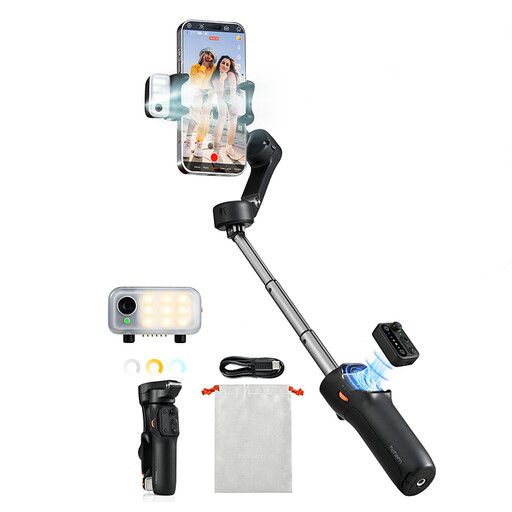
Why This Fits Their Persona: Ideal for content creators seeking a complete, mobile recording solution. This model combines stabilization, AI tracking, a light, a tripod, and an extension rod into a single, foldable device, making extra accessories redundant.
The magnetic AI tracking module operates independently of an app and is controlled by gestures. This conserves the smartphone's battery and prevents compatibility issues.
App-independent AI tracking, an integrated tri-color fill light, and a detachable remote for shooting from a distance.
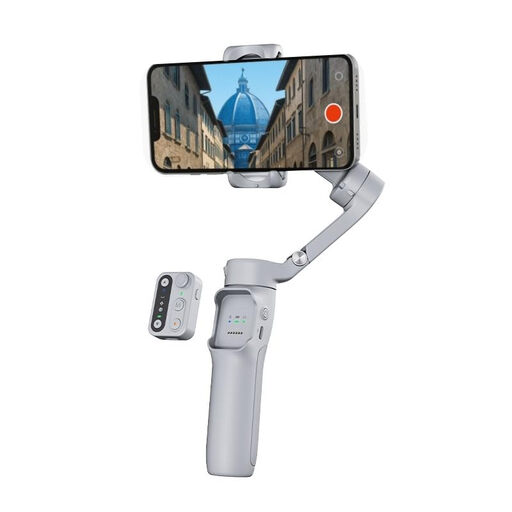
Why This Fits Their Persona: Perfect for beginners and casual users who want a reliable core function—stabilization—without complex extra features. It offers a professional stabilization system in a simple, portable package.
This model focuses on robust 3-axis stabilization and solid construction. By omitting an integrated light or app-dependent tracking, it simplifies operation and reduces potential points of failure.
Focused on the essentials: The iSteady 8.0 stabilization system ensures shake-free footage. Its long 11-hour battery life and lightweight, foldable design make it a dependable companion.
We have compiled a complete, up-to-date list of products that fully meet these strict selection criteria and comply with German safety regulations.
Generally, thin and lightweight cases are not a problem. However, thick, heavy cases (e.g., those with a built-in battery or made of metal) can exceed the maximum payload or obstruct the clamp. For optimal balance and motor performance, it is often recommended to remove the case before use.
Battery life varies depending on the model and intensity of use. Most modern gimbals offer an operating time of between 8 and 13 hours. This is usually sufficient for a full day of shooting. Using additional features like the integrated light or intensive motor movements can reduce the runtime.
For static shots on a tripod, it is not strictly necessary. However, as soon as movement comes into play—whether you're walking, tracking a subject, or panning the camera—a 3-axis stabilizer is crucial. It provides the smooth, professional look that distinguishes high-quality content on platforms like Instagram, TikTok, or YouTube from simple, shaky clips.