
Lieferung heute & morgen

Qualitätsgarantie

Willkommens-Angebote freischalten: KOSTENLOSE Lieferung | Bis zu 80 % RABATT | Kostenlose 30-Tage-JoyPlus-Testphase
App herunterladen
Choosing a smartwatch is based on an analysis of technical specifications and how well they align with the user's individual requirements. Parameters such as display brightness, positioning service precision, sensor technology, and material quality are decisive factors for a device's functionality and longevity. This article highlights the technical features of select models to provide a basis for an informed decision.
Technological development in wearables is advancing rapidly. For a proper evaluation, the following criteria are important:
Display Technology and Brightness: AMOLED (Active Matrix Organic Light Emitting Diode) displays are the de facto standard for high-end smartwatches. They offer high contrast and deep black levels. The peak brightness, measured in nits, is crucial for readability in direct sunlight. Values over 1,500 nits are considered very good. A sapphire crystal display cover offers higher scratch resistance compared to conventional glass.
GPS and Satellite Navigation: For athletes and outdoor enthusiasts, the accuracy of positioning is fundamental. Modern devices use multi-band GPS (often L1+L5), which receives signals on multiple frequencies to reduce interference from buildings or in valleys. Support for multiple satellite systems (GPS, GLONASS, Galileo, BeiDou) increases the reliability and speed of position acquisition.
Sensors and Health Metrics: The sensor suite determines the scope of health tracking. Core components include optical heart rate sensors, SpO2 sensors for measuring blood oxygen saturation, and accelerometers for activity detection. Some models also offer an ECG (electrocardiogram) function and skin temperature sensors. It should be noted that these functions are generally designed for wellness purposes and do not replace medical diagnostics.
Battery Life and Operating System: Battery life is significantly influenced by the usage profile. Manufacturer specifications often differentiate between typical use, power-saving mode, and continuous GPS use. The operating system (e.g., watchOS, Wear OS) determines the user interface, app availability, and compatibility with smartphones (iOS or Android).
Materials and Build Quality: The case material affects weight, feel, and durability. Stainless steel offers a classic look and good durability. Titanium is lighter than steel and extremely resilient, making it ideal for sports and outdoor models. Certifications like IP68 (dust and water resistance) or MIL-STD-810H (military standard for durability) provide information about resilience under demanding conditions.
The following models were selected for a detailed review based on their technical specifications and feature set.
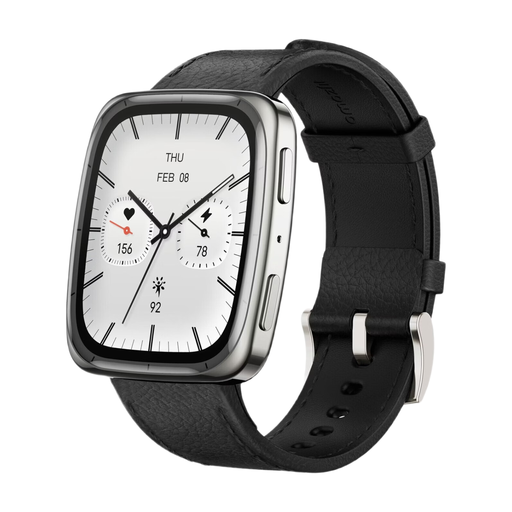
Why We Recommend It The Amazfit Active 2 Square combines a high-end design with a comprehensive feature set. The polished stainless steel case and the scratch-resistant sapphire crystal over the 1.75-inch AMOLED display, with a peak brightness of 2,000 nits, position the device in the premium segment. The long battery life of up to 10 days with typical use is a key practical advantage.
Pros
Who It's For This model is suitable for users looking for a stylish and feature-rich smartwatch for everyday life as well as for ambitious fitness training. Its cross-platform compatibility and long battery life make it a flexible choice.
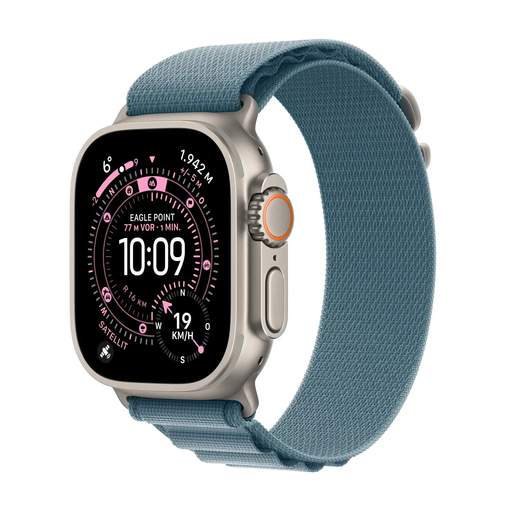
Why We Recommend It The Apple Watch Ultra 3 is consistently engineered for the needs of athletes and adventurers. The 49mm titanium case offers maximum durability with minimal weight. A standout feature is the satellite connectivity for emergency calls outside of cellular coverage. The deep integration into the Apple ecosystem allows for a seamless experience with an iPhone.
Pros
Who It's For The Apple Watch Ultra 3 is the choice for iPhone users who need an extremely durable sports watch for demanding outdoor activities and extreme sports. The safety features offer an added benefit in remote areas.
Why We Recommend It The Samsung Galaxy Watch 8 Classic merges a traditional watch design, highlighted by the rotating bezel for navigation, with advanced technology. The Super AMOLED display achieves an exceptional peak brightness of 3,000 nits. Technically, it impresses with a powerful Exynos W1000 processor, 64 GB of internal storage, and precise dual-frequency GPS (L1+L5).
Pros
Who It's For This model is aimed at Android users, especially owners of Samsung smartphones, who are looking for a powerful premium smartwatch with a classic aesthetic and a focus on detailed health analytics.
| Feature | Amazfit Active 2 Square | Apple Watch Ultra 3 | Samsung Galaxy Watch 8 Classic | | :--- | :--- | :--- | :--- | | Display | 1.75" AMOLED, 2,000 nits | 49 mm AMOLED | 1.34" Super AMOLED, 3,000 nits | | Case Material | Stainless Steel | Titanium | Stainless Steel | | GPS | 5-System GPS | Standalone GPS, Satellite | Dual-Frequency GPS (L1+L5) | | Health Feature | BioTracker (HR, SpO2) | ECG, Blood Oxygen | BioActive Sensor, ECG, Blood Pressure | | Battery Life (typ.) | Up to 10 days | Up to 42 hours | Not specified, 445 mAh | | Compatibility | Android & iOS | iOS only | Android only |
While the featured models offer a high level of durability for everyday life and most sports activities, extreme use cases like construction sites or military exercises require an even more specialised construction. For users who need maximum protection against impacts, vibrations, and extreme environmental conditions, a dedicated product category exists. You can find a selection of such models under shock-resistant watches.
Which smartwatch has the most accurate GPS? The precision of the GPS function depends on the technology used. Models with dual-frequency GPS (L1+L5), like the Samsung Galaxy Watch 8 Classic, can receive signals on two frequencies. This minimises errors caused by reflections off buildings or in canyons, leading to more accurate positioning compared to single-band GPS systems. Support for multiple satellite systems (GPS, GLONASS, Galileo) also helps to improve accuracy.
Can a smartwatch replace a medical-grade ECG? No. The ECG function in smartwatches like the Apple Watch Ultra 3 or the Samsung Galaxy Watch 8 Classic is designed as a wellness feature. It can provide indications of irregularities like atrial fibrillation but is not a certified medical diagnostic device. The measurements should not be used for self-diagnosis or for adjusting medical treatment. If you have health concerns, consulting a physician is always necessary.
How important is smartphone compatibility? Compatibility is fundamental to accessing the full range of a smartwatch's features. The Apple Watch is exclusively compatible with iPhones. Smartwatches with Wear OS, such as the Samsung Galaxy Watch, are designed for use with Android smartphones. While some basic functions may work across platforms (e.g., with the Amazfit Active 2), the corresponding operating systems are a prerequisite for synchronising data, installing apps, and receiving notifications.