
Lieferung heute & morgen

Qualitätsgarantie

Willkommens-Angebote freischalten: KOSTENLOSE Lieferung | Bis zu 80 % RABATT | Kostenlose 30-Tage-JoyPlus-Testphase
App herunterladen
Deciding to buy a smoothie maker is often the first step towards a healthier diet. However, the market is flooded with a wide range of models that vary significantly in power, size, and functionality. Choosing the right appliance can quickly become overwhelming.
As your Joybuy Product Recommendation Officer, my job is to provide you with clear, objective guidance. This article will introduce different types of blenders, explain key purchasing criteria, and present a curated selection of models to help simplify your decision.
To find the right appliance for your needs, a few technical aspects are crucial. The following points will help you objectively evaluate the features of different blenders.
Motor power, measured in watts (W), is a key indicator of a blender's performance.
The design of the blender determines its versatility.
Pay attention to the material of the blending container. Many manufacturers now use BPA-free plastic (like Tritan) or glass. Glass is scratch-resistant and doesn't stain, but it's heavier and more fragile. Plastic containers are lighter and more durable. For hassle-free cleaning, it's best if the removable parts—such as the container, lid, and blade assembly—are dishwasher-safe.
Here is a selection of three different models that cover a range of uses.
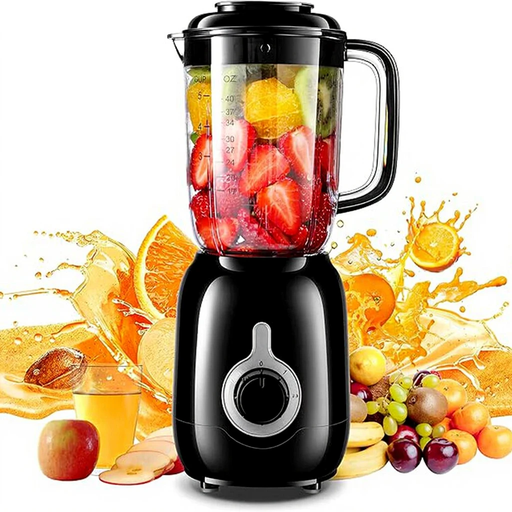
What makes it stand out: The Bear LLJ-B12K1 is a classic countertop blender with a 500-watt motor and four stainless steel blades. It offers two speed settings and a pulse function for greater control when breaking down ingredients like ice. A key feature is its included accessories: a grinding cup and a chopping cup, which also make the appliance suitable for grinding spices or mincing meat.
Advantages:
Who is this model for? This appliance is a great choice for families or individuals who regularly prepare large batches of smoothies or other blended drinks and appreciate a versatile device with extra features.
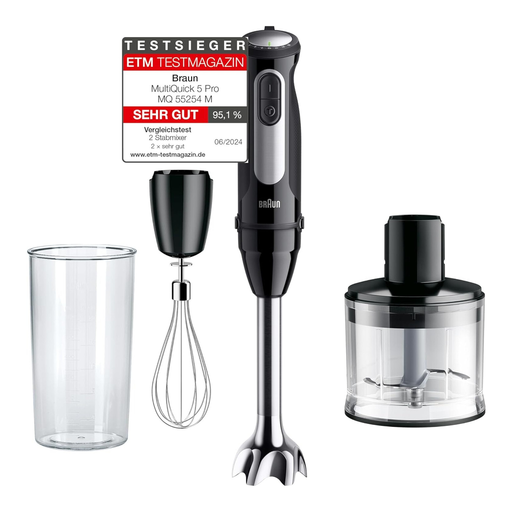
What makes it stand out: The Braun MultiQuick 5 Pro is not just a smoothie maker but a versatile immersion blender with a powerful 1000-watt motor. The EasyClick Plus system allows for quick attachment changes. According to the manufacturer, its PowerBell Plus technology features an extra milling blade for finer blending results. With 25 speed settings, it offers highly precise control.
Advantages:
Who is this model for? The MultiQuick 5 Pro is aimed at users looking for a multifunctional kitchen tool. If you want to make soups, dips, baby food, or whipped egg whites in addition to smoothies, this is a flexible solution.
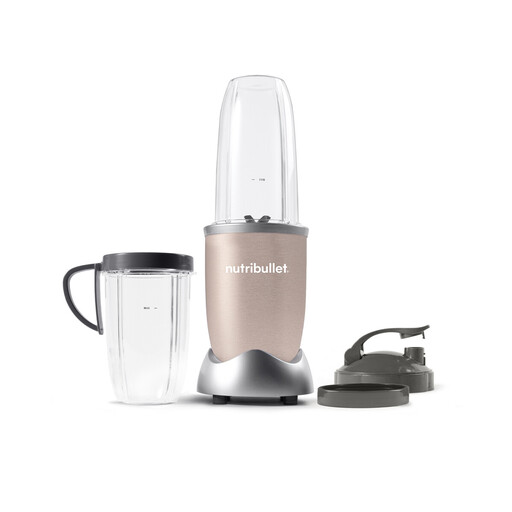
What makes it stand out: The nutribullet Pro is a compact personal blender specifically designed for the quick preparation of nutrient-dense smoothies. Its 900-watt motor is powerful enough to handle frozen fruits, nuts, and seeds. Operation is incredibly simple: just place the cup on the base, push down, and it starts blending. The included cups can be used as travel bottles with the to-go lids.
Advantages:
Who is this model for? This device is ideal for health-conscious professionals, athletes, and individuals looking for a fast and straightforward to-go smoothie maker for daily use. Its strength lies in the efficient preparation of single servings.
The models featured here cover many common use cases. However, if your needs go beyond making smoothies—for example, if you plan to regularly process hard nuts into nut butter or flour—you may need an appliance with more specialised features.
For such purposes, we have a dedicated selection. Discover more options in our Blenders for Nuts category.
1. How many watts should a good smoothie maker have? The required wattage depends on the ingredients. For soft fruits and yoghurt, 300–500 watts is sufficient. For a blender for green smoothies that needs to finely purée leafy greens like kale, or for crushing frozen fruit and ice, models with 900 watts or more are recommended.
2. Can every smoothie maker crush ice? No, not every blender is designed for this task. To crush ice effectively, an appliance needs a powerful motor, durable blades, and ideally, a pulse function. Always check the manufacturer's specifications to avoid overloading the motor.
3. What is the difference between a countertop blender and a personal blender? A countertop blender typically has a large pitcher and is intended for preparing larger quantities for the whole family. A personal blender is more compact, designed for single servings, and its blending cup often doubles as a travel container, making it a practical to-go smoothie maker.