
Lieferung heute & morgen

Qualitätsgarantie

Willkommens-Angebote freischalten: KOSTENLOSE Lieferung | Bis zu 80 % RABATT | Kostenlose 30-Tage-JoyPlus-Testphase
App herunterladen
Solar lights for the garden promise simple, atmospheric, and electricity-free illumination. But the reality is often different: after just a few months, many lights only flicker dimly or fail completely. As a Joybuy Product Recommendation Officer, I analyse market information to provide you with objective criteria to help you distinguish long-lasting, functional models from short-lived duds.
Before you make a decision, you should be aware of the three most common pitfalls that lead to disappointment:
To avoid these problems, it's crucial to focus on verifiable technical specifications rather than marketing promises.
Reliable, power-grid-free garden lighting is not a matter of chance. It is based on solid technical foundations. Pay attention to the following three key points before buying to make an informed decision.
The IP Rating (Ingress Protection) is the most important indicator of an outdoor light's durability. It consists of two digits:
The combination of the solar panel and battery determines how long and how brightly your light will shine.
The choice of material has a direct impact on lifespan and appearance.
Instead of making a blanket recommendation, we have identified products that are tailored to specific use cases and their requirements.
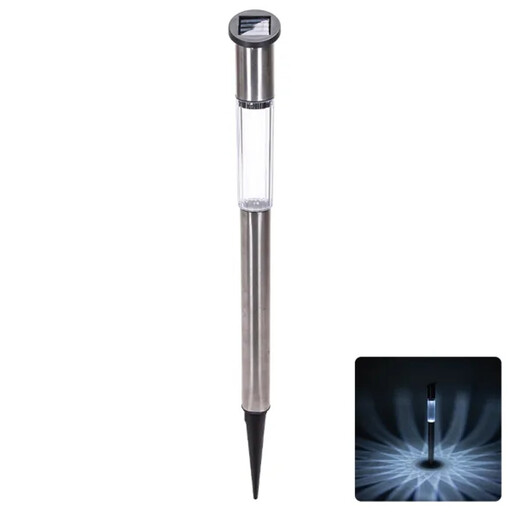
Why it's a good fit: Ideal for anyone looking to illuminate a garden path or flower bed on a small budget and with minimal effort. The light provides functional basic illumination and is quick to install thanks to its ground stake.
The stainless steel ground stake is significantly more robust than the typical plastic stakes in this price range, preventing breakage during installation.
The IP44 rating is sufficient for a path light and is clearly stated. The specified lifespan of 15,000 hours provides a transparent performance expectation.
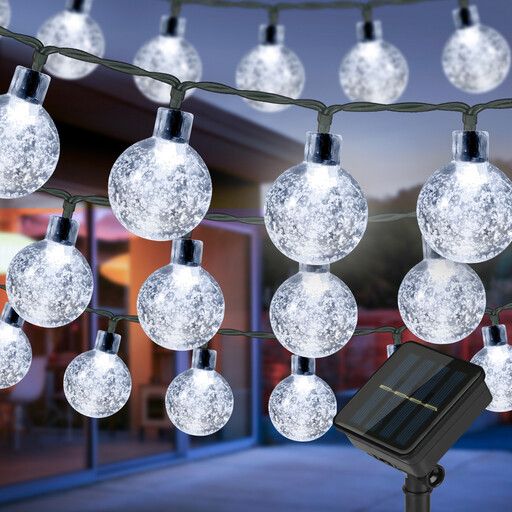
Why it's a good fit: Perfect for creating an atmospheric ambiance on a balcony, terrace, or for garden parties. The 11-metre string with 60 LEDs and 8 lighting modes offers plenty of creative freedom for garden decor lights.
With an IP65 rating, these string lights are explicitly protected against water jets, making them far more resistant to bad weather than many competing products that only offer IP44.
The product description provides specific figures for charging time (6-8 hrs) and runtime (8-14 hrs), which allows for realistic expectations and avoids the "Unrealistic Runtime" trap.
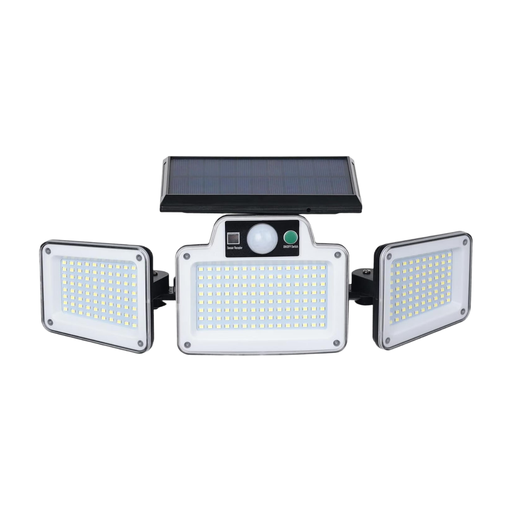
Why it's a good fit: Designed for reliably illuminating driveways, garages, or dark corners of your property. The combination of 280 LEDs, a motion sensor, and three adjustable light heads ensures security and flexibility.
The separate solar panel with a long cable (approx. 4.7 m) solves a core problem: the light can be mounted in the shade (e.g., under the eaves), while the panel is placed in full sun.
The IP65 certification and the large 2400mAh battery ensure a robust, weatherproof design and a reliable power supply for bright security lighting.
We have compiled a complete, up-to-date list of products that meet these strict selection criteria.
Yes, but with reduced performance. Modern solar panels can charge in diffuse light, but much more slowly than in direct sunlight. The runtime during the winter months will therefore be shorter. To maximise performance, you should place the solar panel in a location with as much direct daylight as possible and keep it free of snow, leaves, and dirt.
The lifespan is determined by two main components: the LED and the battery. The LEDs themselves often have a very long life (e.g., 15,000 hours or more). The limiting factor is usually the rechargeable battery, whose capacity diminishes after 1-3 years (approx. 500-800 charge cycles). On some models, the battery (often a standard AA or AAA NiMH cell) can be easily replaced, which significantly extends the light's lifespan.
Installation is usually straightforward. The most important point is the orientation of the solar panel: it should face south and not be shaded by trees, buildings, or other objects during the day. Before first use, it is recommended to let the light charge fully in the sun for one to two days while switched off. Clean the panel regularly with a soft, damp cloth to maintain charging efficiency.