
Lieferung heute & morgen

Qualitätsgarantie

Willkommens-Angebote freischalten: KOSTENLOSE Lieferung | Bis zu 80 % RABATT | Kostenlose 30-Tage-JoyPlus-Testphase
App herunterladen
Outdoor solar lights promise simple, cost-effective, and eco-friendly lighting for your garden, patio, and pathways. However, the market is flooded with products whose real-world performance often falls short of the promises on the packaging. Many buyers are left disappointed by lights that fail after the first rainfall, provide barely any illumination, or have batteries that give out after just a few weeks. This guide will help you identify the common pitfalls and make an informed decision.
Before you invest, you should be aware of the most common issues that lead to frustration and unnecessary expense.
To avoid these problems, focus on three verifiable technical specifications. These will give you an objective basis for your purchasing decision.
The IP (Ingress Protection) rating indicates how well an electrical device is protected against the ingress of foreign objects (first digit) and water (second digit). For waterproof solar lights that are mounted unprotected outdoors, this is the most important value.
Forget the wattage; with LED technology, the lumen (lm) value is what determines brightness. The higher the lumen value, the brighter the lamp will shine. Use the following guidelines for different applications:
A good battery is crucial for illumination time and lifespan.
Here are some product suggestions tailored to specific use cases that meet the criteria mentioned above.
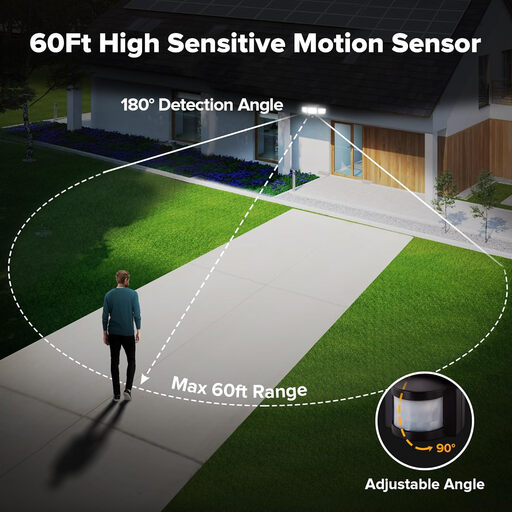
Why This Fits Their Persona: Ideal for illuminating driveways, garages, and dark areas of a property where high brightness and a reliable motion sensor are needed for deterrence and safety.
Avoids the brightness illusion with a specified luminous flux of 3000 lumens and the 'weatherproof' trap with a robust IP65 certification, designed for all-weather use.
Three flexibly adjustable light heads allow for a wide 270° illumination angle. The motion sensor detects movement across a broad 180° range.
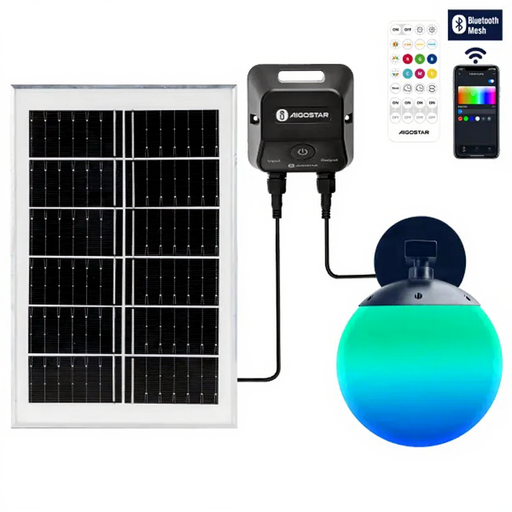
Why This Fits Their Persona: Perfect for users who want to individually control their outdoor lighting and integrate it into a connected system. This smart solar light allows for the creation of lighting scenes via an app.
Offers far more than just 'On/Off'. The Bluetooth Mesh technology allows control over colour (RGB), colour temperature (2700K-6500K), and brightness. The 4000mAh lithium battery bypasses the problem of short-lived batteries.
Can network over 200 devices. The light creates architectural effects with its up-and-down lighting. Installation is simple thanks to solar power, requiring no wiring.
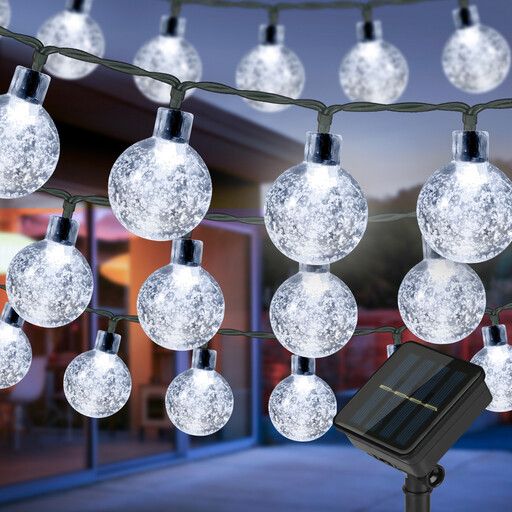
Why This Fits Their Persona: For anyone looking to effortlessly create an atmospheric ambiance on a balcony, patio, or for a garden party. Ideal for decorative accents on fences, plants, or railings.
The efficient solar panel and battery provide an illumination time of 8 to 14 hours, thus avoiding the short-lifespan trap. The weatherproof construction ensures reliable function throughout the season.
Eight different lighting modes offer creative variety. Installation is tool-free and flexible, as no external power source is needed.
We have compiled a complete, up-to-date list of products that fully meet these strict selection criteria and safety standards.
Yes, but with limitations. The shorter days and lower intensity of sunlight in winter lead to shorter charging times and, consequently, reduced illumination duration. For winter use, models with high-efficiency monocrystalline solar panels and high-capacity (mAh) batteries are better suited. Placement is also crucial: the panel should be free of snow and receive as much direct sunlight as possible.
It is the decisive factor for perceived brightness and should match the intended application. For purely decorative Solar String Lights, values below 100 lumens may be sufficient. For Solar Pathway Lights intended to provide safe orientation, 100 to 400 lumens are recommended. A solar light with a motion sensor for deterrence should have at least 500 lumens, or even more.
The IP (Ingress Protection) rating classifies a housing's protection against the ingress of foreign objects (first digit) and water (second digit). IP44 means protection against splashing water and is sufficient for sheltered areas. IP65 means the light is dust-tight and protected against water jets. This is the reliable standard for most unprotected outdoor areas and a clear quality feature for waterproof solar lights.