
Lieferung heute & morgen

Qualitätsgarantie

Willkommens-Angebote freischalten: KOSTENLOSE Lieferung | Bis zu 80 % RABATT | Kostenlose 30-Tage-JoyPlus-Testphase
App herunterladen
Integrating an SPF 50 face sunscreen into your daily routine isn't just a passing trend; it's a fundamental decision for your skin's long-term health. However, the market is saturated with products whose marketing claims often create more confusion than clarity. Many formulations feel heavy, leave behind an unflattering white cast, or simply don't work with your skin type.
As a Joybuy Product Recommendation Officer, my job is to cut through the noise with objective information to help you make an informed choice. This guide focuses on the crucial criteria and shows you how to avoid common purchasing pitfalls to find a sunscreen that truly fits you and your daily life.
Before we dive into the selection criteria, it's important to recognise two prevalent marketing traps that often lead to disappointing purchases.
To find a sunscreen you'll enjoy using every day, you should check three core technical aspects.
A high Sun Protection Factor (SPF) alone is not enough. The SPF primarily indicates the level of protection against UVB rays, which are responsible for sunburn. At least as important is protection against UVA rays, which penetrate deeper into the skin and are a major contributor to premature skin ageing (wrinkles, dark spots).
The choice of UV filter depends heavily on your skin type and personal preferences.
A sunscreen can only become a daily staple if its texture feels comfortable on your skin.
Here are some selected products tailored to the needs of different users.

Why it's a match: Ideal for anyone looking for a straightforward yet effective Korean sunscreen. The texture is similar to a lightweight moisturiser and is perfect for daily use, even under makeup.
Thanks to modern chemical filters, the "no white cast" trap is completely avoided. The formulation absorbs without a trace, leaving a comfortable, hydrated skin feel without a sticky residue.
Offers very high UVA protection with a PA++++ rating. The formula is enriched with 30% rice extract and fermented grain extracts, which further nourish and moisturise the skin.
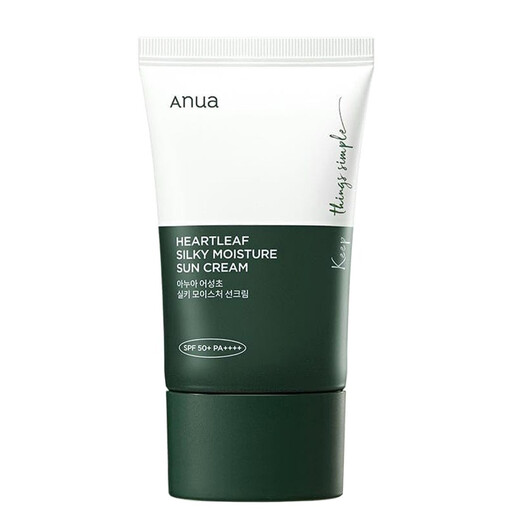
Why it's a match: Developed for sensitive and redness-prone skin. The silky gel texture soothes and moisturises without irritating the skin or clogging pores, making it also suitable for oily skin.
This is a chemical sunscreen specifically formulated for sensitive skin. It proves that chemical filters can be very gentle, while simultaneously avoiding the white cast of mineral alternatives.
Contains a high concentration (300,000 ppm) of Houttuynia Cordata Extract, known for its soothing and anti-inflammatory properties. The formula is also vegan and fragrance-free.
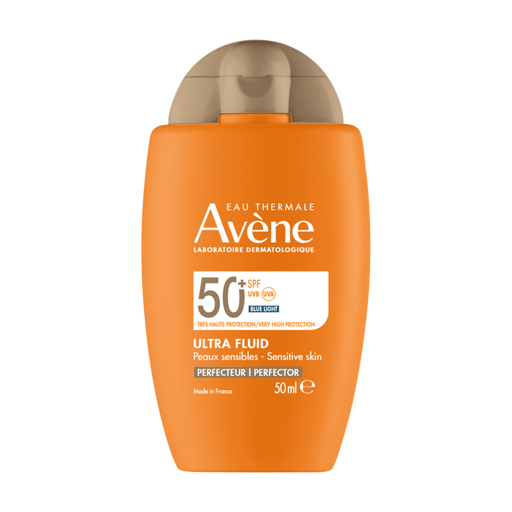
Why it's a match: A tinted sunscreen for daily use that combines high protection with a light, universal tint. It subtly evens out skin tone and serves as a good makeup base.
The formulation is specifically designed for sensitive skin and is water-resistant. The tint is described as universal and subtle, which sets realistic expectations for coverage and shouldn't be confused with a foundation.
Uses the exclusive TriAsorB filter system, which protects not only against UVA and UVB rays but also against high-energy visible (HEV) blue light.
We have compiled a complete, up-to-date list of products that fully meet these strict selection criteria and German safety regulations.
A common and practical recommendation is the two-finger rule: apply a strip of sunscreen to your index and middle fingers. This amount is generally sufficient for the face and neck to achieve the sun protection factor stated on the packaging. Applying too little significantly reduces the level of protection.
Yes. Up to 80% of UV radiation can penetrate clouds. UVA rays, which are responsible for skin ageing, are present at a nearly constant intensity throughout the year, even in winter and behind window panes. Daily application is therefore a consistent step in protecting your skin.
The difference in the level of protection is smaller than the numbers suggest. SPF 30 blocks about 97% of UVB rays, while SPF 50 blocks about 98%. The key advantage of SPF 50 is that it provides a larger margin of error, as most people tend to apply too little sunscreen. When applied correctly, SPF 50 offers more robust and longer-lasting protection, especially for fair, sensitive skin or during intense sun exposure.