
Lieferung heute & morgen

Qualitätsgarantie

Willkommens-Angebote freischalten: KOSTENLOSE Lieferung | Bis zu 80 % RABATT | Kostenlose 30-Tage-JoyPlus-Testphase
App herunterladen
Capturing your athletic experiences from a first-person perspective has a unique appeal. Sports camera glasses promise just that: hands-free recording directly from your field of view, perfect for cycling, hiking, or skiing down the slopes. However, the market is flooded with models whose advertised features often fail to deliver in practice. Before making a purchase, it's crucial to understand the common pitfalls to avoid a bad investment.
This guide, created by the Joybuy Product Recommendation Officer, will help you objectively evaluate technical specifications and find a model that truly meets your needs.
Many products over-promise and under-deliver. Pay close attention to these three areas where marketing claims and reality often diverge:
To avoid these pitfalls, check the following parameters before you buy. They are critical for the functionality and overall value of smart sports glasses with a camera.
A field-ready POV camera glasses needs more than just a high pixel count. Look for a native resolution of at least 1080p—or better yet, 2.7K or 3K—at a frame rate of 30 or 60 frames per second (fps). Even more important are glasses with image stabilisation. Good Electronic Image Stabilisation (EIS) digitally compensates for vibrations, ensuring smooth footage even on rough terrain. This is an indispensable feature for any video glasses for cycling or other high-motion sports.
For long-term use during sports, comfort is key. The glasses should ideally weigh under 80 grams, with lighter models around 50 grams often being more comfortable. The frame material also plays a role. TR90, a thermoplastic polyamide, is a commonly used material because it is lightweight, flexible, and durable. An ergonomic fit that stays secure without pinching is essential for athletic use.
Modern camera glasses offer more than just video recording. Open-ear audio sports glasses allow you to listen to music or take calls without completely blocking out ambient sounds—a crucial safety feature in traffic. Software is another key feature. An intuitive app for controlling the camera and managing recordings is standard. Models with AI video editing go a step further: they can automatically create highlight clips from your footage, which significantly speeds up the sharing process and bypasses the post-processing trap.
Based on the criteria above, we've identified a few models suited for different user profiles.
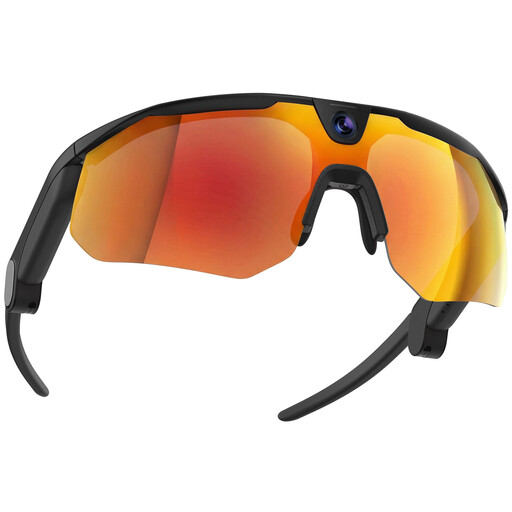
Why it's a match: The BleeqUp Ranger is an integrated solution for athletes who value comfort and ease of use. It combines a camera, open-ear audio, and AI-powered editing features in a lightweight design. Ideal for cyclists and hikers who want to capture and share their experiences without the hassle.
The integrated AI video editing solves the problem of tedious post-processing. The lightweight design at just 49 grams and the TR90 frame prevent the comfort trap on long excursions.
3K video recording at 60 fps with EIS image stabilisation. Open-ear audio system with four speakers and wind noise reduction.
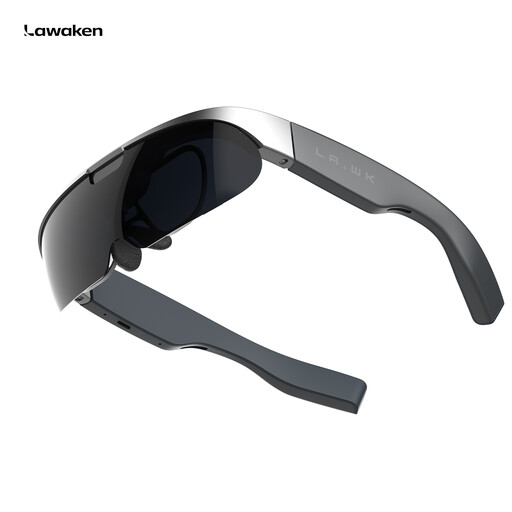
Why it's a match: For athletes who want to not only record their ride but also keep an eye on performance data. The integrated AR (Augmented Reality) display projects navigation cues and sports data directly into your field of view, so you don't have to look away from the road.
This model goes beyond simple recording, offering real added value through AR data integration. It's more than just a camera; it's a training tool.
AR display (HUD) for real-time data and navigation. Syncs with external sports peripherals. Compatible with prescription lenses.
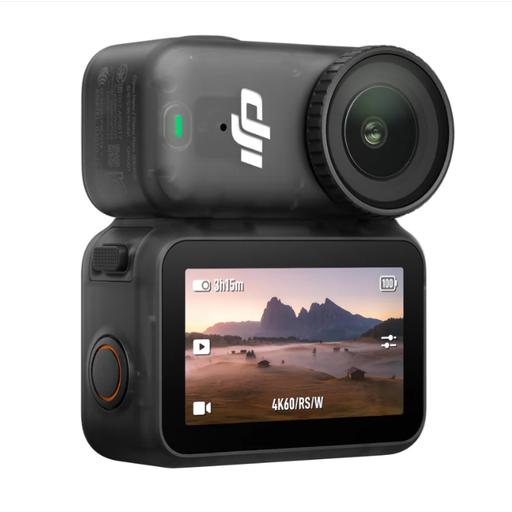
Why it's a match: For users who prioritise image quality above all else. While not technically glasses, the Osmo Nano serves as an ultra-compact, wearable action cam glasses alternative that delivers superior video quality. Its magnetic design allows for flexible POV mounting on clothing, helmets, or hats.
It bypasses the image quality trade-offs that can come with integrating a camera into a glasses frame. The clear focus here is on achieving the best possible recording quality in a tiny, wearable form factor.
Large 1/1.3-inch sensor for high image quality at 4K/60fps. RockSteady 3.0 stabilisation and 10-bit D-Log M colour profile for professional post-production.
We've compiled a complete, up-to-date list of products that fully meet these strict selection criteria and relevant safety regulations.
Battery life varies depending on the model, selected resolution, and ambient temperature. On average, you can expect 60 to 90 minutes of continuous recording time. Some models offer the ability to connect external power banks to extend runtime.
Most camera glasses are sweat- and splash-resistant, indicated by an IP rating like IPX4. This is sufficient for light rain or sweat. For underwater use or in heavy rain, a dedicated action camera with a waterproof housing is generally the more suitable choice. Always check the specific IP certification of the model.
Some models are designed for prescription wearers. Products like the BleeqUp Ranger or the LAWAKEN LAWK ONE come with a special insert frame (Vision Correction Frame) that an optician can fit with prescription lenses. If you rely on vision correction, this is an important feature to look for when choosing a product.