
Lieferung heute & morgen

Qualitätsgarantie

Willkommens-Angebote freischalten: KOSTENLOSE Lieferung | Bis zu 80 % RABATT | Kostenlose 30-Tage-JoyPlus-Testphase
App herunterladen
Choosing a new sports watch can quickly become overwhelming. Manufacturers advertise a flood of features, but not every innovation is relevant for your daily training routine. As a Joybuy Product Recommendation Officer, I'll help you distinguish marketing promises from genuine performance features and find a watch that truly matches your athletic ambitions.
Before we dive into the crucial criteria, let's highlight three common marketing traps that often lead to poor purchasing decisions:
To make an informed decision, focus on these three core aspects. They define the performance and reliability of a sports watch for ambitious users.
The most important metric for athletes is the battery life during continuous GPS use. Look specifically for this specification in the technical data. For marathon runners or triathletes, a sports watch with long battery life of at least 10-14 hours in GPS mode is a fundamental requirement. Models for extreme sports and ultra-long distances often offer special power-saving modes that enable GPS tracking for several days.
For precise tracking in challenging terrain like dense forests or urban canyons, Multi-Band GNSS (often referred to as L1 + L5) is crucial. This system uses multiple frequency bands from satellite systems like GPS, GLONASS, and Galileo to significantly increase positional accuracy. For adventurers seeking a GPS watch for hiking in remote areas without a mobile network, some high-end models also offer satellite communication for emergency calls and messages.
A smartwatch for extreme sports must withstand more than just everyday bumps. Look for the following features:
Instead of making a one-size-fits-all recommendation, we have identified models tailored to specific user profiles.
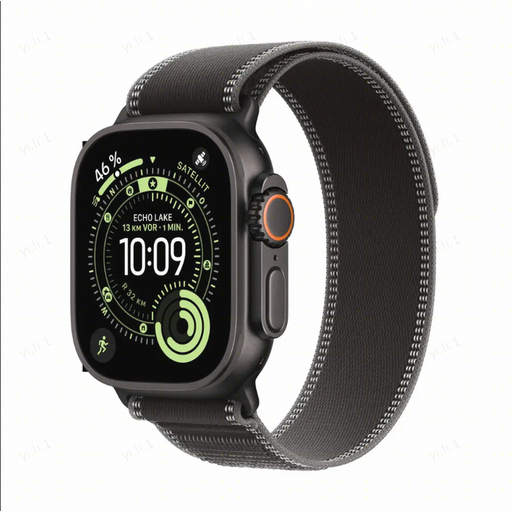
Why this model is a great fit: Ideal for athletes deeply embedded in the Apple ecosystem who seek a seamless connection between daily life, training, and safety. It offers a strong balance of advanced sports features and first-class smartwatch capabilities.
Apple transparently states the battery life for various scenarios: up to 42 hours with normal use and up to 14 hours with continuous GPS use. The 100m water resistance is designed for most water sports, excluding deep scuba diving.
Precise dual-frequency GPS (L1+L5) and integrated satellite communication for emergency calls even without a mobile network. The robust titanium case and sapphire crystal withstand the rigours of training.
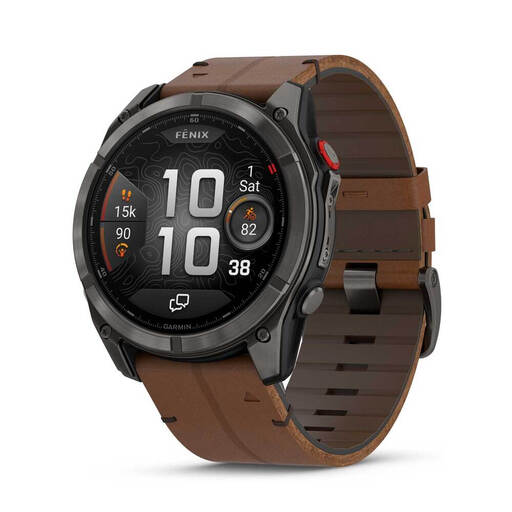
Why this model is a great fit: For athletes and adventurers who prioritise maximum battery life, reliability, and advanced navigation features. The Fenix 8 Pro is less of a smartwatch and more of a professional training and expedition tool.
Battery life is the main selling point: up to 27 days in smartwatch mode and up to 78 hours in GPS mode are market-leading. It is certified for diving up to 40 metres and features waterproof inductive buttons, qualifying it for serious water sports.
Extreme battery life and preloaded TopoActive maps with Multi-Band GNSS. The integrated LED flashlight and optional inReach satellite features make it a self-sufficient tool for expeditions.

Why this model is a great fit: Perfect for users whose focus is on general fitness, wellness, and detailed health monitoring. It offers advanced health metrics in a slim design for daily use.
This model clearly positions itself as a health and fitness watch, not an expedition device. The battery life of up to 24 hours is designed for daily sports and sleep tracking and is not compared with extreme sports scenarios.
Comprehensive health features, including, according to the manufacturer, high blood pressure notifications, an ECG function, and sleep analysis. It offers an accessible entry point into the ecosystem with a focus on preventative health monitoring.
We have compiled a complete, real-time updated list of products that fully meet these strict selection criteria and safety regulations.
Accuracy has significantly improved with Multi-Band GNSS (L1+L5) systems. In open terrain, you can expect a deviation of just a few metres. In urban areas or dense forests where signals are reflected, this technology provides more stable and accurate tracking compared to older watches with only single-band L1 GPS support.
Not necessarily. Many models with "Cellular" or "LTE" have their own mobile connection (eSIM required). This allows you to make calls, send messages, and stream music without your phone. Models without this feature require a Bluetooth connection to a smartphone for notifications and data synchronisation, but they can record GPS activities autonomously.
For a marathon (approx. 3-5 hours), almost any modern sports watch is sufficient. For an 8-hour hike, you should choose a model that lasts at least 12-14 hours in GPS mode to have a buffer. For multi-day tours, watches like the Garmin Fenix series, with special expedition GPS modes that last over 70 hours, are the more reliable choice.