
Lieferung heute & morgen

Qualitätsgarantie

Willkommens-Angebote freischalten: KOSTENLOSE Lieferung | Bis zu 80 % RABATT | Kostenlose 30-Tage-JoyPlus-Testphase
App herunterladen
The search for the right sunscreen can quickly become overwhelming. Between different SPFs, ingredient lists, and product claims, making an informed decision is a challenge. Many products don't live up to their promises, leading to disappointment—whether due to an unpleasant texture or inadequate protection. This guide will help you understand the crucial criteria and avoid common pitfalls.
Before we dive into the selection criteria, let's look at three common assumptions that often lead to a bad buy:
To find the right sunscreen, you should focus on objective and verifiable properties. The following three parameters are fundamental to making a good purchase decision.
The Sun Protection Factor (SPF) indicates how much longer you can expose yourself to the sun with the product before getting a sunburn (caused by UVB rays), compared to unprotected skin. An SPF 50+ offers very high protection against UVB radiation.
Equally important is protection against UVA rays, which penetrate deeper into the skin and contribute to premature skin ageing. The PA system, commonly found on Asian products like Korean sunscreen, rates UVA protection. A rating like PA++++ signifies extremely high protection. In Europe, look for the UVA logo (a circle with "UVA" inside), which confirms that the UVA protection is at least one-third of the stated SPF. Comprehensive UV protection always covers both types of rays.
Sunscreen products use different filters to protect the skin from UV radiation:
The choice depends on personal skin tolerance and texture preferences.
Not every sunscreen is suitable for every situation. A lightweight facial sunscreen with nourishing properties is ideal for daily use, while larger, more budget-friendly packaging is often practical for the body. For sun protection on the balcony or in the car, physical barriers like awnings or blinds are the right solution, not creams. Modern formulations, especially from the K-beauty sector, often offer serum-like textures that absorb quickly, are non-greasy, and provide additional skincare benefits.
Based on the criteria mentioned, we have compiled a selection of products for different user profiles.

Why this product is a great fit: Ideal for anyone looking for a lightweight, moisturising Korean sunscreen that feels like a daily moisturiser. Perfect for everyday use, even under makeup.
The creamy, lightweight texture absorbs quickly, completely bypassing the pitfall of a sticky, whitening sunscreen.
Offers very high broad-spectrum protection with SPF50+ and PA++++. The formula is enriched with 30% rice extract and grain-fermented extracts that nourish the skin.
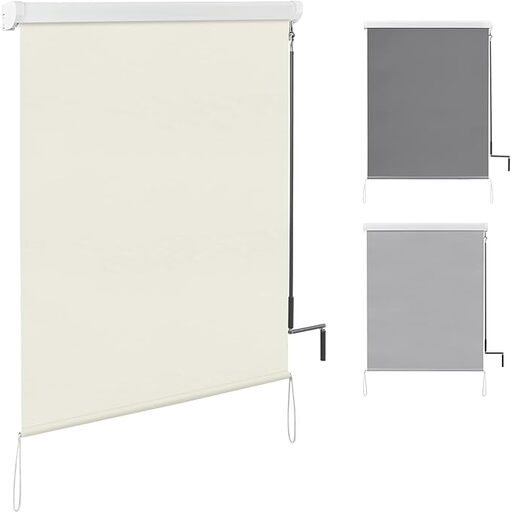
Why this product is a great fit: A practical solution for sun protection on your balcony or terrace. It provides not only UV protection but also wind and privacy screening.
Solves the problem of sun protection for living spaces where cream is impractical, extending protection beyond personal skincare.
The material, made of polyester fabric with a PU coating, offers 90–95% UV protection according to the manufacturer. The hand crank operation allows for flexible height adjustment.
We have compiled a complete, up-to-date list of products that fully meet these strict selection criteria and current regulations.
To maintain continuous protection, it is recommended to reapply sunscreen every two hours. After heavy sweating, swimming, or towel drying, protection should be reapplied immediately, regardless of how much time has passed since the last application.
UVB rays are shorter and primarily responsible for sunburn. UVA rays penetrate deeper into the skin and are a major cause of premature skin ageing, such as wrinkles and dark spots. A good sunscreen provides broad-spectrum protection that shields against both types of radiation.
Most sunscreen products have an open jar symbol (PAO - Period After Opening) on the packaging, which indicates how many months the product is good for after opening—usually 12 months. If the product smells strange, has changed in colour or consistency, or has passed its expiration date, it should no longer be used, as its protective effect can no longer be guaranteed.