
Lieferung heute & morgen

Qualitätsgarantie

Willkommens-Angebote freischalten: KOSTENLOSE Lieferung | Bis zu 80 % RABATT | Kostenlose 30-Tage-JoyPlus-Testphase
App herunterladen
Choosing a thermometer seems simple at first glance. But the market is filled with devices promising everything from medical-grade precision to monitoring your Sunday roast. This variety often leads to confusion and, ultimately, to purchase decisions that don't meet actual needs. Many consumers invest in models whose advertised features are unreliable in practice or whose handling proves to be impractical.
As your Joybuy Product Recommendation Officer, I'm here to help you separate the wheat from the chaff. We'll focus on the objective criteria that truly matter and uncover the most common pitfalls, so you can make an informed decision.
Before we dive into the key features, let's look at two common issues that lead to unsatisfying purchases:
To avoid a purchase mistake, you should base your decision on two fundamental parameters: the use case and the underlying measurement technology.
The purpose determines the technology. A thermometer is not a one-size-fits-all tool. Clearly define what you primarily need it for:
Technology is the heart of every thermometer. The main types are:
Instead of making a blanket recommendation, we have selected models that meet specific requirement profiles and purposefully avoid the pitfalls mentioned.
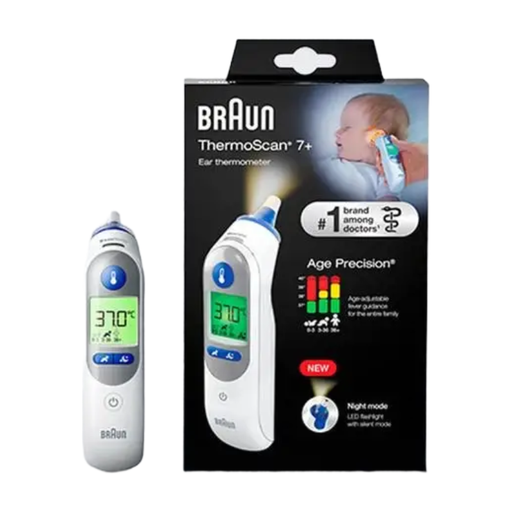
Why this model is a great fit: This device is specifically designed for precise fever measurement in the ear. The Age Precision technology allows for an age-specific interpretation of the temperature, giving parents added peace of mind. The night mode allows for a measurement without waking the child.
It is a highly specialised medical device, not a compromise-laden multi-function gadget. Its technology is exclusively designed for the accurate measurement of eardrum temperature.
The combination of a colour-coded display and an age-specific fever threshold makes it easy to quickly and correctly assess the reading, even without prior medical knowledge.
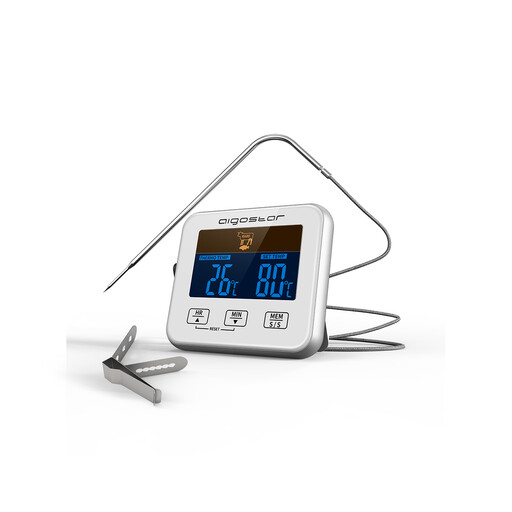
Why this model is a great fit: This device is designed as a dedicated kitchen and meat thermometer. The long, food-grade stainless steel probe allows for precise measurement of the core temperature without damaging the food. The timer function and preset cooking levels are practical helpers in the kitchen.
It avoids the inaccuracy that would arise from using an unsuitable thermometer (e.g., an infrared surface scanner) for core temperature measurement. The focus is clearly on its function as a meat thermometer.
The combination of temperature measurement and a timer in one device simplifies monitoring the cooking process. The magnetic back allows for space-saving attachment to an oven or refrigerator.
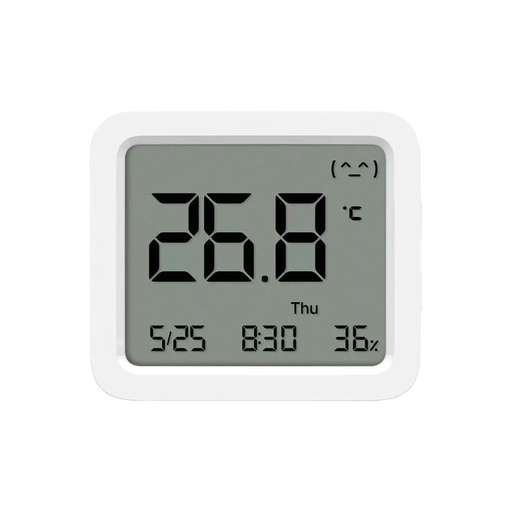
Why this model is a great fit: This compact device is designed as a smart room thermometer and hygrometer. It accurately measures temperature and humidity and can be connected to a smartphone via Bluetooth to analyse historical data and integrate it into smart home routines.
It is a specialist for monitoring the indoor climate. It doesn't try to be a fever or kitchen thermometer; instead, it provides valuable additional data (humidity) that simple thermometers do not offer.
The Bluetooth connectivity and compatibility with smart home ecosystems enable automated climate control, for example, by controlling humidifiers or smart radiator thermostats.
We have compiled a complete, up-to-date list of products that meet these strict selection criteria and comply with applicable safety regulations.
Both methods can deliver very accurate results when used correctly. An ear thermometer measures the infrared radiation from the eardrum, which is considered a good indicator of the core body temperature. A forehead thermometer is less invasive but can be more easily influenced by external factors like sweat or cold ambient air. For a reliable measurement, strict adherence to the manufacturer's instructions is crucial for both types.
For home use, digital fever thermometers are factory-calibrated and do not require regular recalibration by the user. The electronics are designed to remain accurate throughout the device's entire lifespan. If you have doubts about its accuracy (e.g., after a drop), it is recommended to replace the device, as a reliable calibration cannot be performed at home.
No, this is strongly advised against. Fever thermometers are certified as medical devices designed for a very specific and narrow temperature range (approx. 32°C to 43°C) with high accuracy (e.g., ±0.1°C). Kitchen thermometers have a much wider measurement range (e.g., -50°C to 300°C) but have lower resolution and accuracy in the range of human body temperature. Furthermore, they are not designed for hygienic contact with the human body.