
Lieferung heute & morgen

Qualitätsgarantie

Willkommens-Angebote freischalten: KOSTENLOSE Lieferung | Bis zu 80 % RABATT | Kostenlose 30-Tage-JoyPlus-Testphase
App herunterladen
A tinted moisturiser with SPF promises the perfect combination of skincare, light coverage, and sun protection. It's the ideal solution for anyone aiming for a streamlined routine and a natural-looking complexion. However, the market is crowded, and many products don't deliver on their promises. Before you make a decision, it's crucial to understand the common pitfalls that can lead to a poor purchase.
Two widespread problems are misleading shade claims and inadequate protection. Formulations with a "universal" tint often fail to adapt to individual skin tones as advertised, leaving an unnatural, mask-like effect. Furthermore, many users rely on the stated SPF, not realising that it's only effective with generous application or that it may not offer sufficient protection against UVA rays, which contribute to skin ageing.
To make an informed decision, you should evaluate three key criteria. These will help you find a product that suits your skin type and needs while providing effective protection.
The Sun Protection Factor (SPF) indicates how well a product protects against UVB radiation, which is responsible for sunburn. For daily use, an SPF of 20 to 30 is generally a good baseline. However, protection against UVA rays is just as critical. Look for the broad-spectrum protection label or the UVA symbol (UVA in a circle), which confirms that the product also shields against the deeper-penetrating UVA rays. Sunscreen is only effective when applied in sufficient quantity. A tinted moisturiser is not a substitute for a dedicated sunscreen during intense sun exposure.
The term "tinted moisturiser" covers a range of products with different effects. The choice depends on your desired result:
Skincare is the foundation of any tinted moisturiser. The ingredients should match your skin type not only to enhance your skin's appearance in the short term but also to nourish it for the long term.
Based on the criteria above, we have identified several products that are well-suited for different needs and skin types.
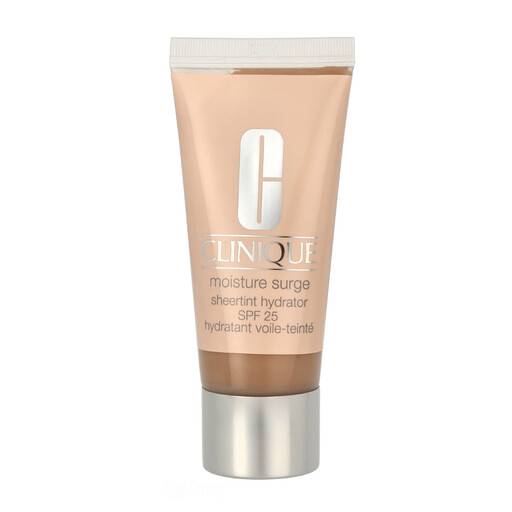
Why This Fits Their Persona: Ideal for users seeking a quick and reliable morning solution. This product combines hydration, a hint of colour, and sun protection in one step, significantly simplifying the daily routine.
The formula is available in several adaptive shades, rather than relying on a vague "universal" promise. The SPF 25 with broad-spectrum protection provides a solid foundation for daily protection in an urban environment.
According to the manufacturer, it provides up to 12 hours of hydration with hyaluronic acid and aloe water. The oil-free and fragrance-free formula is suitable for many skin types.
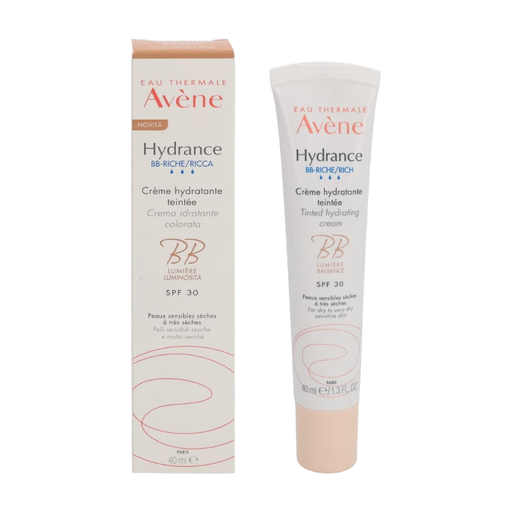
Why This Fits Their Persona: Specifically for those with sensitive, dry to very dry skin who need soothing care with reliable sun protection and a hint of colour. The formula is designed for maximum compatibility.
This product avoids the pitfall of unsuitable textures by being explicitly labelled as "RICH" for dry skin. The SPF 30 with broad-spectrum protection is a reliable standard for the daily defence of sensitive skin.
Contains soothing Avène Thermal Spring Water and nourishing shea butter. The formula is designed to provide long-lasting moisture and protect the skin from environmental aggressors.
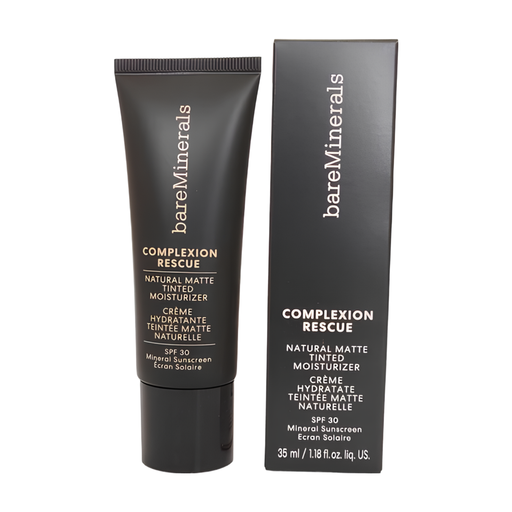
Why This Fits Their Persona: Perfect for those with oily or combination skin who want an even complexion without unwanted shine. This cream provides a matte finish and helps control oil production throughout the day.
The oil-free formula is explicitly designed for oily skin types and promises a matte finish, rather than being a universal "moisturiser" that would be too rich for this skin type. The mineral-based SPF 30 is often well-tolerated.
According to the manufacturer, it controls oil and shine for up to 12 hours. The formula is available in 20 shades, allowing for precise colour matching.
We've compiled a complete, up-to-date list of products that fully meet these strict selection criteria and safety regulations.
For everyday use, like commuting to work or brief periods outdoors, a tinted moisturiser with SPF 30 or higher, applied generously, can be sufficient. However, for prolonged and direct sun exposure, such as at the beach, hiking, or playing sports, a dedicated, water-resistant sunscreen with a high SPF is essential. This is because tinted products are often applied more sparingly, meaning the full stated SPF is not achieved.
Determining your skin's undertone is the first step. The main categories are cool (pinkish, bluish veins), warm (yellowish/golden, greenish veins), and neutral. Look for clues in product descriptions like "cool undertones" (C), "warm undertones" (W), or "neutral undertones" (N). Many brands offer digital shade-finder tools on their websites. When in doubt, it's often safer to choose a slightly lighter shade, as it's easier to blend and adjust.
Although the lines are often blurred, there are fundamental differences: