
Lieferung heute & morgen

Qualitätsgarantie

Willkommens-Angebote freischalten: KOSTENLOSE Lieferung | Bis zu 80 % RABATT | Kostenlose 30-Tage-JoyPlus-Testphase
App herunterladen
A well-organised tool bag is the foundation for efficient work, whether you're on a construction site, doing assembly, or in your home workshop. Constantly searching for the right screwdriver or the correct pair of pliers not only wastes time but also causes frustration. A thoughtfully designed bag protects your tools from damage and the elements, ensuring you have everything you need within easy reach.
This article serves as a practical guide. We will highlight the key features of a functional tool bag and introduce a selection of models, each suited for different applications due to their specific characteristics.
Before making a decision, you should consider a few fundamental criteria. The needs of an electrician differ from those of a technician or an ambitious DIYer.
A heavy-duty tool bag must withstand the rigours of a demanding workday. Look for durable materials and solid construction.
Order is crucial for working quickly. A tool bag with multiple compartments allows you to store every tool in its designated place.
A fully loaded tradesperson's bag can reach a significant weight. Ergonomic carrying options are therefore essential.
Based on the criteria mentioned, we have compiled a selection of models that stand out for their functionality and material properties.
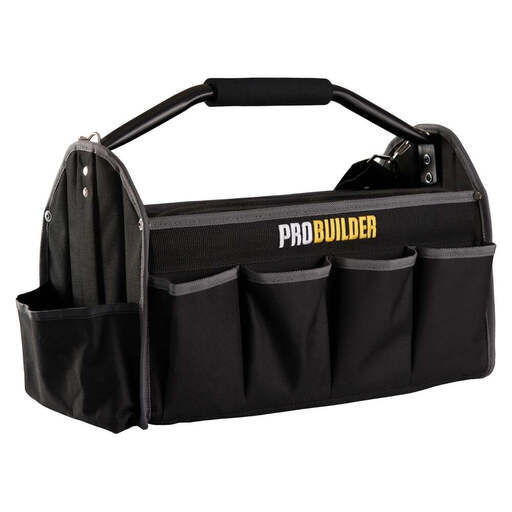
Why It Stands Out: This 17-inch bag from PROBUILDER is a versatile all-rounder. Made from durable 600D polyester, it provides a solid foundation for everyday use. Its special feature is the 360° exterior pockets, which allow quick access to a variety of tools without having to open the bag.
Advantages:
Who It's For: This model is a great choice for tradespeople and DIYers looking for a spacious and well-organised bag for a wide range of tools.
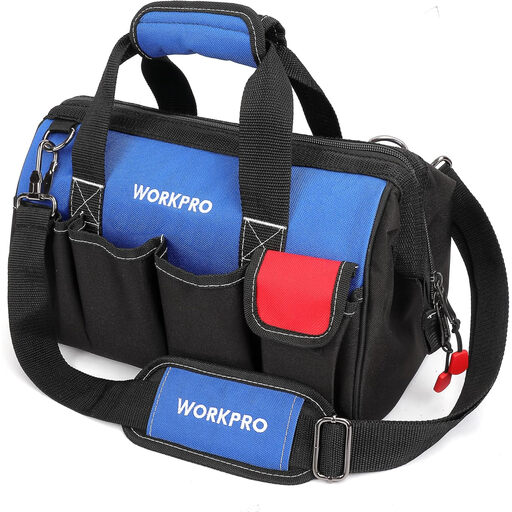
Why It Stands Out: The WORKPRO 14-inch bag is specifically tailored to the needs of technicians and electricians. Its standout feature is the waterproof and non-slip PE base, which reliably protects the contents from moisture. Its compact design makes it an ideal technician's bag.
Advantages:
Who It's For: Ideal for electricians, technicians, and anyone who needs a compact, extremely durable, and waterproof tool bag for use in demanding conditions.
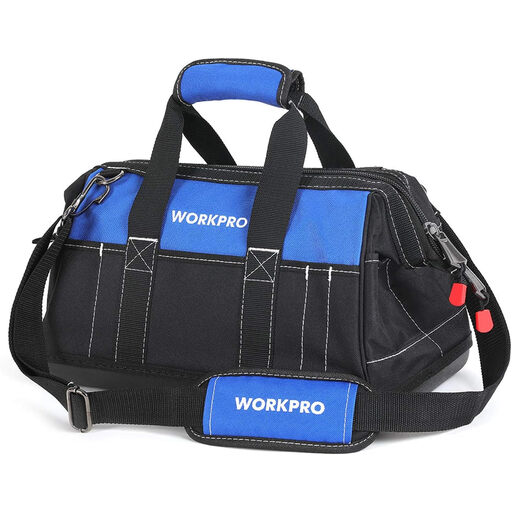
Why It Stands Out: This model from WORKPRO is designed as a professional-grade tool bag. It combines an extremely durable 600D polyester fabric with a solid, waterproof hard-shell base. With a total of 21 pockets and 8 straps, it offers maximum organisational options for a large tool collection.
Advantages:
Who It's For: Perfect for professional tradespeople and demanding DIY enthusiasts who need an extremely heavy-duty bag with maximum storage space and superior protection for their tools.
The models presented cover common requirements. However, if you haven't found the perfect solution for your specific needs yet, you may find the right model in our broader selection.
? Discover more tool bags here
1. What is better: a toolbox or a tool bag? The choice depends on the place of use and personal preference. A toolbox made of hard plastic or metal offers maximum protection against impacts and is often lockable. A tool bag, also known as a tool tote, is more flexible, lighter, and adapts better to tight spaces. Thanks to its many compartments, it often allows for better organisation of hand tools.
2. How do I organise my tool bag most efficiently? Place heavy and large tools at the bottom of the main compartment to keep the centre of gravity low. Frequently used tools like screwdrivers and pliers belong in the easily accessible interior or exterior pockets. Small parts like screws or wall plugs should be kept in small, sealable boxes or the designated compartments to prevent them from getting mixed up.
3. What should you look for in a waterproof tool bag? The crucial element is the base. A fully moulded, seamless hard-shell base made of plastic (PE) offers the best protection against standing water. Ensure that the base material extends up the sides to also protect the lower areas of the bag. Water-resistant zips and a densely woven upper material like polyester complete the protection.