
Lieferung heute & morgen

Qualitätsgarantie

Willkommens-Angebote freischalten: KOSTENLOSE Lieferung | Bis zu 80 % RABATT | Kostenlose 30-Tage-JoyPlus-Testphase
App herunterladen
By the Joybuy Product Recommendation OfficerPublished July 28, 2026
Purchasing a new tool set can quickly become complicated. The market offers a bewildering array of options, from compact repair kits to comprehensively stocked tool chests. But not every shiny new set delivers on its promises. Many buyers only realize after the fact that they've fallen into one of several common traps. This guide will help you separate the wheat from the chaff and make an informed decision.
A common problem is misleading kit composition. Large sets advertise a high piece count, but a closer look often reveals they consist of numerous small, rarely used bits, while essential tools are either missing or of poor quality. Another source of trouble is inferior material. Tools made from overly soft steel wear out quickly, stripping screw heads and turning the job from productive to frustrating. Finally, the tool case itself is often a weak point: brittle plastic hinges or inadequate clasps cause tools to fall out of place during transport, destroying any sense of order.
To avoid a bad purchase, you should focus on a few crucial technical parameters. These form the foundation for a durable and functional tool set.
The quality of the steel used is the most important factor for the durability of tools subjected to high forces. For a socket set or wrenches, Chrome Vanadium steel (Cr-V) has established itself as the industry standard. This alloy provides high strength and toughness, preventing tools from breaking or deforming under load. A matte or satin finish can also offer better corrosion protection than a simple, shiny chrome plating, which can chip or flake off if damaged. Look for precisely machined edges on sockets and screwdriver bits to ensure optimal torque transfer and prevent damage to screw heads.
Think carefully about the tasks you need the tools for. A universal set for general DIY needs is significantly different from specialized workshop equipment.
A well-equipped tool case shouldn't just contain many pieces, but the right pieces for your specific application.
Instead of making a blanket recommendation, we've identified products tailored to specific user profiles and their needs.
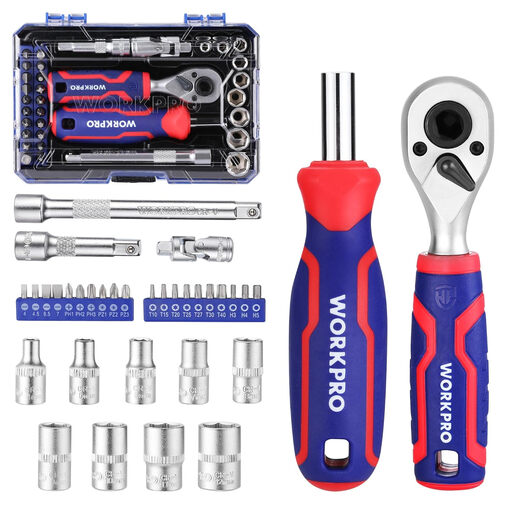
Why this set is a great fit: Perfect for basic household repairs, furniture assembly, and minor bicycle adjustments. It's compact, easy to store, and its 1/4-inch drive covers the most common small bolt sizes encountered in daily life.
This set avoids the "unnecessary filler" trap. It focuses on a practical selection of sockets and bits made from Chrome Vanadium steel, rather than advertising a high piece count of low-quality parts.
The compact and well-organized case ensures all parts stay in place. The 72-tooth ratchet allows for precise work even in tight spaces.
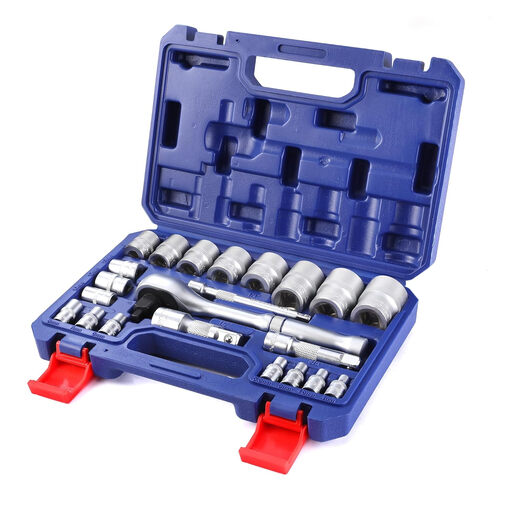
Why this set is a great fit: The innovative 3-in-1 ratchet covers 1/4", 3/8", and 1/2" drive sizes. This makes the set extremely versatile for various automotive tasks, from the engine bay to the chassis, without constantly needing to switch tools.
Instead of requiring three separate ratchets and cases, this set bundles the functionality into one tool. It's an efficient addition to any workshop, preventing the purchase of redundant tools.
The sockets are made from high-strength Cr-V steel and designed for high-torque applications. The included extensions make it easier to work in hard-to-reach areas.
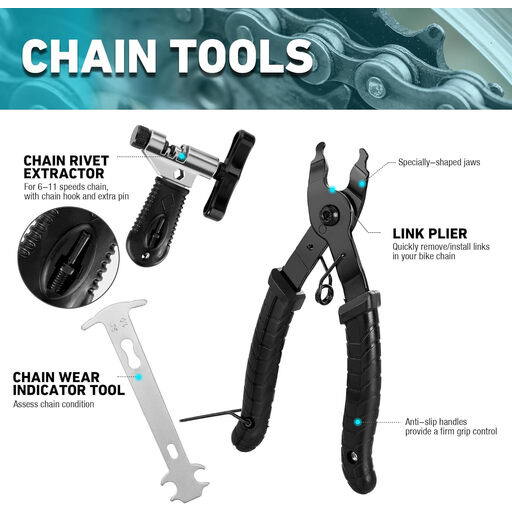
Why this set is a great fit: This kit is specifically designed for bicycle maintenance, containing tools for the chain, crank, cassette, and pedals that are missing from general-purpose sets. It's an all-in-one solution for servicing mountain bikes and road bikes.
It solves the problem of incomplete universal sets that are unsuitable for specific bike components. Each tool is purpose-built, preventing damage to sensitive parts.
All tools are housed in a sturdy case with precision-molded slots. This keeps everything organized and protects the high-quality bicycle tools from damage and loss.
We've compiled a complete, up-to-date list of products that fully meet these strict selection criteria and safety standards.
Look for the Chrome Vanadium steel (Cr-V) designation, as this material ensures high strength and durability. A satin or matte finish is often an indicator of high-quality manufacturing and provides better corrosion resistance than a simple shiny chrome plating, which can chip if damaged.
Yes, it's highly recommended for many maintenance tasks. While a standard set might suffice for simple jobs like adjusting brakes, components like the crankset, cassette, or chain require special tools (e.g., a crank puller, chain whip, cassette removal tool). A dedicated bicycle tool kit is the more efficient and safer choice to avoid damaging components.
A torque wrench is essential for safety-critical fasteners on a vehicle. Components like wheels, brake parts, or cylinder head bolts must be tightened to a precise torque specified by the manufacturer. Incorrect torque can lead to material fatigue, damage, or the connection loosening while driving. For anyone who regularly works on their own car, a torque wrench is a necessary investment in their own safety.