
Lieferung heute & morgen

Qualitätsgarantie

Willkommens-Angebote freischalten: KOSTENLOSE Lieferung | Bis zu 80 % RABATT | Kostenlose 30-Tage-JoyPlus-Testphase
App herunterladen
A well-equipped tool set is the foundation for countless projects in the home, garage, or workshop. But the market is overwhelming, and many offers that seem attractive at first glance turn out to be poor investments. Before you decide to buy, it's important to know the common pitfalls that often lead to frustration and unnecessary expenses.
Many buyers focus on superficial features and overlook crucial quality aspects. You should avoid these three mistakes:
To make an informed decision, you should focus on the core technical features that determine the quality and durability of a tool set.
By far the most important criterion is the material used. Look for tools made from chrome vanadium steel (often marked as Cr-V). This alloy offers high hardness, toughness, and wear resistance. It ensures that wrenches and sockets maintain their shape even under high torque and don't "round off" bolt heads. A clean, burr-free finish and precision-fit tool heads are further indicators of good manufacturing quality.
Think carefully about the primary tasks you will need the tools for. The requirements for a tool set vary widely:
Instead of making a blanket recommendation, we have selected products tailored to specific user profiles and their requirements.
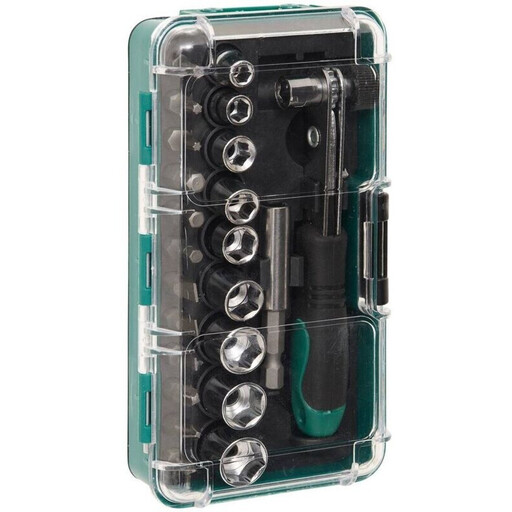
Why this set is a good fit: Ideal for those who need a compact and versatile tool for quick repairs, like assembling furniture or tightening screws on a bike. It's small enough to fit in a kitchen drawer.
This set avoids the "more is better" trap by focusing on the most common bits and sockets (4-12 mm) that are actually needed around the house. No unnecessary filler.
The ergonomic ratchet handle and magnetic adapter allow for quick changes and comfortable use. The ultra-compact case ensures everything stays organised and is easy to store.
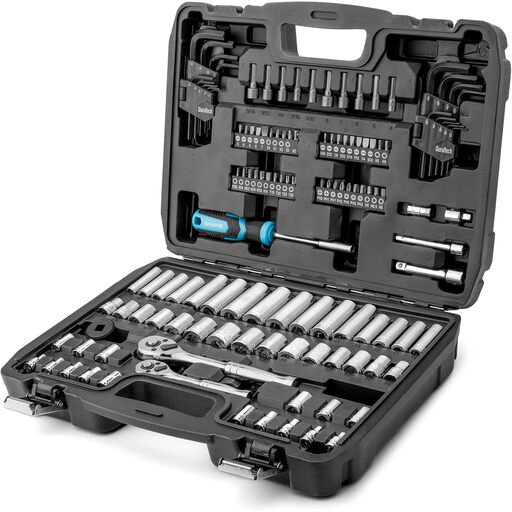
Why this set is a good fit: Perfect for the dedicated DIYer who regularly works on various projects—from car repairs to furniture building. It offers a comprehensive yet practical selection.
This set sidesteps the trap of poor-quality materials. According to the manufacturer, the tools are made from heat-treated chrome vanadium steel, which promises high hardness and durability.
The combination of 1/4" and 3/8" drives, metric/SAE sockets, and an extensive bit set makes it extremely versatile. The sturdy case keeps all 121 pieces securely in place.
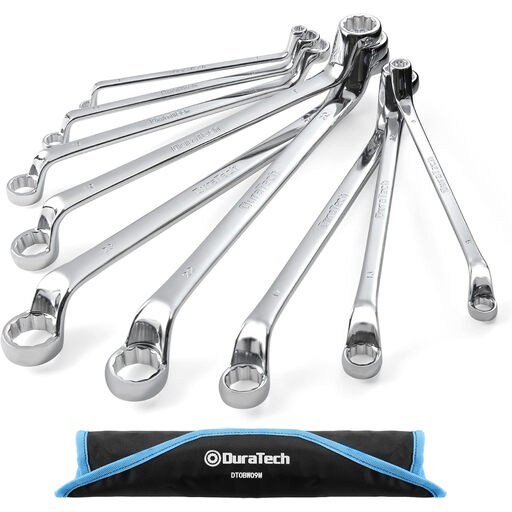
Why this set is a good fit: For mechanics and hobbyists who regularly deal with recessed or obstructed bolts in engine bays or on machinery where a standard wrench can't reach.
This set solves a specific problem rather than trying to cover everything. It's a targeted addition that extends the functionality of a standard tool kit instead of overloading it with redundancies.
The 75-degree offset design provides crucial clearance for your hands and allows access to fasteners in tight spaces. The included roll-up pouch ensures organised storage.
We have compiled a complete, up-to-date list of products that fully meet these strict selection criteria and applicable regulations.
You can identify a high-quality tool set by several features. The most important is the material: look for the Chrome Vanadium Steel (Cr-V) marking. Also, check the workmanship: the tools should not have any sharp edges or burrs. The precision fit of sockets and wrenches is also crucial to prevent slipping and damaging bolt heads.
The number of pieces is less important than the right selection. For general home use, a set with 20 to 50 carefully selected pieces is often more useful than a 200-piece set full of filler. A good basic kit includes various screwdrivers, pliers, a hammer, a tape measure, and a small socket set with the most common sizes (e.g., 8-19 mm).
Regular carbon steel is relatively soft and prone to corrosion. Chrome vanadium steel is an alloy to which chromium and vanadium are added. Chromium significantly increases hardness and corrosion resistance. Vanadium improves the steel's toughness and wear resistance. The result is a tool that is much more durable and can withstand higher loads.