
Lieferung heute & morgen

Qualitätsgarantie

Willkommens-Angebote freischalten: KOSTENLOSE Lieferung | Bis zu 80 % RABATT | Kostenlose 30-Tage-JoyPlus-Testphase
App herunterladen
On modern cars and bicycles, applying the correct torque isn't just for perfectionists—it's a safety-critical necessity. A bolt that is too loose can come undone while you're on the move, while an overtightened bolt can damage the component or strip the threads. Choosing the right tool is therefore crucial.
This article serves as your guide. It introduces different types of torque wrenches and explains the technical parameters that are essential for making an informed purchasing decision. Our goal is to provide you with an objective basis for finding the perfect torque wrench set for your specific needs.
Before making a decision, you should consider a few technical fundamentals. The following points will help you objectively evaluate product features.
The most important factor is the torque range, measured in Newton-metres (Nm). Different tasks require different levels of force:
A single wrench can rarely cover all applications. Therefore, a tool set for cars and bikes is often a sensible investment, as it contains multiple wrenches or adapters for different ranges.
There are essentially two types of torque wrenches:
The accuracy of a torque wrench is specified as a percentage deviation from the set value. Values of ±3% to ±4% are common. For precision work, higher accuracy is advantageous. Many manufacturers include a calibration certificate that documents the measurement accuracy of the specific tool.
Also, pay attention to what's included in the box. A good set contains not only the wrench but also matching sockets (bits), extensions, and a sturdy storage case to protect the precision instrument from damage.
Based on the criteria mentioned, we have compiled a selection of products that are well-suited for different user groups due to their specific features.
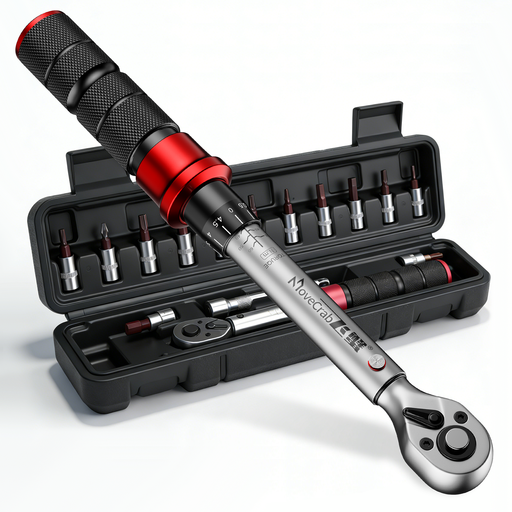
Why It Stands Out: This set is specifically designed for precision work at low torque. The ability to measure torque in both directions (clockwise and counter-clockwise) and the fine-toothed 72-tooth ratchet head made of chrome-molybdenum steel make it a functional tool for delicate tasks.
Advantages:
Who Is It For? This set is a great choice for cyclists and motorcyclists who want to perform maintenance on sensitive components like carbon handlebars, stems, or derailleur parts themselves.
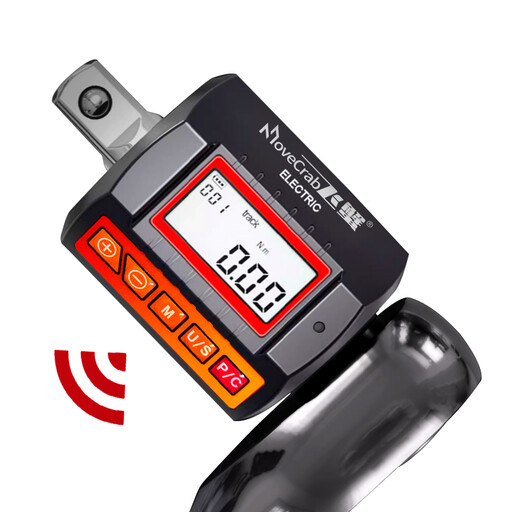
Why It Stands Out: This digital torque adapter offers high flexibility. It can be combined with existing ratchets and, thanks to the included adapters for 1/4", 3/8", and 1/2" drives, covers a very wide range of applications. The digital features, such as data storage and various working modes, provide advanced control options.
Advantages:
Who Is It For? Ideal for tech-savvy users who want to upgrade their existing tool collection with a precise, digital measurement function. Its high flexibility makes it a universal tool for cars, motorcycles, and bicycles.
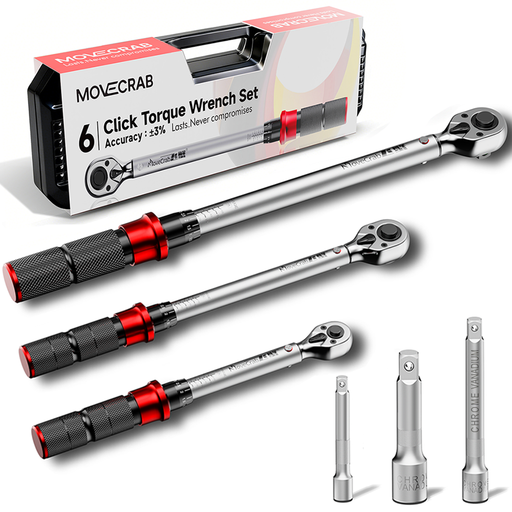
Why It Stands Out: This set is a comprehensive solution for ambitious DIY enthusiasts. It includes three separate mechanical torque wrenches that together cover an extremely wide range from 5 Nm to 220 Nm. This makes it possible to handle virtually all common tasks on bicycles, motorcycles, and cars.
Advantages:
Who Is It For? This torque wrench set is aimed at users looking for an all-in-one solution for a wide variety of fastening jobs who value having dedicated tools for each torque range. It is a comprehensive tool set for cars and bikes.
The products featured here cover common use cases. If you haven't found the right solution for your specific project or are looking for other specialty tools, it's worth taking a look at our broader assortment.
Browse our Niche Auto category to find more tools and accessories.
The frequency of calibration depends on usage. For professional use, an annual certified calibration is standard. For occasional hobbyist use, it is recommended to have the tool checked every 1-2 years, or immediately after it has been dropped, as an impact can throw the mechanism out of alignment.
This is strongly discouraged. A torque wrench is a precision measuring instrument. The high breakaway torque required to loosen tight bolts can permanently damage the release mechanism and its calibration. Always use a standard wrench, a regular ratchet, or a breaker bar for loosening.
The inch measurement refers to the size of the square drive where the socket is attached. A 1/4-inch drive is smaller and designed for low-torque applications, such as those typically found on a bicycle torque wrench. A 1/2-inch drive is larger and more robust, designed for the high torque required when changing a wheel with a car torque wrench.