
Lieferung heute & morgen

Qualitätsgarantie

Willkommens-Angebote freischalten: KOSTENLOSE Lieferung | Bis zu 80 % RABATT | Kostenlose 30-Tage-JoyPlus-Testphase
App herunterladen
The selection of toy tractors is vast, ranging from simple models for toddlers to highly detailed replicas for collectors. However, not every model that looks impressive at first glance lives up to its promise in the playroom. Many buyers invest in products that either break quickly or cause frustration instead of joy due to mismatched features. This guide will help you navigate the common pitfalls and find a model that perfectly suits your child's age and interests.
Before we dive into the selection criteria, it's important to understand the most common issues that can lead to a poor purchase.
To avoid these pitfalls, you should check three key aspects before buying. These are crucial in determining the tractor's durability, play value, and safety.
The choice of material is a direct indicator of its robustness. The two leading materials are:
Pay attention to a clean finish without sharp edges or burrs, especially on models intended for younger children.
The scale indicates the size ratio of the model to the original vehicle and is crucial for compatibility with accessories.
A tractor with trailer toy only makes sense if the hitches on the tractor and trailer are compatible. Therefore, always check that the desired components are from the same manufacturer and product line.
The features should match the child's developmental stage.
Here are some recommendations tailored to different needs and age groups.
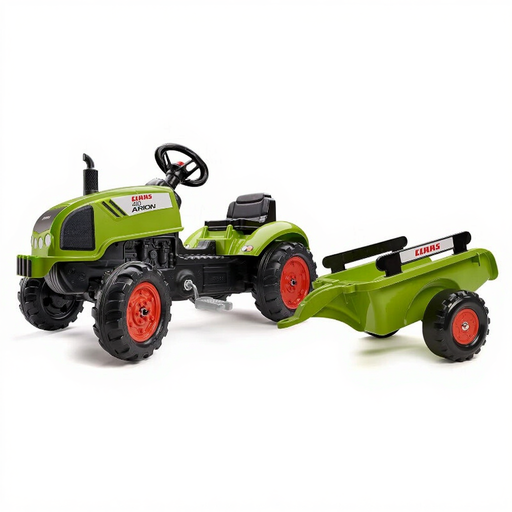
Why This Fits Their Persona: This model is a classic pedal tractor designed specifically for the needs and size of toddlers. It encourages movement and gross motor skills, while the trailer allows for early role-playing.
It bypasses the complexity trap by being limited to a few robust functions like steering, pedalling, and a simple trailer. The material is designed for durability during outdoor use.
Actively promotes physical development. The detachable trailer offers added play value for transporting sand, leaves, or other toys.
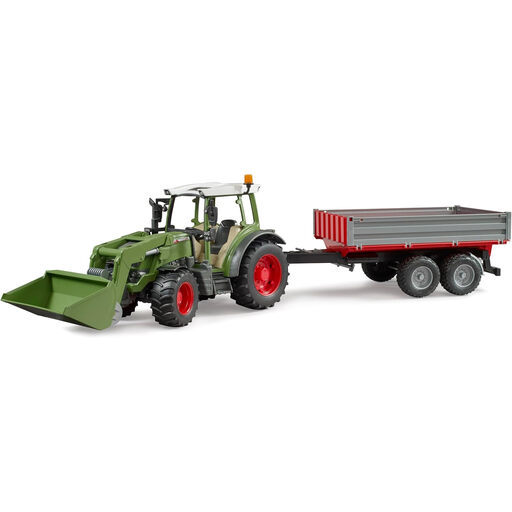
Why This Fits Their Persona: This set is ideal for children who love realistic play scenarios. The functional front loader and tipping trailer offer a wide range of play options that go beyond simply driving.
It solves the system dead-end problem by being part of the vast Bruder 1:16 scale ecosystem. The tractor can be combined with countless other trailers and implements. The ABS plastic prevents the material trap.
High play value thanks to the complete set of a tractor, front loader, and trailer. The functions are robust and easy for children's hands to operate.
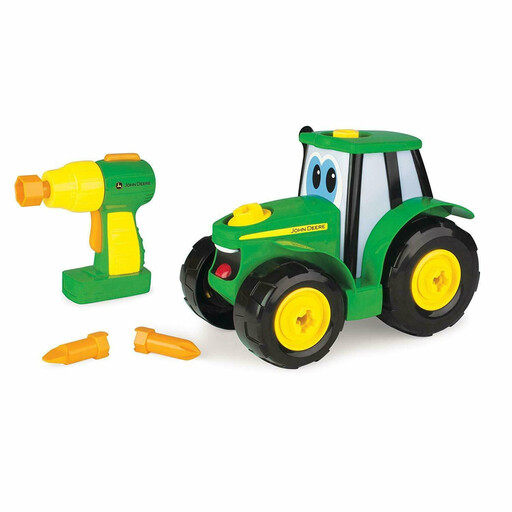
Why This Fits Their Persona: This toy is perfect for children who not only want to play but also want to understand how things work. It combines the fun of a tractor with the joy of building and tinkering.
Disassembly isn't a defect here; it's the core play concept. It avoids the material trap, as the 16 large parts and the child-safe drill are specifically designed for repeated assembly and disassembly.
Specifically promotes fine motor skills, technical understanding, and problem-solving abilities. The battery-powered toy drill provides an authentic building experience.
We have compiled a complete, up-to-date list of products that fully meet these strict selection criteria and safety standards.
That depends on the available space and the desired level of detail. The 1:16 scale (e.g., Bruder) is large, robust, and easy for younger children's hands to grasp. It's excellent for playing both indoors and outdoors. The 1:32 or 1:50 scales (e.g., Siku) are more compact, allowing for the creation of larger agricultural worlds in a smaller space, and are often very popular with collectors.
Generally, no. Due to the different scales (Bruder is mostly 1:16, Siku is mostly 1:32 or 1:50) and different hitch systems, trailers and attachments from one brand will not fit the tractors of the other. To ensure compatibility, it is advisable to stick within one brand and product line.
A pedal tractor is generally suitable for children from about 2 to 5 years old. The key factor is that the child can sit securely on the seat, reach the pedals with their feet, and coordinate the pedalling motion. Pay attention to the manufacturer's recommendations for height and look for an adjustable seat so the vehicle can grow with the child.