
Lieferung heute & morgen

Qualitätsgarantie

Willkommens-Angebote freischalten: KOSTENLOSE Lieferung | Bis zu 80 % RABATT | Kostenlose 30-Tage-JoyPlus-Testphase
App herunterladen
The selection of toy tractors is huge and can be overwhelming at first glance. From simple models for toddlers to highly detailed replicas for collectors, finding the right model is often harder than you think. Many buyers fall into common traps that lead to disappointment in the playroom or unnecessary expenses. Before you make a decision, it's important to know the most common pitfalls.
The 3 Most Common Traps When Buying a Toy Tractor:
This guide will help you avoid these pitfalls and make an informed decision based on objective criteria.
To find the right toy tractor, you shouldn't be guided by marketing promises, but rather focus on verifiable facts. Three features are of key importance.
The material is crucial for the toy's durability and safety. There are two primary categories here:
Regardless of the material, a clean finish without sharp edges or burrs is a must. The CE marking on the packaging confirms that the product meets the EU's essential health and safety requirements.
The scale indicates the size ratio of the model to the original vehicle and is the key to compatibility within a play world.
Always check the scale before buying to ensure that the new tractor fits with existing accessories.
The features of a toy tractor should match the child's developmental stage.
Instead of making a one-size-fits-all recommendation, we have selected models that suit different needs and age groups.
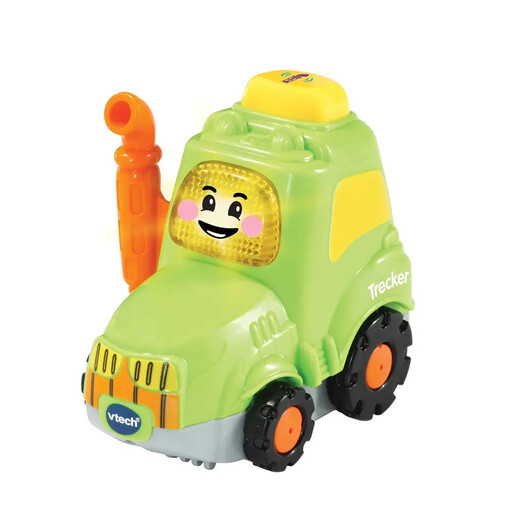
Why this model is a good fit: This toy is specially designed for the little ones. It is robust, has no small parts that can be swallowed, and promotes sensory development with cheerful phrases, melodies, and a light-up button without being overwhelming.
The model is perfectly tailored to the motor and cognitive skills of toddlers, thus avoiding the trap of the wrong age rating. Its sturdy construction prevents material breakage.
Responds to the movement of the wheels and is compatible with the "Magic Sensors" of the Toot-Toot Drivers playsets, which expands its play value.
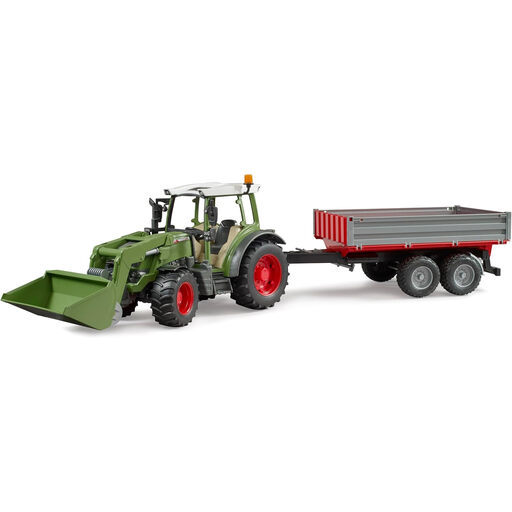
Why this model is a good fit: This set offers a complete package for immediate fun. The tractor has a fully functional front loader and the trailer has folding side panels. Ideal for children who want to re-enact farming activities.
The set solves the compatibility problem as the tractor and trailer are perfectly matched. The ABS plastic used is robust and durable, which avoids the material trap.
High play value thanks to many functions (steerable axle, detachable front loader). As part of the Bruder 1:16 system, it can be expanded with almost all other agricultural equipment from the brand.
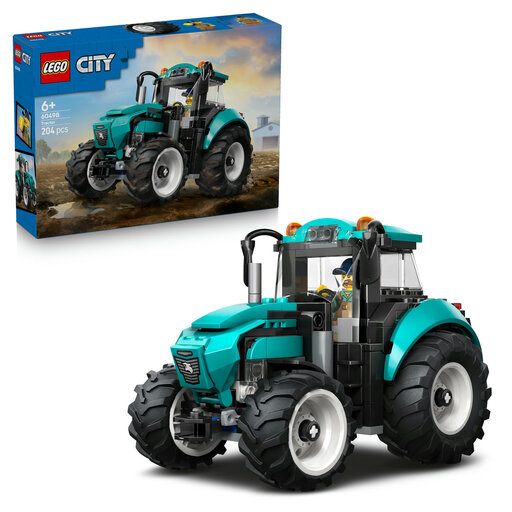
Why this model is a good fit: This set combines the fun of building with subsequent role-play. Children who enjoy constructing from instructions and love vehicles will find a motivating challenge here. The finished model is a fully-fledged toy.
The value here lies in the building process itself, which bypasses the trap of being purely overloaded with functions. As part of the LEGO universe, compatibility with all other LEGO City sets is guaranteed.
Proven to promote fine motor skills, spatial reasoning, and concentration. The included interactive building instructions in the LEGO Builder App provide additional support.
We have compiled a complete, up-to-date list of products that fully meet these strict selection criteria and UK safety regulations.
That depends on the age and intended use. For active play in the playroom and outdoors, the 1:16 scale (e.g., Bruder) is ideal, as the models are large and robust. For children who are already building a collection or value a wider selection of machines, 1:32 or 1:50 (e.g., Siku) is a good choice. The 1:87 scale is primarily intended for collectors and for integration into model railway landscapes.
Both materials have their merits. High-quality ABS plastic, as used by Bruder, is very impact-resistant and flexible. It doesn't break easily and is therefore well-suited for intense, sometimes rough, play. Die-cast metal (Siku) is heavier and extremely stable, which gives it a high-quality feel. However, on hard impacts, the paint can chip or small plastic attachments can break. For the sandbox, a robust plastic model is often the more practical choice.
Most toy tractors without electronics can be cleaned simply with a damp cloth and, for heavier soiling, with mild soapy water. Avoid aggressive cleaning agents as they can damage the plastic or paint. Models with electronic components (e.g., lights or sound) must not be submerged in water; here, the surface should only be wiped with a damp cloth. Allow the toy to air dry completely after cleaning.