
Lieferung heute & morgen

Qualitätsgarantie

Willkommens-Angebote freischalten: KOSTENLOSE Lieferung | Bis zu 80 % RABATT | Kostenlose 30-Tage-JoyPlus-Testphase
App herunterladen
The right trekking poles can transform a hike from a strenuous ordeal into a comfortable experience. They provide stability on uneven terrain, reduce strain on your joints during descents, and can improve your rhythm on ascents. However, the market is flooded with models featuring a wide variety of features and price points. Those who buy without being informed often invest in products that aren't up to the task or are simply unsuitable for their personal needs.
Before you make a decision, you should be aware of the most common pitfalls that can lead to a bad purchase:
To avoid a bad purchase, focus on the technical features that directly impact the function and durability of your hiking poles.
The choice of material is a fundamental decision between durability and weight.
Adjustable trekking poles are standard today. The system used to adjust the length is crucial for handling and reliability.
The grip is your direct connection to the pole.
Based on these objective criteria, we have identified some models that represent a considered choice for specific user profiles.
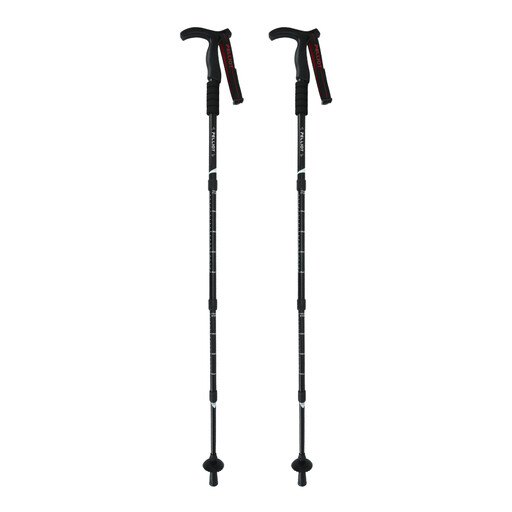
Why this model is a good fit: Ideal for hikers looking for reliable, basic equipment for tours in low mountain ranges or on well-maintained trails. The robust aluminum is forgiving of less careful handling and offers high durability for its entry-level price.
This model relies on a proven aluminum alloy, thus avoiding the risk of brittle carbon fibers in the lower price segment. Durability is clearly prioritized over minimal weight here.
The 4-section telescopic system allows for a very compact pack size, so the poles can be easily stowed on or inside a backpack when not in use.
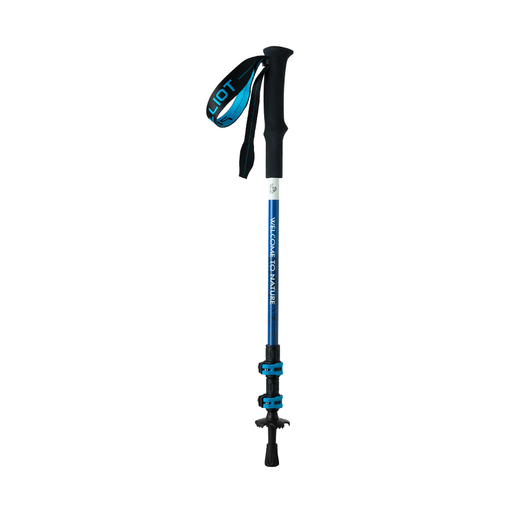
Why this model is a good fit: For experienced hikers and alpinists who want to save weight on long, demanding tours. The carbon material reduces arm fatigue, while the extended grip allows for quick grip changes in varied terrain without adjusting the length.
The high-quality, extended EVA foam grip provides a secure hold even in wet conditions and helps prevent blisters—a clear advantage over the often-used hard plastic grips.
The combination of ultralight carbon fibre and the functional, extended grip makes this pole an efficient tool for technically demanding tours with significant elevation changes.
We have curated a selection of products that meet various requirements for a telescopic pole.
On level ground, the length is correct when your forearm forms a 90-degree angle with your upper arm while the pole is standing vertically. As a rule of thumb: your height in cm x 0.68. When ascending, the poles are set slightly shorter for better support. When descending, they are set longer to effectively relieve the joints.
Aluminum poles are generally considered more robust. They may bend under heavy stress but rarely break abruptly. Carbon is extremely stiff and stable, but it can splinter from a hard, point-specific impact, for example, on a sharp rock edge. The lifespan of both materials depends heavily on the intensity of use and proper care.
Not necessarily. A higher price is often justified by lighter materials like carbon, more elaborate grips, or special shock-absorption systems. However, for many hikers, especially on less extreme tours, a solid aluminum pole offers better value for money. The choice should be based on your personal use case and your own priorities—weight, durability, or comfort.