
Lieferung heute & morgen

Qualitätsgarantie

Willkommens-Angebote freischalten: KOSTENLOSE Lieferung | Bis zu 80 % RABATT | Kostenlose 30-Tage-JoyPlus-Testphase
App herunterladen
A convertible tricycle seems like the perfect solution: a single vehicle that grows with your child for years, from their first parent-pushed outings to their first independent attempts at pedalling. However, the market is flooded with models whose promises often fall short in practice. Before you make a decision, it's crucial to understand the common pitfalls and know which features truly matter.
Many parents invest in a tricycle only to find it impractical, unsafe, or already too small after just a few months. These three problems are especially widespread:
To avoid a bad investment, focus on the technical specifications that guarantee long-term, safe use.
A versatile model adapts to your child's motor skill development. A typical 4-in-1 tricycle offers the following phases:
Check carefully whether the advertised stages represent genuinely useful and easy-to-perform conversions.
The quality of the components determines ride comfort and durability.
Instead of making a one-size-fits-all recommendation, we have identified models that are tailored to the specific needs of families.
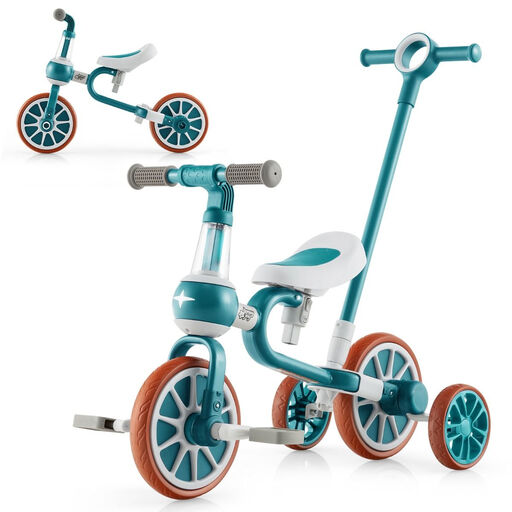
Why it's a match: Ideal for parents seeking a single, long-term solution. This model covers the full development from a push-along to an independent tricycle, maximizing its lifespan and the value of the investment.
The explicit 4-in-1 design ensures that each developmental stage is supported with meaningful conversions, preventing the tricycle from becoming prematurely obsolete.
The push handle is directly connected to the steering mechanism, allowing for precise control by the parent. The various conversion stages are clearly defined.
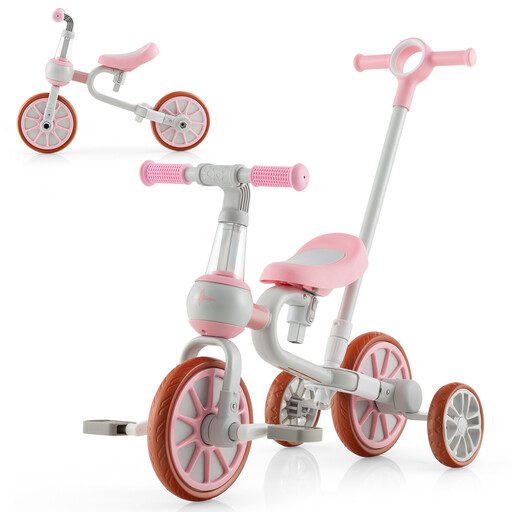
Why it's a match: For families who want the full functionality of a 4-in-1 model without breaking the bank. It offers the necessary versatility for a child's first bike at an accessible price point.
Despite its attractive price point, this model features an adjustable push handle and the fundamental conversion options that allow for longer use than simple push toys.
Delivers excellent value by combining push and pedal functions. The 2-4 year age range is realistic for its core features.
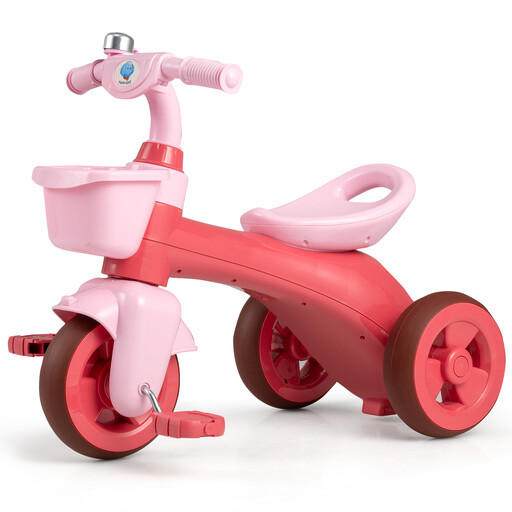
Why it's a match: Perfect for parents looking for a robust, straightforward tricycle. It concentrates on the core functions—pushing and pedalling—and emphasizes safety-critical details like the steering limiter.
Instead of advertising numerous conversion stages, this model focuses on a stable core construction. The steering limiter directly addresses the safety issue of oversteering and tipping.
The simple, robust design and integrated steering limiter make it a reliable and safe choice for a child's first riding attempts.
We've compiled a comprehensive, up-to-date list of products that meet these selection criteria and current safety standards.
Most models are designed for use from around 10 to 18 months of age in push mode. In this phase, they essentially replace a stroller. The full functionality as a tricycle for pushing and later for independent riding extends to an age of about 4 to 5 years. The deciding factor is not just age, but above all, your child's individual physical development and size.
There are two basic systems. On higher-quality models, the push handle is mechanically linked to the front wheel or handlebar. Moving the handle left or right results in a direct steering motion of the wheel. Simpler models often have a rigid push handle that is only for pushing. With these, parents must lift the tricycle to correct its direction, which is significantly less convenient.
A tricycle and a balance bike promote different skills. The tricycle trains the coordination required for pedalling. A balance bike, on the other hand, primarily trains the sense of balance, which is considered a crucial preliminary step for riding a real bicycle. While some multifunctional models can be converted into a type of balance bike, a dedicated balance bike is generally more effective for balance training. However, a convertible tricycle is an excellent choice as a child's first bike to get them accustomed to movement and control.