
Lieferung heute & morgen

Qualitätsgarantie

Willkommens-Angebote freischalten: KOSTENLOSE Lieferung | Bis zu 80 % RABATT | Kostenlose 30-Tage-JoyPlus-Testphase
App herunterladen
Looking to give your dishes a deeper, more savoury note that goes beyond salty, sweet, sour, and bitter? Then you're looking for umami, the so-called fifth taste. Whether you're making an authentic Japanese broth or simply want to enhance your everyday cooking, the wide array of seasonings can be overwhelming. This guide offers clear direction and introduces you to various products, helping you buy the right umami seasoning to meet your culinary needs.
Choosing the right product depends on your cooking style and the desired result. Here are three key points to help you decide.
Umami seasonings can be broadly divided into two categories. Products like Hondashi are based on traditional ingredients, primarily bonito flakes (dried, smoked tuna), and provide a complex, savoury, fish-forward aroma that is ideal for soups and broths. In contrast, pure monosodium glutamate (MSG) is a flavour enhancer that boosts the natural taste of ingredients without adding a distinct flavour of its own. It can be used universally in savoury dishes.
If you specifically want to prepare authentic Japanese dishes like miso soup, ramen, or oden, a dashi powder like Hondashi is the natural choice. It provides the characteristic foundation for these meals. However, if you're looking for an ingredient to universally enhance and deepen the flavour of stews, stir-fries, marinades, or even vegetables, pure MSG is a practical option.
The available package sizes are tailored to different needs. For home cooks just beginning to explore the fifth taste, smaller 200 g containers are ideal. Those who cook Asian cuisine regularly or have higher usage will benefit from larger 500 g or 1 kg packs, which often offer better value for money. Food service businesses typically opt for the kilogram-sized packages.
Here is a selection of products from the Ajinomoto brand, which is renowned for its umami seasonings.
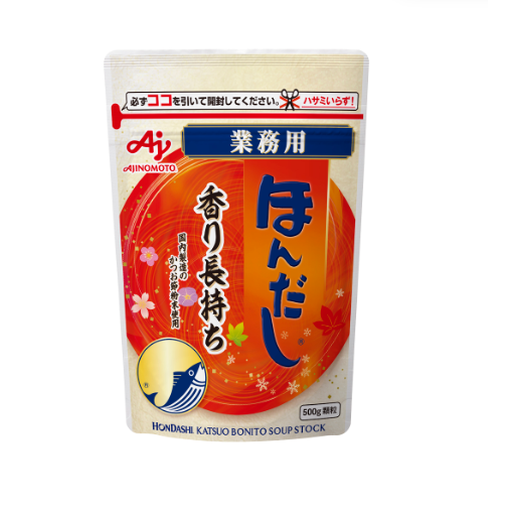
What sets it apart: Hondashi is an instant broth powder based on carefully selected bonito flakes. It serves as the foundation for dashi, the fundamental broth in Japanese cuisine. The formula combines salt, sugar, and bonito flavours to create a balanced taste profile.
Benefits at a Glance:
Who is it for? For cooks who appreciate the authentic taste of Japanese soups and stews and are looking for a quick yet flavourful foundation.
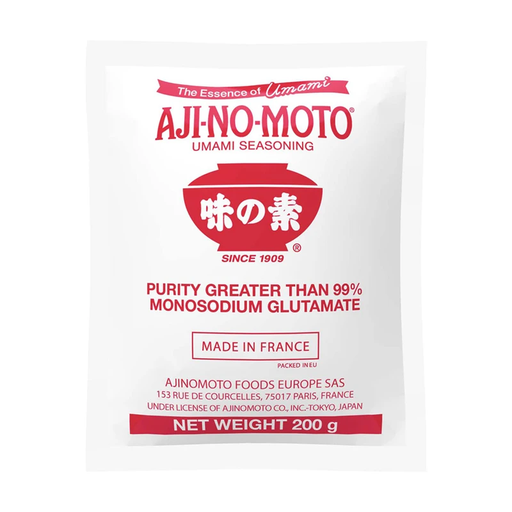
What sets it apart: This product is 100% monosodium glutamate (E621) and acts as a pure umami flavour enhancer. It contains no other flavours and serves exclusively to intensify and round out the natural taste of meat, poultry, vegetables, and sauces.
Benefits at a Glance:
Who is it for? For food enthusiasts and home cooks looking for a versatile flavour enhancer to easily intensify the natural taste of their dishes.
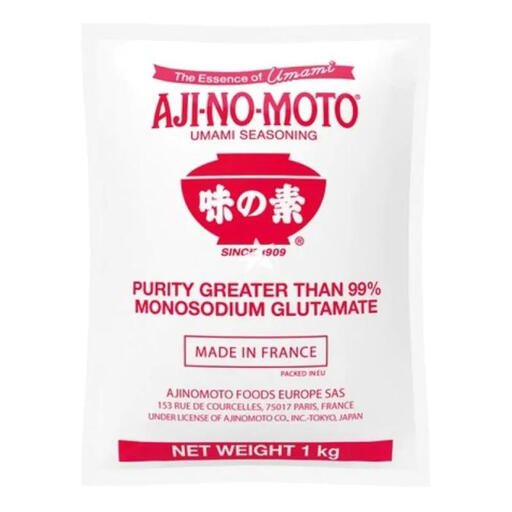
What sets it apart: This bulk pack also contains pure monosodium glutamate, which, according to the manufacturer Ajinomoto, is derived from plant-based ingredients like sugar cane through a natural fermentation process. It adds no flavour of its own and enhances the savoury notes of a dish.
Benefits at a Glance:
Who is it for? For ambitious home cooks with high usage, food service businesses, and anyone who regularly buys MSG and prefers a cost-effective solution.
If you'd like to expand your repertoire of kitchen essentials, you can find more fundamental ingredients for your pantry in our Beetroot category.
Alongside sweet, sour, salty, and bitter, umami is one of the five basic tastes. It is often described as 'savoury,' 'meaty,' or 'brothy.' This taste sensation is triggered by the salts of glutamic acid (glutamates), which occur naturally in many foods like ripe tomatoes, Parmesan cheese, mushrooms, soy sauce, and, in a concentrated form, in seasonings like MSG.
Monosodium glutamate is approved as a food additive in the European Union under the number E621. Competent authorities like the European Food Safety Authority (EFSA) regularly assess the safety of additives. As with all foods and seasonings, it is recommended to use it in moderation as part of a balanced diet.
Proper dosage is crucial to avoid over-seasoning a dish.