
Lieferung heute & morgen

Qualitätsgarantie

Willkommens-Angebote freischalten: KOSTENLOSE Lieferung | Bis zu 80 % RABATT | Kostenlose 30-Tage-JoyPlus-Testphase
App herunterladen
A spilled glass of red wine on the new sofa, muddy paw prints from a pet on a favourite armchair, or the inevitable stains on car seats after a family trip—upholstered furniture and textiles are exposed to daily wear and tear. Professional cleaning is often costly and time-consuming. An upholstery cleaner of your own promises a quick solution. However, the market can be overwhelming, and not every device delivers on its promises.
Before you make a purchasing decision, it's important to know the most common pitfalls that lead to unsatisfactory results and bad investments.
To avoid these problems, you should focus on a few crucial technical features. These determine whether a device is a genuine help or a source of frustration.
An effective upholstery cleaner, often also called a wet vacuum or spray extraction device, works on the principle of spray extraction. First, a cleaning solution is sprayed onto the textile surface under pressure to loosen dirt and stains. Then, a powerful nozzle immediately vacuums up the contaminated water. This process enables a deep clean that goes far beyond a superficial wipe-down and is ideal to clean a sofa or remove stubborn pet stains.
Suction power, often specified in kilopascals (kPa), is a critical measure of effectiveness. A higher kPa value means that more dirty water is pulled from the fibres, leading to a cleaner result and a significantly shorter drying time. For portable devices, a value over 10 kPa is a good benchmark.
Also, look for a dual-tank system. Separate containers for clean and dirty water ensure that you are always working with a fresh solution and that hygiene is maintained. A capacity of over 1 litre for the fresh water tank and 0.5 litres for the dirty water tank allows for uninterrupted work on larger areas, such as when using a mattress cleaner.
Practical usability depends heavily on portability and the included accessories. A low weight, a long hose (at least 1.2 metres), and a long power cord (over 3 metres) are crucial for flexibly cleaning car seats or reaching all sides of upholstered furniture. Various brush attachments allow for adaptation to different surfaces and levels of soiling, from large-area carpets to narrow crevices.
The choice of the right device depends on your specific use case. Here are some recommendations tailored to different needs.

Why This Fits Their Persona: This device is designed for users who need a versatile solution for various cleaning tasks throughout the house—from the sofa and carpets to car seats. Its compact design makes it easily portable.
With a suction power of 15 kPa, it effectively extracts dirty water and minimises drying time. The large dual-tank system (1.5 L / 0.8 L) and the long hose (1.3 m) and power cord (3 m) prevent the typical frustrations with handling and reach.
The 3-in-1 system of spraying, brushing, and suctioning in a single pass allows for efficient deep cleaning. Two included brush heads offer flexibility for small and large areas.

Why This Fits Their Persona: Ideal for users who want to target stubborn, dried-in stains. This tool is used to mechanically work in a stain remover before the actual extraction (e.g., with a wet vacuum or manually).
This device bypasses the pitfall of manual fatigue. Instead of tedious hand scrubbing, the motorised rotation ensures an even and powerful agitation of the stain, which increases the effectiveness of the cleaning agent.
The 8 interchangeable brush heads and the telescopic handle allow for use on a wide variety of surfaces. The cordless design and IPX7 waterproof rating ensure maximum flexibility and easy cleaning of the device itself.
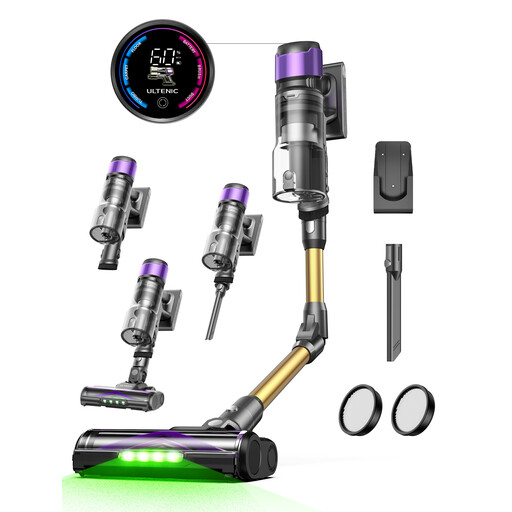
Why This Fits Their Persona: For households with pets, removing loose dirt and hair is the crucial first step before any wet cleaning. This powerful cordless vacuum cleaner is optimised for precisely this task.
It prevents the trap of turning pet hair and dirt into a sludgy mess during wet cleaning, which can clog the upholstery cleaner. The anti-tangle brush prevents hair from wrapping around it and ensures consistently high suction power.
The high dry suction power of 55 kPa removes deep-seated dirt and allergens. The 7-stage filtration system captures 99.9% of dust, according to the manufacturer, and improves air quality, which is particularly beneficial for allergy sufferers.
For targeted cleaning tasks and the care of various surfaces, we have compiled a selection of devices that stand out for their specific functions.
1. How long does it take for upholstery to dry after cleaning with a spray extraction device? The drying time depends on the device's suction power, the type of fabric, and the room's ventilation. With a high-suction device (over 10 kPa), the surface can feel dry again after just 4 to 8 hours. Good air circulation, for example, from an open window, can speed up the process.
2. Can I use regular dish soap in an upholstery cleaner? This is strongly discouraged. Household cleaners like dish soap tend to create excessive foam, which can damage the device's motor. They also often leave behind sticky residues that attract new dirt. Instead, use a low-foaming cleaning concentrate specifically designed for use in a carpet cleaner or wet vacuum.
3. How often should you deep clean a sofa or mattress? For general maintenance and hygiene, a deep clean is recommended once or twice a year. In households with children, pets, or allergy sufferers, a quarterly cleaning can be beneficial to regularly remove allergens and deep-seated dirt. Minor stains should always be treated immediately.