
Lieferung heute & morgen

Qualitätsgarantie

Willkommens-Angebote freischalten: KOSTENLOSE Lieferung | Bis zu 80 % RABATT | Kostenlose 30-Tage-JoyPlus-Testphase
App herunterladen
A spilled glass of juice on the new sofa, muddy paw prints from a pet on the carpet, or the unavoidable signs of daily life on car seats—stains on upholstery and textiles are frustrating. An upholstery cleaner, often called a spot cleaner or carpet washer, promises a quick fix. However, the market is overwhelming, and many devices don't live up to their advertising claims. Before you make a purchasing decision, it's crucial to know the typical pitfalls that can lead to disappointment and unnecessary expense.
As your Joybuy Product Recommendation Officer, I'll help you find objective criteria for your selection and separate the wheat from the chaff.
Many purchasing decisions are based on marketing promises rather than practical facts. Pay special attention to these three points to avoid a bad buy:
To effectively clean upholstery, car seats, or a carpet, you should look for the interplay of a few, but crucial, technical features.
A good upholstery cleaner works on the spray-extraction principle. In the first step, a cleaning solution is sprayed with pressure onto the soiled area to loosen the dirt from the fibres. Immediately after, a powerful nozzle vacuums up the liquid along with the dissolved dirt. This method is far more thorough than simple vacuuming or surface wiping. Its effectiveness heavily depends on the design of the brush nozzle and the even distribution of water.
Hygienic operation is only guaranteed with a dual-tank system. This strictly separates fresh water (with or without detergent) from the vacuumed dirty water. This prevents already dissolved dirt from being redistributed onto the surface being cleaned. Look for a tank capacity of at least 0.8 litres for the fresh water tank to avoid having to refill after every small area. It is just as important that both tanks can be easily removed, emptied, and rinsed.
Some models offer additional features that can enhance cleaning performance:
Based on the objective criteria mentioned above, we have identified some models that represent a considered choice for specific user profiles.
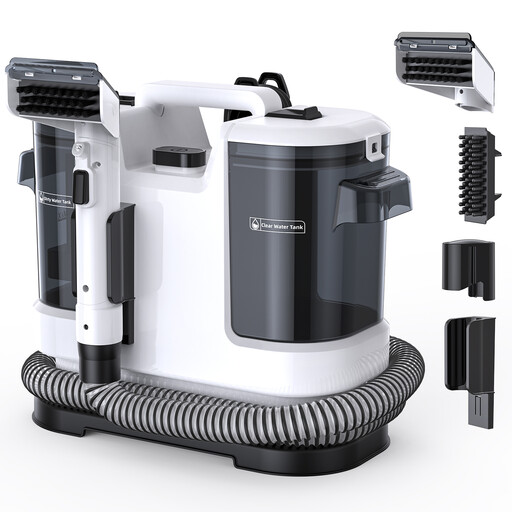
Why This Fits Their Persona: Ideal for users looking for a straightforward and affordable solution for occasional mishaps. The device focuses on the core function of stain removal without expensive extra features, making it a pragmatic choice for a first home or for targeted cleaning of car seats.
This model bypasses the "all-in-one" trap by focusing on the essential spray-extraction principle. The suction power of 13,500 Pa is solid for this price range and is well-matched to the nozzle design.
Good value for money; large tank capacities and a long cable provide a decent operating radius.
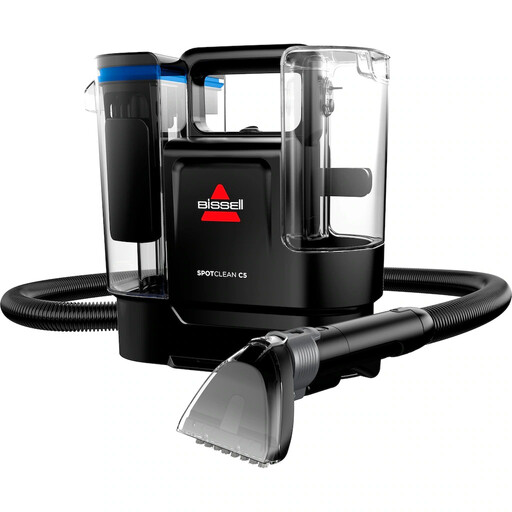
Why This Fits Their Persona: For households with children or pets where stains are a regular occurrence, reliability and easy maintenance are crucial. This device offers strong cleaning performance for everyday and stubborn messes and is designed for straightforward handling.
It directly addresses the trap of impractical maintenance: The HydroRinse Self-Cleaning Tool flushes the hose after use, preventing odour buildup. The proven dual-tank system is easy to handle.
Integrated self-cleaning function for the hose; suction power of over 15 kPa as part of a coordinated system (spray, scrub, suction).
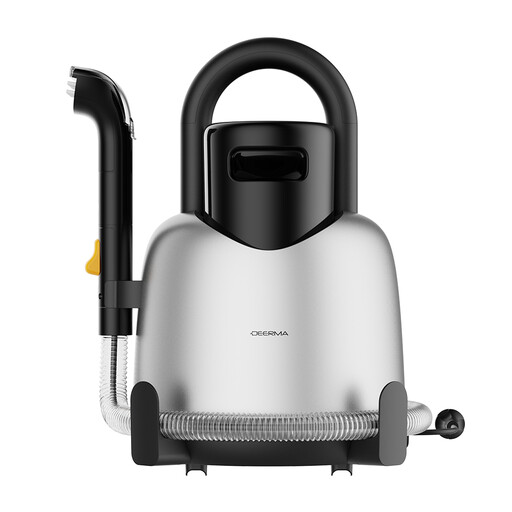
Why This Fits Their Persona: For users who want maximum flexibility and a deep clean. This model offers various temperature modes to specifically address different fabrics and levels of soiling, from gentle cold-water cleaning to intensive steam treatment.
Instead of being a vague "all-in-one" compromise, it offers clearly defined modes: Steam (~100°C), Hot Water (~60°C), and room temperature. The user can consciously choose the appropriate method, thus avoiding the risk of damaging delicate fabrics.
Three selectable cleaning modes for high adaptability; large tank capacities (1.7 L fresh water / 1.4 L dirty water) for longer cleaning sessions.
We have compiled a complete, up-to-date list of products that fully meet these strict selection criteria and German safety regulations.
The drying time depends on several factors: the suction power of the device, room temperature, air circulation, and the type of fabric. As a rule, you should expect a drying time of 2 to 6 hours. Good ventilation in the room can speed up the process. After cleaning, run the suction nozzle over the wet area several times without the spray function to remove as much residual moisture as possible.
No, it is recommended to only use cleaning agents that are approved by the device manufacturer or are explicitly designated for use in spray-extraction devices. Common household cleaners can foam excessively and damage the device's motor. They can also leave sticky residues in the upholstery that attract new dirt.
An upholstery cleaner (carpet washer) uses water and suction to physically flush and remove dirt from the fibres. A pure steam cleaner primarily works with hot steam to loosen dirt and disinfect surfaces but usually does not have a suction function. The loosened dirt must then be manually wiped up with a cloth. For deep cleaning upholstery, the spray-extraction method of a carpet washer is therefore usually more thorough.