
Lieferung heute & morgen

Qualitätsgarantie

Willkommens-Angebote freischalten: KOSTENLOSE Lieferung | Bis zu 80 % RABATT | Kostenlose 30-Tage-JoyPlus-Testphase
App herunterladen
The search for the right USB-C charger can quickly become overwhelming. Since many manufacturers now ship smartphones and other devices without a power adapter, the market is flooded with options. But not every charger delivers on its promises. As your Joybuy Product Recommendation Officer, I'll help you identify the common pitfalls and make an informed decision based on facts, not marketing hype.
Before you spend any money, you should be aware of these widespread problems, which often lead to disappointment and, in the worst case, damaged devices.
To avoid these traps, focus on three verifiable criteria. These determine whether a charger is suitable, safe, and efficient for your needs.
The crucial specification is not just the maximum wattage, but how it's distributed. A good 65W power adapter should be able to provide the full 65 watts to a single device (e.g., a laptop) through one port. When multiple devices are connected, the power distribution should be clearly specified (e.g., 45W for the laptop and 20W for the smartphone). Check the product description for details on power allocation during simultaneous use.
Compatibility is essential for fast charging. The two most important standards are:
Ensure that the charger explicitly supports the protocol required by your device.
Modern chargers increasingly rely on GaN technology (Gallium Nitride). A GaN charger is significantly smaller, lighter, and generates less waste heat at the same power level than traditional silicon chargers. This makes it not only more portable but also safer to operate. Also, always look for the CE marking, which confirms that the product meets EU safety standards.
Here are some product recommendations tailored to specific use cases that meet the criteria mentioned above.
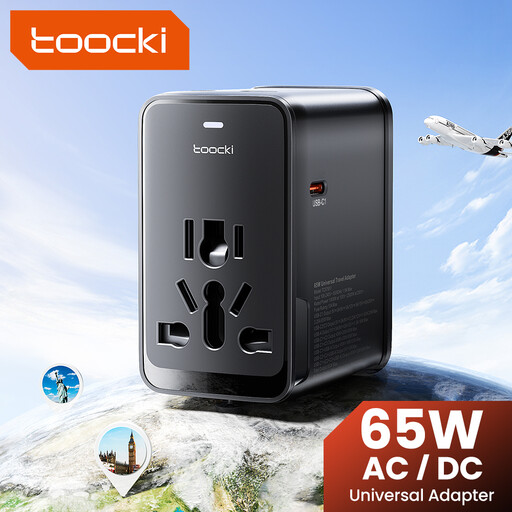
Why This Fits Their Persona: Ideal for frequent travellers who need a single, compact solution for worldwide sockets (EU, UK, US, AUS) and for simultaneously charging multiple devices, including a laptop.
This universal travel adapter bypasses the wattage trap by providing a high 65W PD output on a single port, sufficient to replace a laptop power supply. It combines multiple functions in one certified device.
Integrated GaN technology for compact size and efficiency. Four charging ports (3x USB-C, 1x USB-A) for maximum flexibility.
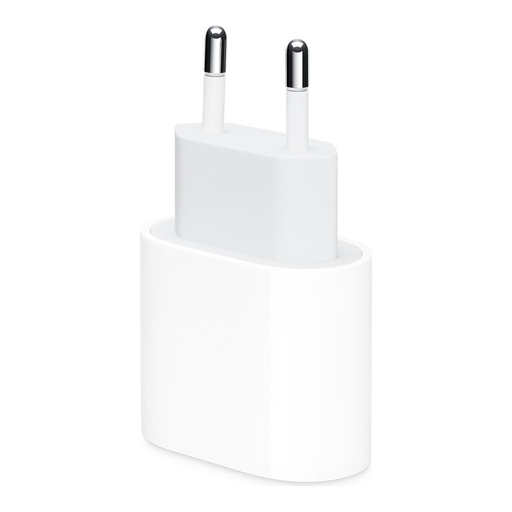
Why This Fits Their Persona: For users of iPhones and iPads who want a reliable, manufacturer-recommended charging solution to make the most of their devices' fast-charging capabilities.
This 20W charger solves the protocol dilemma as it is perfectly matched to the Power Delivery profile of Apple devices. There are no compatibility doubts.
Ensures the fast-charging performance intended by Apple for iPhone 8 or newer. Compact and proven design.
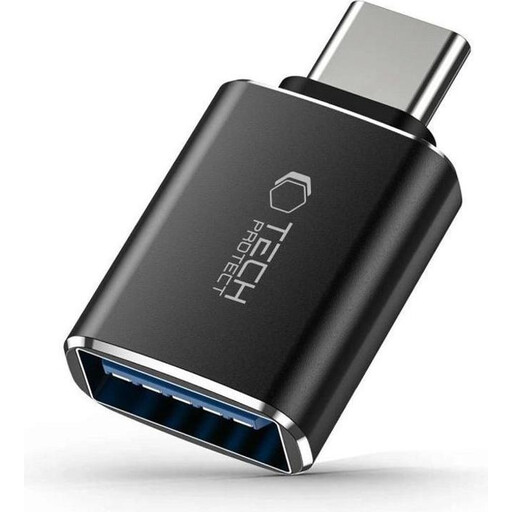
Why This Fits Their Persona: Perfect for users who need to bridge the gap between their new USB-C devices (smartphone, tablet) and older accessories with a USB-A port (USB drives, keyboards, mice).
This OTG adapter is not a charging solution but a connectivity problem-solver. It prevents the unnecessary repurchase of peripherals just because the connection standard has changed.
Enables data transfer and the connection of accessories (On-The-Go function). Compact and robust design for mobile use.
We have compiled a complete, real-time list of products that fully satisfy these strict selection criteria and UK safety regulations.
1. Can I use any USB-C charger for my phone? Technically, the plug will fit, but it's not advisable. Make sure the charger's power output (watts) is not significantly higher than your phone's maximum charging power and that the fast-charging protocols (e.g., Power Delivery) match. A certified charger with protection against overvoltage and overheating is always the safer choice.
2. What does GaN mean on a charger? GaN stands for Gallium Nitride, a semiconductor material that operates more efficiently than traditional silicon. A GaN charger can be built smaller and lighter for the same power output and generates less heat. This makes it ideal for powerful and compact power adapters, especially for fast chargers and travel adapters.
3. How many watts does my laptop power adapter need? Check the specifications on your original laptop power adapter or on the bottom of the laptop itself. Most ultrabooks require between 45W and 65W. More powerful workstation or gaming laptops may require 90W or more. A USB-C charger should provide at least the same wattage to reliably charge the battery during use.