
Lieferung heute & morgen

Qualitätsgarantie

Willkommens-Angebote freischalten: KOSTENLOSE Lieferung | Bis zu 80 % RABATT | Kostenlose 30-Tage-JoyPlus-Testphase
App herunterladen
A messy cut that tears cardboard instead of slicing it, or a blade that gives way under pressure—these issues are not only a hindrance in crafts, logistics, and DIY projects, but also a safety risk. A reliable utility knife is an essential tool, yet choosing the right model can be a challenge given the wide variety of options.
This guide is designed to provide you with clear direction. We will introduce different types of cutting tools and explain the key criteria for making an informed decision. Our goal is to help you find a tool that meets your needs for precision, durability, and safety.
The choice of the right knife depends heavily on its intended application. Three key features will help you evaluate a model's functionality and quality.
A knife's cutting performance is largely determined by the blade material. SK5 blades made from carbon steel are a common choice for high-quality cutting tools. This steel is known for its high hardness and edge retention, meaning the blades stay sharp longer.
Furthermore, the blade-changing system is crucial:
A tool that fits comfortably in your hand allows for better control and reduces fatigue during extended use. Handles are typically made from materials like aluminium, plastic, or wood. A knife with a wooden handle offers a classic look and a pleasant feel. Handles with rubber inserts (TPR) increase slip resistance, which is particularly advantageous in damp environments or during strenuous work. The shape of the handle should ensure safe and comfortable handling for precise cuts.
A secure locking mechanism is essential to prevent the blade from accidentally folding in or out. Common systems include:
A reliable lock is a critical safety feature that every utility knife should have.
Based on the criteria mentioned, we have compiled a selection of cutting tools that stand out for their materials, functionality, and design.
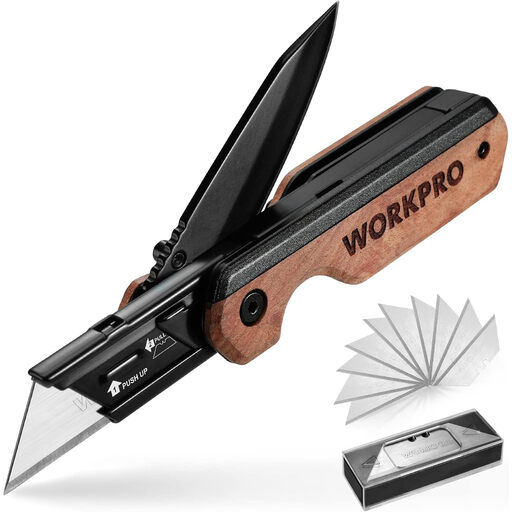
Why it stands out: This model combines the functionality of a classic pocket knife with that of a professional carpet knife. The 2-in-1 design offers a fixed stainless steel blade for general cutting tasks and a separate, replaceable trapezoid blade for more demanding materials.
Advantages:
Who it's for: Users looking for a versatile and visually appealing tool for daily use, camping, or light craftwork. The knife with a wooden handle is ideal for those who want to combine functionality with aesthetics.
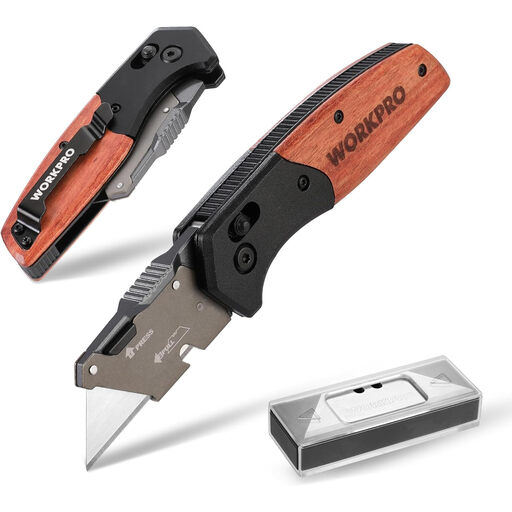
Why it stands out: This carpet knife is distinguished by its external slide lock mechanism, which ensures secure blade positioning and allows for convenient one-handed operation. Its lightweight and compact design make it a practical companion.
Advantages:
Who it's for: Craftsmen and DIY enthusiasts who need a robust and safe box cutter for materials like carpet, drywall, or packaging and who value quick, one-handed operation.
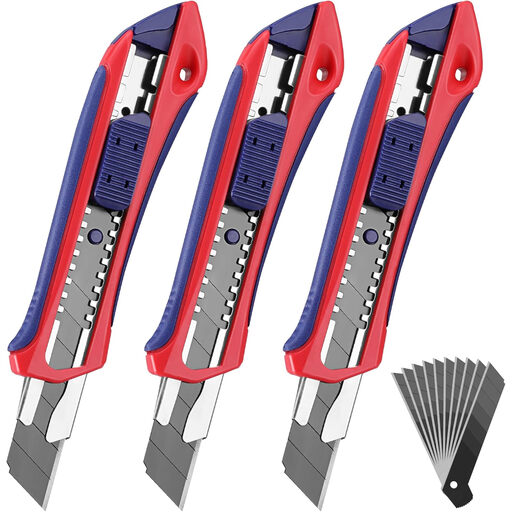
Why it stands out: This utility knife set offers a practical solution for a wide range of tasks in the office, workshop, or for crafts. It includes three identical snap-off blade knives and a supply of replacement blades, ensuring a sharp tool is always at hand.
Advantages:
Who it's for: Users who need multiple knives for different locations or who regularly cut materials like cardboard and foil. Ideal as a craft knife or for general tasks in the warehouse and home.
The models presented here cover a broad spectrum of applications. However, if you are looking for a tool with more specific features, such as a knife with a fixed blade or a special protective sheath, you can find more options in our range.
Explore our entire selection of knives with sheaths for more professional tools.
The term "utility knife" is an umbrella term for various cutting tools with replaceable blades. A carpet knife is a specific, particularly robust version. It typically uses thick, hooked, or trapezoidal blades optimized for cutting tough materials like carpet, PVC, or roofing felt. A snap-off blade knife, on the other hand, is better suited for lighter materials like paper or cardboard.
Safety is the top priority when changing a blade. If possible, wear protective gloves. Ensure the knife's locking mechanism is engaged. Follow the manufacturer's instructions for the specific knife's blade-changing mechanism. With quick-change systems, you usually need to press a button to remove the old blade and insert a new one. Dispose of old blades properly in a designated container.
SK5 is a Japanese standard for a high-carbon tool steel. This steel is known for its excellent balance of hardness and toughness. This means that SK5 blades maintain a high level of sharpness for a long time (edge retention) while also being resistant to chipping. For this reason, it is frequently used for high-quality blades in utility and box cutters.