
Lieferung heute & morgen

Qualitätsgarantie

Willkommens-Angebote freischalten: KOSTENLOSE Lieferung | Bis zu 80 % RABATT | Kostenlose 30-Tage-JoyPlus-Testphase
App herunterladen
Packed wardrobes, overflowing drawers, and the question of where to put the winter duvet in summer—these are common challenges for anyone living in a home with limited storage space. Seasonal clothing, bedding, and even clothes for growing children take up valuable room. Vacuum storage bags for clothes offer a practical solution to significantly reduce the volume of textiles while protecting them from dust, moisture, and moths.
This article serves as a guide. We explain the key criteria to consider when choosing vacuum storage bags and present a selection of different models designed for various use cases—from travel to long-term garment storage at home.
To find the right bags for your needs, a few technical features are crucial. Functionality and durability largely depend on the material, seal, and compression method.
The durability of a vacuum bag is determined by its material. A common and robust combination is PA+PE (Polyamide + Polyethylene). This multi-layer film offers high tear resistance and reliably protects the contents from external elements. A critical detail for airtightness is the seal. Models with a double-zip seal provide enhanced security against air leakage, ensuring the vacuum is maintained over a long period.
Space-saver bags work by removing the air from them. This can be done in several ways:
The shape of the bag affects how efficiently it can be stored.
Based on the criteria mentioned, we have curated a selection of products that meet different storage needs for clothing and textiles.
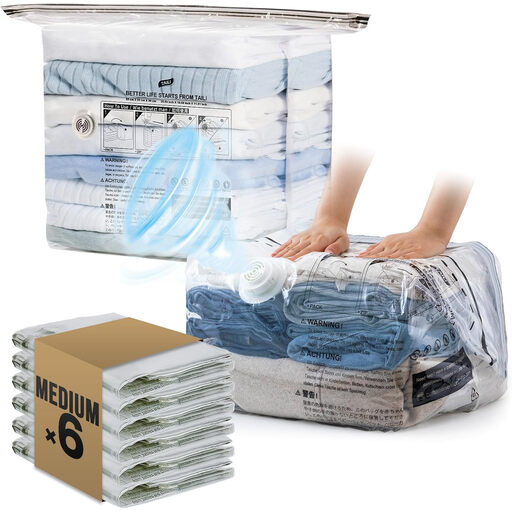
What Makes This Product Stand Out The standout feature of these bags is the patented ESY-SHRINK air valve, which allows for compression without a pump or vacuum cleaner. Air is removed by simply pressing down with your hands. The cubic shape, measuring 25 x 19 x 11 inches (approx. 63 x 48 x 28 cm), is designed to fit neatly into standard carry-on suitcases or backpacks.
Benefits
Who is it for? Ideal for travellers looking to pack efficiently, as well as for organising seasonal clothing or baby clothes at home without needing a vacuum cleaner.
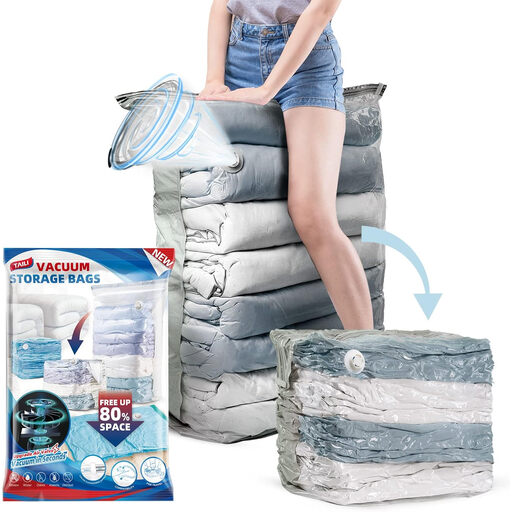
What Makes This Product Stand Out Measuring 31 x 40 x 15 inches (approx. 79 x 102 x 38 cm), this jumbo bag offers enormous space. The cubic shape is self-standing, making it easy for one person to fill. The capless air valve is compatible with any standard vacuum cleaner, allowing for quick air removal.
Benefits
Who is it for? Perfect for households that need to store very bulky textiles like thick winter duvets, large blankets, or pillows. Also a great choice for moving or for organising the basement or attic.
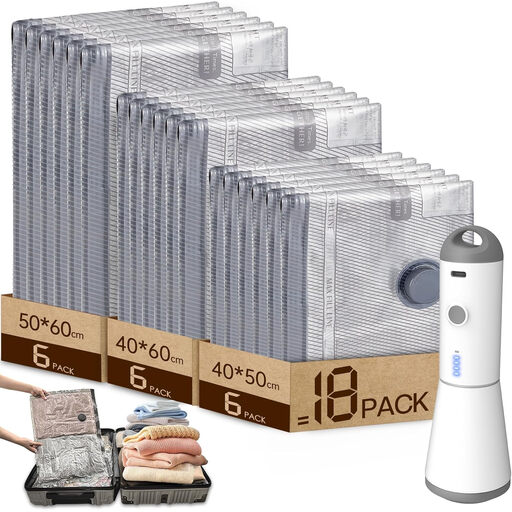
What Makes This Product Stand Out This vacuum bag set includes a cordless, battery-powered vacuum pump that removes air in about 30 seconds. The set comprises 18 bags in three different sizes (6x 40x50 cm, 6x 40x60 cm, 6x 50x60 cm), offering a flexible solution for various storage needs.
Benefits
Who is it for? An excellent choice for those looking for an all-in-one solution who appreciate the convenience of an electric pump. Ideal for travel, moving, and general household organisation.
If the products featured here don't exactly match your requirements or if you're looking for special sizes for extra-large bedding, you can find more models in our category.
? Explore our full range of airtight blanket storage bags
1. How long do vacuum bags hold their seal? The length of time a vacuum bag remains airtight depends on the quality of the material and the seal. High-quality bags with a robust double-zip and a tight valve can maintain the vacuum for several months up to a year. It is recommended to check their condition every few months, especially for long-term storage.
2. Are vacuum bags reusable? Yes, most modern vacuum bags, especially those made from PA+PE material, are designed for multiple uses. To ensure their longevity, the bags should be handled carefully, not overfilled, and protected from sharp objects to prevent punctures.
3. Can you store any type of clothing in vacuum bags? Vacuum bags are safe for most textiles like cotton, wool, and synthetic fabrics. However, caution is advised for delicate natural materials such as down, feathers, or leather. Excessive compression can damage the structure of these materials and impair their insulating properties. For such items, less intense compression or a different storage method is advisable.