
Lieferung heute & morgen

Qualitätsgarantie

Willkommens-Angebote freischalten: KOSTENLOSE Lieferung | Bis zu 80 % RABATT | Kostenlose 30-Tage-JoyPlus-Testphase
App herunterladen
Overstuffed wardrobes, overflowing drawers, and no room for the seasonal duvet—it's a common problem in many homes. Storing clothes and textiles can quickly become a cluttered mess, especially when storage space is limited. Vacuum storage bags for clothes offer a practical solution. They significantly reduce the volume of textiles while protecting them from dust, moisture, and odours.
This article serves as a guide. We will introduce different types of vacuum bags, explain their key features, and present a selection of products designed for various needs.
To find the right product for your needs, a few criteria are crucial. The choice depends on what you want to store, where, and for how long.
Vacuum bags come in different designs, each optimised for specific applications.
The durability and airtightness of a vacuum bag depend heavily on the material and the seal.
Air removal is a key step. There are several systems for this.
Based on the criteria mentioned, we have compiled a selection of products for different use cases.
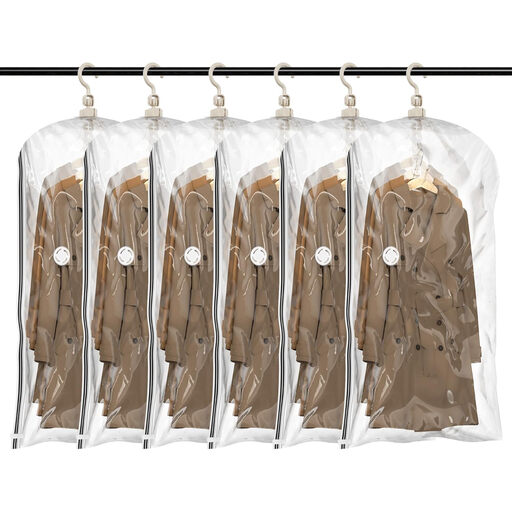
What makes this product stand out: These hanging vacuum bags are specifically designed for wardrobe organisation. The set includes six large bags (135 x 70 x 38 cm) with widened sides for extra volume. A key feature is the five-ring hook, which rotates 360° to make hanging multiple garments easy. The patented air valve is compatible with any standard vacuum cleaner.
Advantages:
Who is this product for? Ideal for those who want to store suits, coats, jackets, or dresses in a space-saving and protected way directly in their wardrobe, without needing to fold them.
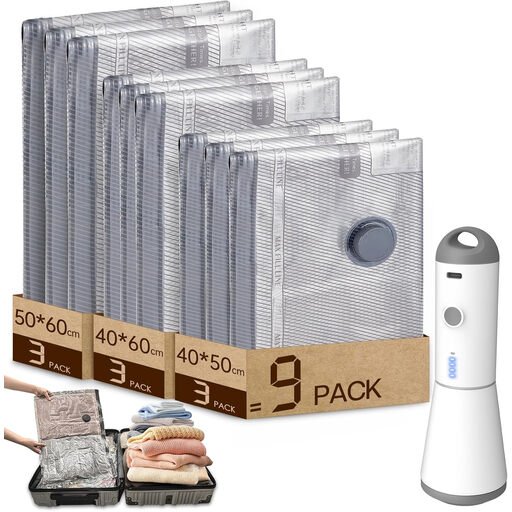
What makes this product stand out: This set is designed for flexibility and portability. It includes nine bags in three different sizes, plus a cordless, battery-powered vacuum pump. The pump removes the air in about 30 seconds and is small enough to fit in your luggage. The double-layer zipper and special valves ensure an airtight seal.
Advantages:
Who is this product for? Perfect for travellers looking to optimise suitcase space, as well as for households without a vacuum cleaner or for those who want a quick and hassle-free solution for everyday storage.
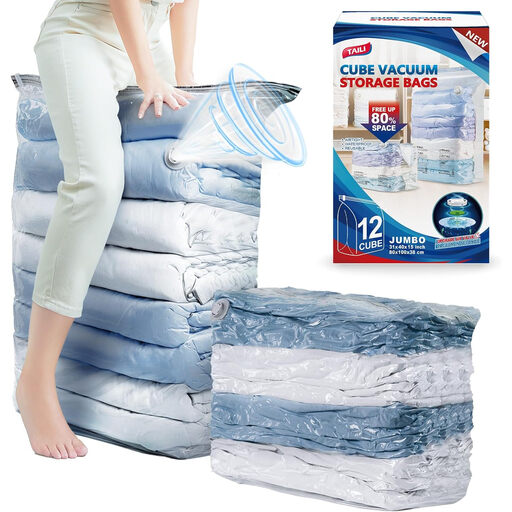
What makes this product stand out: These cube-shaped XXL vacuum bags are designed for maximum space utilization. Measuring 78 x 101 x 38 cm, they can hold 3–5 duvets or a large amount of clothing per bag. The stable, cube-shaped structure makes them easy to fill and stack. According to the manufacturer, one cube bag replaces four ordinary flat vacuum bags.
Advantages:
Who is this product for? Suitable for anyone who needs to store very bulky textiles like winter duvets, pillows, blankets, or large quantities of seasonal clothing and wants to make the most of the available space in closets, the basement, or the attic.
The selection presented here covers common use cases. However, you may be looking for different sizes, special travel sets without a pump, or different set configurations.
If you are looking for more models, you can find a wider range of products in our Vacuum Sealer Bags for Clothes with Pump category.
1. How long do vacuum bags stay sealed? How long a vacuum bag remains airtight depends on the quality of the material, valve, and seal. High-quality bags can hold the vacuum for several months. It is recommended to check the condition of the bags every six months and re-vacuum if necessary, especially for very long-term storage.
2. Can I use any vacuum cleaner for vacuum bags? Most vacuum bags are equipped with a universal valve that fits the standard hose attachments of most household vacuum cleaners. Nevertheless, it is advisable to check the product description for compatibility information. Some sets, especially for travel, come with their own manual or electric pump.
3. Do vacuum bags damage clothes or down duvets? When used correctly, vacuum bags are safe for most textiles. It's crucial to pack items only when they are clean and completely dry to prevent mould. For delicate materials like down or feathers, you should not compress the bag 100%. It is advisable to leave about 20-30% of the volume to avoid damaging the filling and to preserve its loft.