
Lieferung heute & morgen

Qualitätsgarantie

Willkommens-Angebote freischalten: KOSTENLOSE Lieferung | Bis zu 80 % RABATT | Kostenlose 30-Tage-JoyPlus-Testphase
App herunterladen
Limited closet space is a common problem, especially when seasonal clothing, bulky duvets, or guest bedding need to be stored securely. Vacuum storage bags for clothes offer a practical solution to significantly reduce the volume of textiles while protecting them from dust, moisture, and odours.
This guide explains the key features of vacuum storage bags and showcases a variety of models to help you make the best choice for your needs.
Choosing the right vacuum bag depends on your specific needs. Whether for seasonal storage at home, for travel, or for moving house, the following criteria will help guide your decision.
The durability of a vacuum bag is largely determined by its material. A common and robust material combination is PA+PE (Polyamide + Polyethylene). This blend offers a good balance of flexibility and resistance to tears or punctures. Look for a sufficient material thickness if you need reusable vacuum bags that will last for several seasons. A sturdy double-zip seal is also crucial to ensure an airtight seal.
Vacuum bags differ in how the air is removed. The most common methods are:
The right size is essential for efficient vacuum clothes storage.
Here is a selection of vacuum bags that, with their different features, are suitable for various applications.
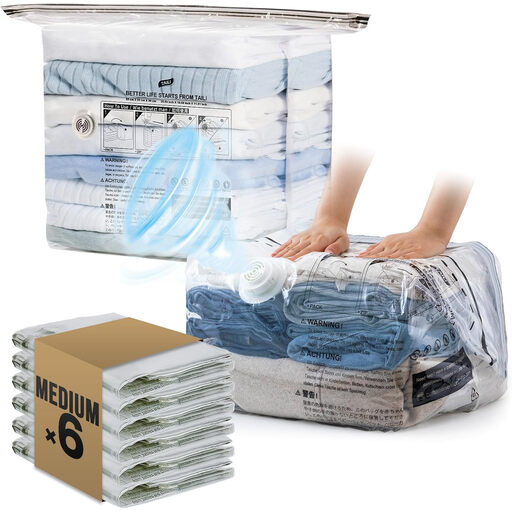
What makes it stand out: The patented valve on these bags allows for compression simply by pressing down manually. No vacuum cleaner or pump is needed, making them especially convenient for quick use and for travel.
Pros:
Who it's for: Users looking for a hassle-free solution for home and for vacuum bags for travel, who want to avoid using external devices like a vacuum cleaner.
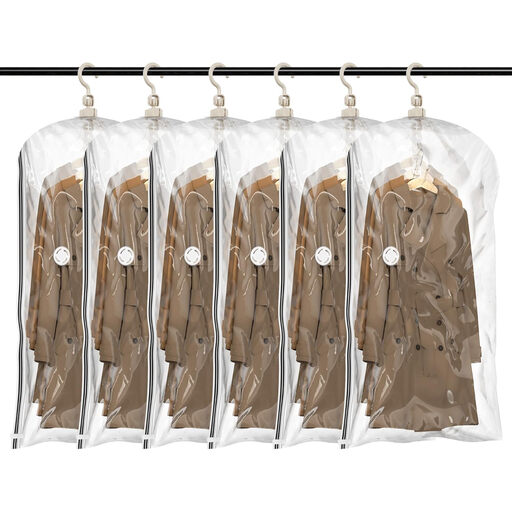
What makes it stand out: These bags are specifically designed for hanging storage in a wardrobe. The integrated five-ring hook rotates 360° for easy access to coats, suits, or dresses.
Pros:
Who it's for: Individuals who want to create valuable space on their wardrobe rail and store seasonal items like winter coats or suits in a protected way.
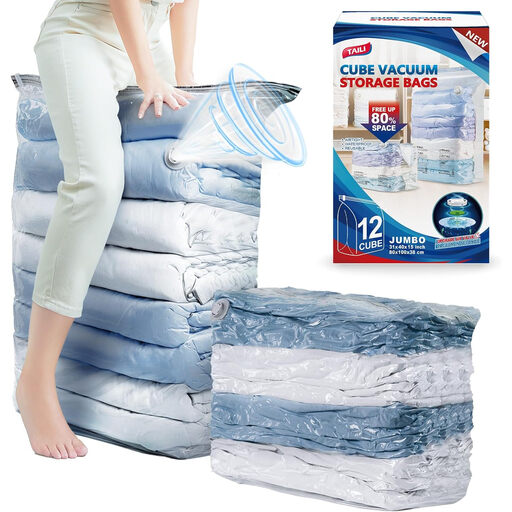
What makes it stand out: Measuring 78.7 x 101.6 x 38.1 cm, these jumbo bags offer enormous capacity. The stable, block-like structure simplifies filling and stacking, making them ideal for large, bulky textiles.
Pros:
Who it's for: Households with a high demand for storage space for vacuum bags for duvets, pillows, and other voluminous home textiles.
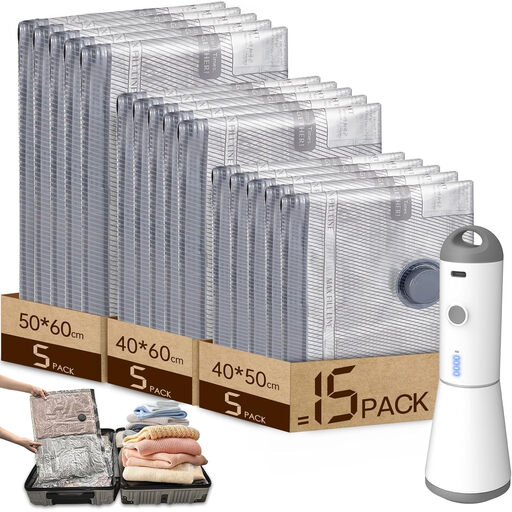
What makes it stand out: This vacuum bag set includes a cordless, battery-powered vacuum pump. It removes the air in about 30 seconds and offers maximum flexibility, as it works independently of a vacuum cleaner or power outlet.
Pros:
Who it's for: Travellers and anyone looking for an all-in-one solution with maximum convenience who doesn't want to rely on a vacuum cleaner.
Vacuum bags are an effective way to reduce volume. However, if you are looking for other solutions to bring order to your closet, other organisational aids might also be useful.
Discover a wide range of wardrobe organisation products, from special hangers to storage boxes, in our Wardrobe Hangers category.
For most textiles made of cotton, synthetics, or wool, storage for up to 12 months is safe. It is recommended to open the bags every 6 to 12 months to let the textiles air out. This prevents the fibres from remaining permanently compressed. For down or feathers, the compression should not be too strong and the storage period should be shorter to preserve their loft.
Yes, there are special vacuum bags that don't require a vacuum cleaner. These work either by manually rolling them up, which forces air out through a one-way valve, or by pressing them, as with the TAILI Cube bags presented above. Alternatively, there are sets that come with a hand pump or a battery-powered pump.
When used correctly, vacuum bags are safe for most textiles. It is important that the clothes are completely dry before being packed to prevent mould growth. For delicate materials such as silk, leather, or textiles with down filling, the air should only be partially removed to avoid damaging the structure of the fibres. Too much vacuum can permanently reduce the loft of down.