
Lieferung heute & morgen

Qualitätsgarantie

Willkommens-Angebote freischalten: KOSTENLOSE Lieferung | Bis zu 80 % RABATT | Kostenlose 30-Tage-JoyPlus-Testphase
App herunterladen
A dull, unwieldy knife can quickly turn prepping fresh fruit and vegetables into a tedious task. Yet, when searching for a new vegetable knife, many buyers face an overwhelming selection and marketing claims that rarely deliver. Poor choices often result in tools that quickly lose their edge, feel uncomfortable in the hand, or are unsuitable for their intended purpose. This guide will help you identify the crucial features and avoid common purchasing pitfalls.
Before you make a decision, it's important to understand the typical issues that can lead to a bad purchase.
To avoid these pitfalls, you should focus on three objective criteria that determine a knife's quality and functionality.
The blade material is the most important factor for durability and performance. For everyday kitchen use, stainless steel has established itself as the standard. Look for a high-quality alloy that combines two key properties:
A good Swiss kitchen knife, such as one from Victorinox, typically uses a proven stainless steel blend specifically tailored to meet these requirements.
The type of grind determines which foods the knife is best suited for.
The handle is the connection between your hand and the blade. An ergonomically shaped handle made from a robust material like polypropylene (PP) offers several advantages: It provides a secure grip, is hygienic, easy to clean, and dishwasher-safe. The low weight of such handles, combined with a well-balanced blade, ensures fatigue-free handling, even when preparing larger quantities of vegetables.
Based on these objective criteria, we have selected a few products that are suitable for different user profiles.
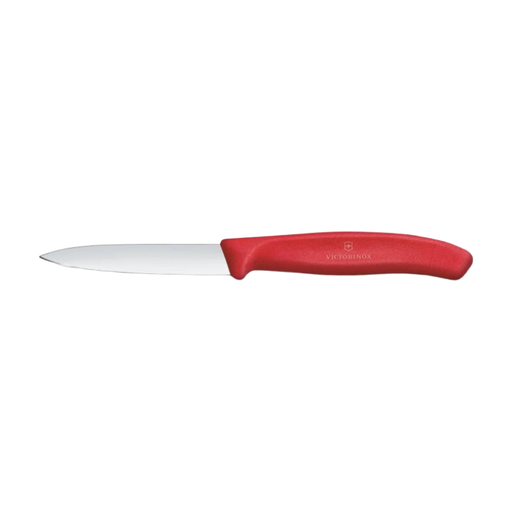
Why it's a match: Ideal for daily use in any kitchen. This knife is a reliable all-rounder for peeling potatoes, slicing apples, or chopping onions. Its compact size makes it extremely easy to handle.
The Victorinox stainless steel blade is renowned for its high edge retention, bypassing the trap of inferior steel. The ergonomic PP handle prevents fatigue.
8 cm Plain Edge Blade: Perfect for precise cutting and peeling tasks. Dishwasher-safe: Allows for easy and hygienic cleaning.
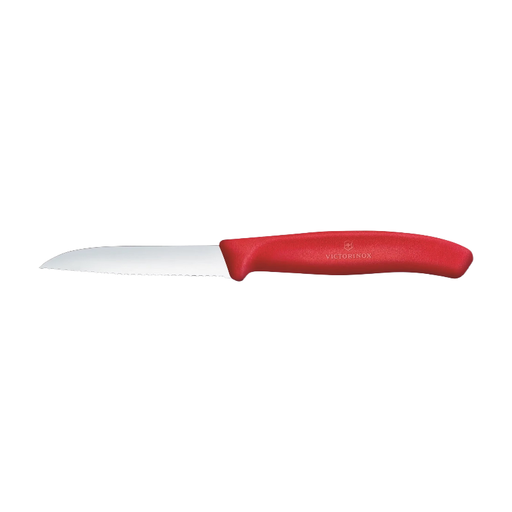
Why it's a match: For anyone who regularly cuts tomatoes, kiwis, bell peppers, or other soft fruits and vegetables with a firm skin. This knife gets the job done without squashing.
It solves the problem of an unsuitable blade grind by offering a specialised serrated edge designed specifically for soft foods with firm skins.
8 cm Serrated Edge Blade: Slices through tomato skin effortlessly. Lightweight and handy: Weighs only 20g and offers excellent control.
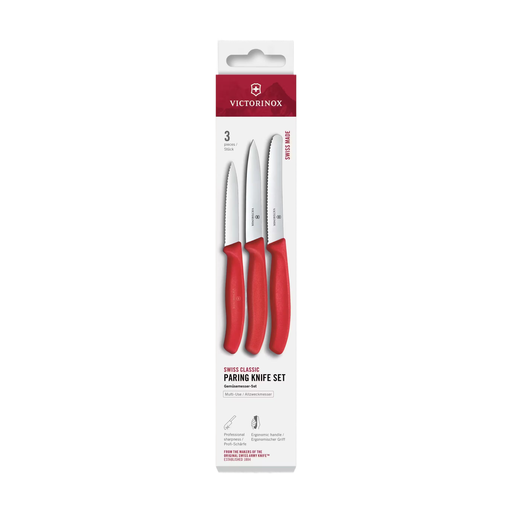
Why it's a match: For home cooks looking to equip their kitchen with a versatile starter kit. This vegetable knife set covers all common cutting tasks for fruits and vegetables.
This set ensures you always have the right blade grind on hand. All knives in the set feature the same high-quality materials and ergonomic handles.
Versatile Blades: Includes knives with plain and serrated edges for maximum flexibility. Uniform Design: Consistent handling and quality across the entire set.
We have compiled a complete, real-time updated list of products that fully meet these strict selection criteria and all relevant safety regulations.
Although many high-quality vegetable knives are labelled as dishwasher-safe, hand washing with mild detergent is recommended to protect the blade. Dry the knife immediately after cleaning to prevent water spots. Only use cutting boards made of wood or plastic, as hard surfaces like stone, glass, or ceramic can damage and dull the blade.
The terms are often used interchangeably, as the lines are often blurred. A paring knife is typically a very small kitchen knife with a short blade (often 6–8 cm), specifically designed for peeling and other delicate, in-hand tasks. A vegetable knife can have a slightly longer blade (8–10 cm) and is an all-rounder for slicing, dicing, and chopping vegetables on a cutting board.
Yes, a small vegetable knife set is very practical for an initial kitchen setup. A set that includes at least one plain-edge and one serrated-edge knife will cover over 90% of daily cutting tasks for fruits and vegetables. It is often a cost-effective solution compared to buying individual knives and ensures you have the right tool on hand for the most important jobs.