
Lieferung heute & morgen

Qualitätsgarantie

Willkommens-Angebote freischalten: KOSTENLOSE Lieferung | Bis zu 80 % RABATT | Kostenlose 30-Tage-JoyPlus-Testphase
App herunterladen
A good vegetable peeler glides effortlessly over the skin of potatoes, carrots, or apples, leaving a clean surface with minimal waste. An unsuitable model, on the other hand, bruises the flesh, requires significant force, or rusts after just a few weeks. Choosing the right tool is crucial for efficiency and enjoyment in the kitchen.
Many buyers are guided by marketing promises that don't hold up in practice. Before you make a decision, it's helpful to know the three most common flaws that can render a seemingly good vegetable peeler useless:
To avoid a bad purchase, you should focus your attention on three objective criteria. These determine the durability, functionality, and safety of your kitchen gadget.
The heart of any peeler is its blade. Its material and edge determine its sharpness, durability, and range of applications.
The shape of the peeler affects its handling and efficiency with different types of food.
A secure and comfortable grip is essential for fast and injury-free work. The handle should provide a good grip even with wet hands. Materials like high-quality Polypropylene (PP), zinc alloy, or ergonomically shaped wood often offer better grip and greater durability than simple, smooth plastic.
Instead of recommending a single model, we have selected products tailored to specific needs and usage scenarios.
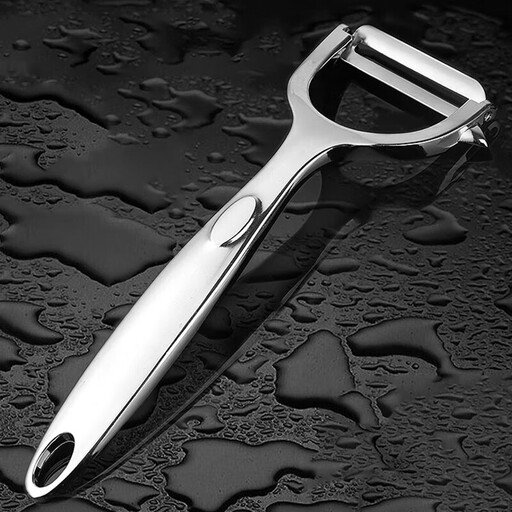
Why This Fits Their Persona: Ideal for users seeking a robust and reliable peeler for everyday tasks like peeling potatoes and carrots, without having to invest in an expensive specialty tool.
The zinc alloy construction is significantly more resistant to rust and breakage than models made from low-grade steel or simple plastic. It thus bypasses the trap of poor material durability.
Robust, rust-resistant zinc alloy; sharp blade for standard vegetables; ergonomic design for comfortable handling.
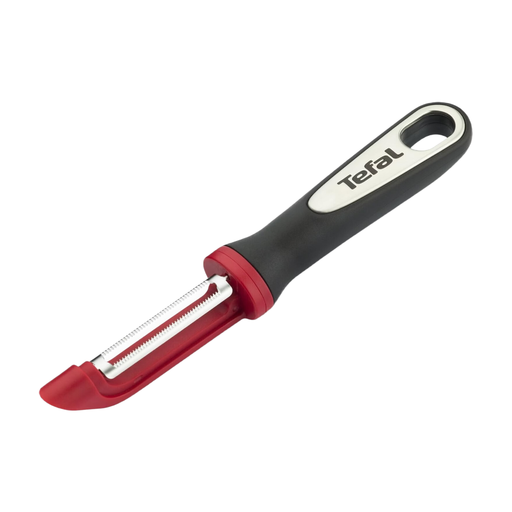
Why This Fits Their Persona: Perfect for anyone who regularly prepares tomatoes, peaches, kiwis, or bell peppers and needs a tool that cleanly removes the delicate skin without damaging the flesh.
This specialty tool solves the "one-blade-fits-all illusion." Instead of an unsuitable all-rounder, you get a blade that is precisely optimised for soft skins, preventing frustration.
Double serrated stainless steel blade for effortless peeling; ergonomic plastic handle for a secure grip; dishwasher-safe.
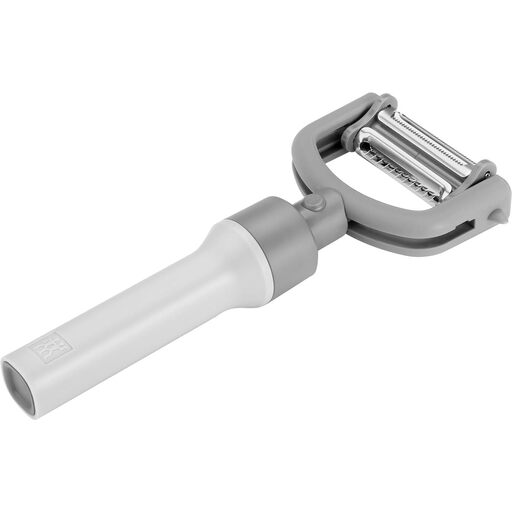
Why This Fits Their Persona: For cooks who value maximum functionality, efficiency, and long-lasting quality. This tool replaces several individual kitchen gadgets and streamlines prep workflows.
This multi-function tool is the opposite of a bad compromise. It combines several specialised blades into one device, avoiding the need to buy a separate, often inferior, tool for each task.
5-in-1 functionality (smooth, serrated, Julienne, etc.); patented Z-CUT blade for fast, bi-directional peeling; suitable for left- and right-handed users.
We have compiled a complete, up-to-date list of products that fully meet these strict selection criteria and German safety regulations.
Many modern vegetable peelers are designed for both left- and right-handed users. In particular, Y-peelers with a centrally mounted, pivoting blade are typically ambidextrous. Models with symmetrical handles or special two-way blade technology, as found in some Zwilling products, also offer high usability for everyone. For classic straight peelers, you should check the product description, as some models may be designed for a specific hand.
Although many peelers are declared dishwasher-safe, hand washing is often recommended to preserve blade sharpness. Harsh detergents and contact with other dishes can dull the fine cutting edge over time. Wash the peeler with warm water after use and dry it thoroughly to prevent corrosion. Safe storage, where the blade does not come into contact with other metal objects, also contributes to its longevity.
Yes, an asparagus peeler is typically a high-quality straight peeler distinguished by a very sharp blade and a shape optimised for long, even peeling strokes. It is therefore also excellent for other long vegetables like carrots, cucumbers, or courgettes. Its design makes it a versatile tool in the kitchen, useful far beyond the asparagus season.