
Lieferung heute & morgen

Qualitätsgarantie

Willkommens-Angebote freischalten: KOSTENLOSE Lieferung | Bis zu 80 % RABATT | Kostenlose 30-Tage-JoyPlus-Testphase
App herunterladen
Limited living space, especially in hallways and bedrooms, presents a common challenge: how to store clothing neatly and accessibly. A wall-mounted clothes rail offers a solution that is both functional and aesthetically pleasing. It creates valuable storage without taking up floor space and can serve as a deliberate design element.
This guide is here to help. We will introduce various models and explain the key criteria to consider when selecting the right wardrobe rail for your needs.
The right choice depends on several factors. The following points will help you make an informed decision.
The material determines not only the look but also the durability. A metal clothes rail, often designed as a sturdy wardrobe pipe, is a popular choice for the industrial style. Pay close attention to the specified maximum load capacity to ensure the clothes rail is heavy-duty enough for your wardrobe, especially if you plan to hang heavy winter coats. The load capacity also depends on the wall type and proper installation.
Measure the intended space accurately. A compact clothes rail for the hallway is ideal for a narrow entryway, while a longer rail offers more space in a walk-in closet or boutique. The distance from the wall is also a relevant factor. Sufficient clearance (e.g., 30 cm) prevents clothes from touching the wall and ensures good air circulation. Thoughtful placement makes the wall-mounted wardrobe space-saving and practical.
The design should harmonise with your existing decor. An industrial-style wardrobe rail, such as a black or white clothes rail, fits well into minimalist and modern interiors. This type of open wardrobe intentionally showcases clothing and adds an urban character to the room.
Based on the criteria mentioned, we have curated a selection of models that stand out for their functionality and design.
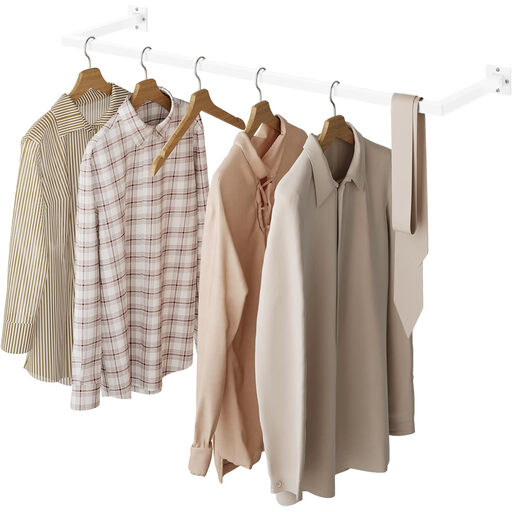
Why It Stands Out: This model combines a practical length of 114 cm with a subtle white finish. The 30 cm wall clearance ensures that garments can hang freely.
Pros:
Who It's For: Individuals looking for a medium-sized, sturdy, and stylish storage solution for a hallway, bedroom, or even the kitchen.
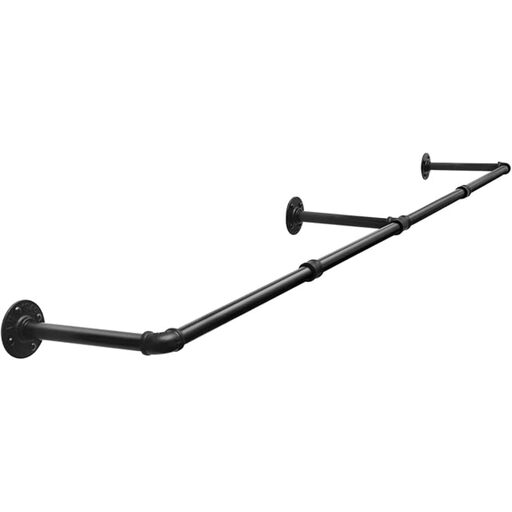
Why It Stands Out: With a length of 180 cm, this black clothes rail offers maximum space, making it an excellent choice for spacious walk-in closets or for displaying merchandise in retail stores.
Pros:
Who It's For: Ideal for users with extensive storage needs, such as families, fashion enthusiasts with a large wardrobe, or retail owners.
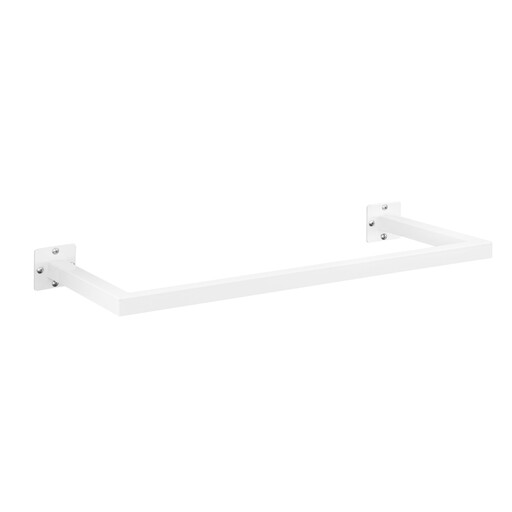
Why It Stands Out: This compact 64 cm model is the perfect space-saving wall rack for small alcoves, narrow hallways, or as a complement to existing storage systems.
Pros:
Who It's For: Users seeking a solution for very limited spaces, such as in an entryway, in the bathroom for towels, or in a small apartment.
If the models featured don't perfectly match your needs, or if you prefer different sizes and styles, you can find more alternatives in our collection.
? Discover Our Entire Collection of Industrial Shelving
1. How high should a wall-mounted clothes rail be installed? A standard mounting height is between 150 cm and 175 cm from the floor. This allows long garments like coats or dresses to hang without wrinkling, while keeping the rail easily accessible for most adults. Adjust the height based on your own height and the length of your clothing.
2. How much weight can a wall-mounted clothes rail hold? The load capacity depends on the product itself, the wall type, and the quality of the installation. According to manufacturer specifications, models made from metal pipes can often support between 50 kg and 100 kg. A solid concrete or brick wall offers greater stability than a drywall wall. Always use the appropriate wall plugs and screws for your wall type.
3. What kind of wall plugs are suitable for mounting a clothes rail? The choice of wall plugs is crucial for a secure installation. For concrete and solid brick walls, expansion anchors are a good choice. For drywall or hollow walls, special hollow-wall anchors (e.g., metal or toggle bolts) should be used, as they anchor themselves behind the board and ensure greater load distribution. Always follow the recommendations of the clothes rail manufacturer and the wall plug manufacturer.