
Lieferung heute & morgen

Qualitätsgarantie

Willkommens-Angebote freischalten: KOSTENLOSE Lieferung | Bis zu 80 % RABATT | Kostenlose 30-Tage-JoyPlus-Testphase
App herunterladen
By the Joybuy Product Recommendation Officer
In many apartments and homes, space for household appliances is limited, often making it difficult to choose between a washing machine and a tumble dryer. A washer-dryer offers a space-saving solution by combining both functions into a single unit. Alternatively, a stackable washer and dryer set can be a high-performance option.
This guide is here to help. We will introduce different concepts, explain key technical features, and present a selection of appliances to help you make an informed purchasing decision.
Choosing the right appliance depends on your individual needs. The following points will help you evaluate the most relevant criteria.
First, you need to decide which system is best suited for your household.
Capacity, measured in kilograms (kg), is a crucial factor. An 8 kg washer-dryer can wash 8 kg of laundry but often only dry 5-6 kg. This means that for a complete drying cycle, you may need to remove some of the wet laundry.
Energy efficiency is indicated by the EU energy label. For washer-dryers, there are two ratings: one for the wash-only cycle and one for the combined wash and dry cycle. An appliance might achieve an A rating for washing but only a D or E for the complete cycle. A washer-dryer with a heat pump is a particularly energy-efficient model, as this technology reuses heat during the drying process, significantly reducing electricity consumption.
Modern appliances increasingly offer smart features. A smart washer-dryer can connect to an app via Wi-Fi, enabling remote control and monitoring. Features like a delayed start, status updates on your smartphone, or the selection of special programs add convenience. Hygiene programs with steam can be beneficial for allergy sufferers and families with young children, as they effectively reduce bacteria and allergens, according to manufacturer claims.
Here is a selection of appliances that cater to different needs and household sizes.
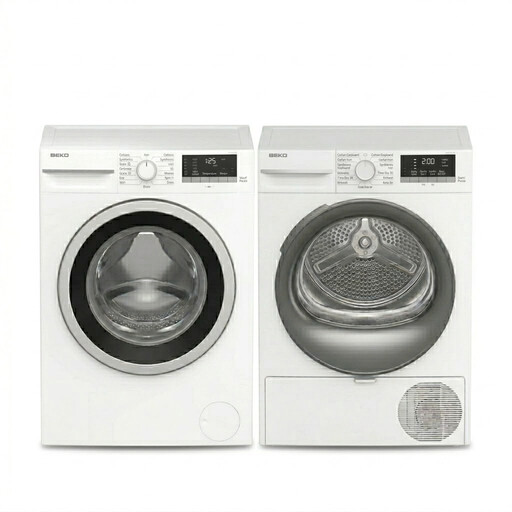
Why it stands out: This set from Beko is the solution for those who prefer the performance of two separate, specialised appliances but only have vertical space. The heat pump dryer is exceptionally energy-efficient, while the washing machine is equipped with modern technologies for a thorough yet gentle clean.
Pros:
Who is it for? For households that have the space for a stacked set and don't want to compromise on washing and drying performance. Ideal for families who regularly need to manage large loads of laundry.
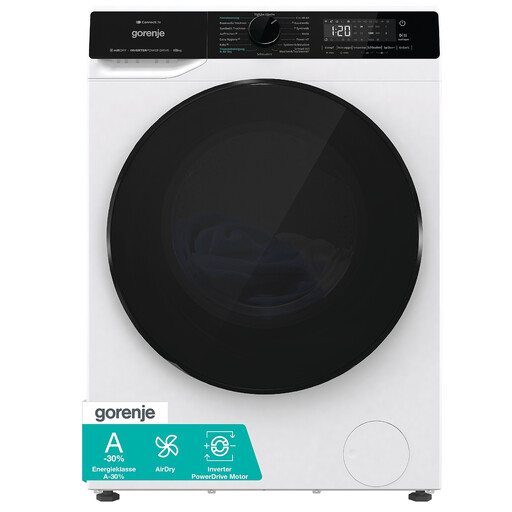
Why it stands out: This washer-dryer from Gorenje is a compact all-in-one solution with smart connectivity. Its Inverter PowerDrive motor ensures quiet and durable operation, while the steam function provides extra hygiene.
Pros:
Who is it for? For couples or small families looking for a space-saving washer-dryer combo who value smart operation and hygiene features.
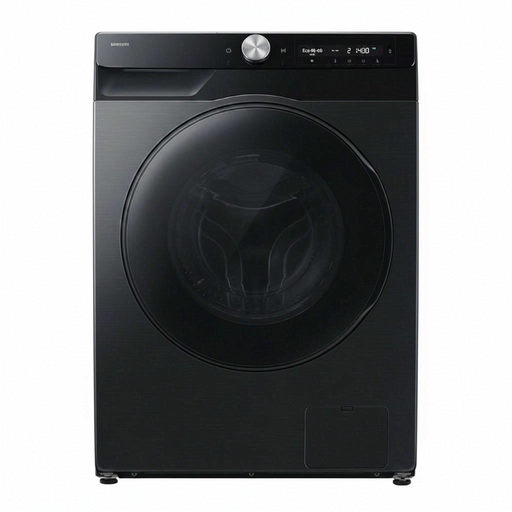
Why it stands out: This Samsung model combines a large capacity with advanced technology. According to the manufacturer, its AI EcoBubble technology delivers an energy-efficient yet thorough clean, even at low temperatures.
Pros:
Who is it for? For larger families (5+ people) and tech-savvy users who want high capacity and the latest smart features in a single appliance.
The models featured here cover common requirements. However, for households with exceptionally high laundry volumes or specific needs, heavy-duty appliances might also be worth considering.
? Explore our selection of heavy-duty washing machines for demanding applications
A washer-dryer's drying capacity is almost always less than its washing capacity. A typical appliance with an 8 kg washing capacity can often only dry 5-6 kg of laundry in a single cycle. This means that with a full wash load, some items must be removed before drying. You can find the exact specifications on the manufacturer's product data sheet.
The energy efficiency of washer-dryers varies greatly. Pay attention to the EU energy label, which shows separate ratings for the wash cycle and the combined wash-and-dry cycle. While many appliances are efficient at washing (Class A or B), their efficiency often drops significantly in combined mode (Class D or E). Models with heat pump technology are an exception, offering much higher efficiency during the drying phase.
Most washer-dryers operate on the condenser principle. In this process, moist air is heated by an element and then cooled with cold water to condense the moisture. This process consumes a relatively large amount of energy and water. In contrast, a washer-dryer with a heat pump uses a closed-loop refrigeration circuit to heat and dehumidify the air. This technology is significantly more energy-efficient because it recycles heat, leading to lower running costs.