
Lieferung heute & morgen

Qualitätsgarantie

Willkommens-Angebote freischalten: KOSTENLOSE Lieferung | Bis zu 80 % RABATT | Kostenlose 30-Tage-JoyPlus-Testphase
App herunterladen
From Your Joybuy Product Recommendation Officer
In many modern homes, space is at a premium, but the desire for the comfort of freshly dried laundry remains. Two separate appliances—a washing machine and a dryer—are often not a realistic option. A washer-dryer offers a smart all-in-one solution, combining washing and drying into a single unit.
This article serves as your buying guide. It explains the key technical features to look for and presents a selection of top models for 2026 to help you make an informed decision.
Choosing the right appliance depends on your individual needs. The following points will help you better understand and compare the features and characteristics of different models.
The type of drying technology has a significant impact on energy consumption.
The right size and useful extras enhance everyday convenience.
Especially in open-plan kitchens or when used at night, a quiet washer-dryer is crucial. The noise level is indicated in decibels (dB) for the spin cycle. Models with brushless inverter motors (often marketed as "EcoSilence Drive" or "Direct Drive") typically operate with fewer vibrations and less noise than appliances with conventional motors.
Here is a selection of three models that stand out for their specific features and technical specifications.
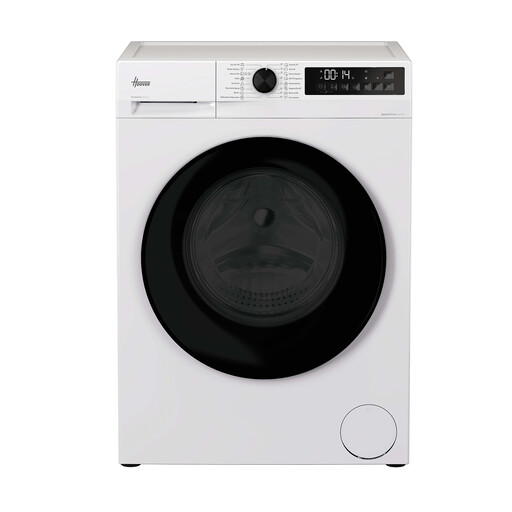
Why It Stands Out: With a depth of just 53 cm, the Hoover ProWash&Dry 300 is exceptionally compact, making it perfect for alcoves or smaller bathrooms. Despite its slim design, it offers an 8 kg wash capacity and a 5 kg dry capacity. The "Fresh Vapor" steam function refreshes clothes and makes ironing easier.
Pros:
Who Is It For? This model is an excellent choice for singles, couples, or small families living in city apartments who need a space-saving yet powerful solution.
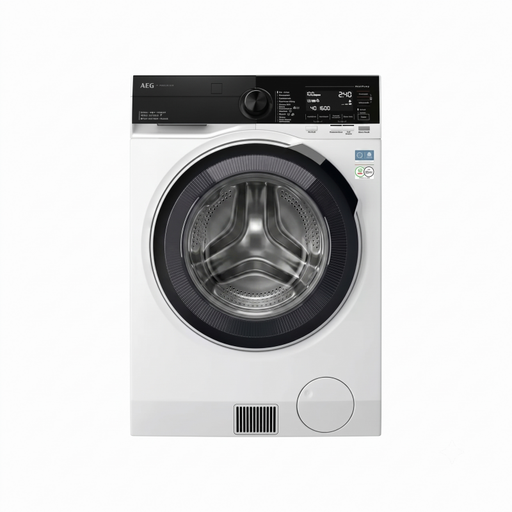
Why It Stands Out: The AEG LWR9W81609 is one of the few washer-dryers on the market equipped with heat pump technology. This allows it to dry laundry at significantly lower temperatures, which is especially gentle on delicate fabrics like wool or silk and lowers energy consumption. Its ProSense technology also automatically adjusts water and energy usage to the size of the load.
Pros:
Who Is It For? Ideal for eco-conscious families and tech-savvy users who value maximum fabric care, high energy efficiency, and smart controls.
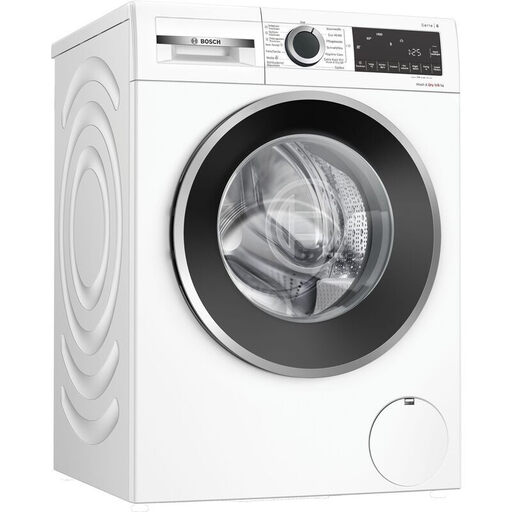
Why It Stands Out: The Bosch Series 6 washer-dryer focuses on convenience and time-saving. The "Iron Assist" steam function smooths dry laundry, significantly reducing the need for ironing. With AutoDry, the appliance uses sensors to dry laundry to the precise level of dryness desired. The EcoSilence Drive motor also ensures exceptionally quiet operation.
Pros:
Who Is It For? Perfect for busy couples and families looking for a reliable washing machine with a dryer that simplifies daily life with time-saving features like ironing assistance and precise drying results.
The models featured here cover a range of different needs. However, if you are looking for appliances with different capacities, specific programmes, or in another price range, it's worth exploring our full assortment.
Discover a wider selection in our Washer-Dryer Combos category.
1. How much laundry can a washer-dryer dry at once? The drying capacity is always lower than the washing capacity. For example, a typical appliance with a 9 kg wash capacity can only dry 5-6 kg of laundry in a single cycle. This is because laundry needs more space in the drum during drying to allow warm air to circulate effectively. For a full wash load, you will either need to dry the laundry in two separate cycles or wash a smaller load from the start.
2. Is a washer-dryer with a heat pump really more economical? Yes, during the drying cycle, a washer-dryer with a heat pump is significantly more energy-efficient than a conventional condenser model. It uses up to 50% less electricity because it reuses heat in a closed loop rather than releasing it into the surrounding environment. Therefore, the higher initial investment can pay for itself over the years through lower running costs.
3. Does a washer-dryer require a special connection? No, a modern washer-dryer (both condenser and heat pump models) requires the same connections as a standard washing machine: a standard power outlet (230 V), a cold water inlet, and a wastewater drain. An external vent, which was necessary for older vented dryers, is not required.