
Lieferung heute & morgen

Qualitätsgarantie

Willkommens-Angebote freischalten: KOSTENLOSE Lieferung | Bis zu 80 % RABATT | Kostenlose 30-Tage-JoyPlus-Testphase
App herunterladen
In many homes, space is limited, but the desire for convenience and efficiency is high. A washer-dryer combo offers a practical 2-in-1 solution, making it unnecessary to buy two separate appliances. This article serves as a guide, providing objective information to help you choose a washer-dryer that fits your needs. We will examine key technical features and present a selection of models with different specialisations.
The right model for you depends on several factors, which should align with your household size, laundry habits, and priorities.
A crucial criterion is the drying technology used. Traditional condenser models use a heating element and cool the humid air with cold water, which increases water consumption. In contrast, a washer-dryer with a heat pump uses a closed-loop refrigeration circuit to dry laundry at lower temperatures. This is not only gentler on your fabrics but also significantly reduces energy consumption. Models with an A-class energy efficiency rating are often the more economical choice in the long run, even if their initial purchase price is higher.
Capacity is specified in kilograms (kg) for both washing and drying. Note that the drying capacity is typically lower than the washing capacity. For example, a 9 kg washer-dryer is well-suited for a family with an average amount of laundry, but it may only be able to dry 6 kg at a time.
For apartments or open-plan living spaces, a quiet washer-dryer is a significant advantage. Pay attention to the decibel (dB) rating for the spin cycle. Models with an inverter motor often produce less vibration and are quieter during operation.
Modern appliances increasingly offer features designed for convenience. A smart washer-dryer with Wi-Fi can be controlled via an app, allowing you to start a cycle remotely or check its status. A washer-dryer with a steam function can refresh clothes and reduce wrinkles, making ironing easier or even unnecessary. Specialised programmes for hygiene, sportswear, or quick washes provide additional flexibility for your daily routine.
Here is a selection of appliances that cater to different needs—from smart controls and high energy efficiency to specialised wash programmes.
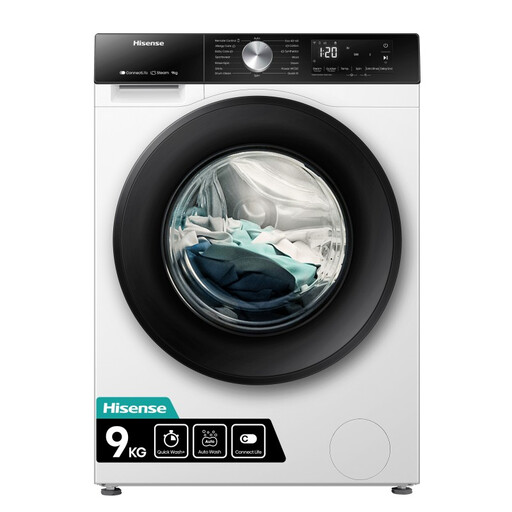
Why It Stands Out: This model combines high energy efficiency with modern smart features. Its Class A energy rating (on a scale of A to G) and quiet inverter motor make it an economical and low-noise option. Control via the ConnectLife app offers excellent flexibility for a connected home.
Pros:
Who It's For: Tech-savvy users and households looking for an energy-efficient appliance with comprehensive smart features and useful programmes like steam treatment.
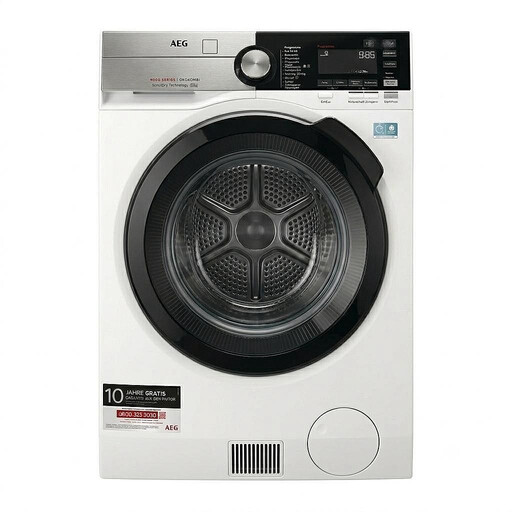
Why It Stands Out: The AEG L9WEF80690 is one of the few washer-dryers on the market equipped with heat pump technology. This enables exceptionally gentle and energy-efficient drying at low temperatures. The German consumer organisation Stiftung Warentest gave this model a "good" rating (2.0) in its 11/2023 issue.
Pros:
Who It's For: Eco-conscious households that prioritise maximum energy efficiency and exceptionally gentle care for their laundry, including delicate fabrics like wool.
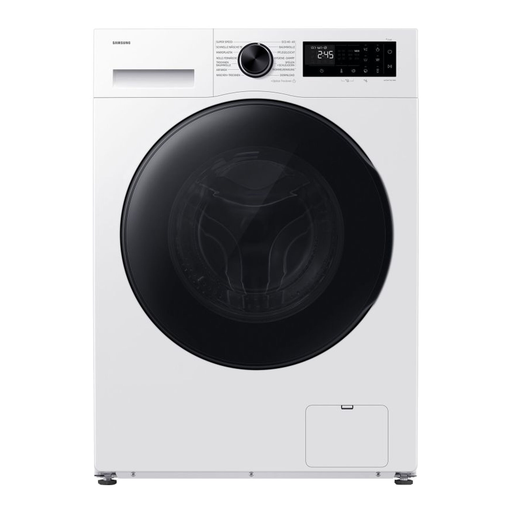
Why It Stands Out: This Samsung model uses intelligent technologies to optimise washing performance and save time. Its AI Ecobubble technology ensures a thorough clean even at low temperatures, while programmes like Super Speed significantly shorten the wash cycle.
Pros:
Who It's For: For busy individuals and families who value fast washing results, seamless smart home integration, and innovative cleaning features.
A front-load washer-dryer is the most common type, but it's not the only option. If your space has unique constraints, such as a narrow alcove, a different form factor might be a better fit.
Explore our selection of top-load washing machines and dryers to find other space-saving alternatives.
1. How much laundry can a washer-dryer dry? A washer-dryer's drying capacity is typically smaller than its washing capacity. A machine with a 9 kg washing capacity can often only dry 5 to 6 kg of laundry in a single cycle. This means for a complete wash-and-dry cycle, you must either underload the machine from the start or remove some of the laundry after washing. You can find the exact specifications in the technical data for each model.
2. Is a washer-dryer with a heat pump always the better choice? A model with a heat pump is significantly more energy-efficient and gentler on your laundry. However, the initial purchase price is higher, and drying cycles can take longer than with a conventional condenser unit. The choice depends on your budget and how often you use the dryer. If you dry clothes frequently, the higher initial cost can be offset by energy savings over time.
3. Does a washer-dryer use a lot of water for drying? Traditional condenser washer-dryers use cold tap water to cool the hot, humid air inside the drum and condense the moisture. This results in additional water consumption during the drying process. Washer-dryers with heat pump technology do not require this cooling water and are therefore significantly more water-efficient when drying.