
Lieferung heute & morgen

Qualitätsgarantie

Willkommens-Angebote freischalten: KOSTENLOSE Lieferung | Bis zu 80 % RABATT | Kostenlose 30-Tage-JoyPlus-Testphase
App herunterladen
In many households, especially in urban apartments, space for a separate washing machine and dryer is limited. A washer-dryer offers a space-saving solution by combining both functions into a single appliance. However, with a vast array of features and technologies available, choosing the right model can be a challenge. This article serves as a guide, providing objective information to help simplify your purchasing decision. We'll highlight key criteria and present a selection of top appliances for 2026.
To find the perfect combo appliance for washing and drying, several technical aspects are crucial. The following points will help you define your needs and compare different models.
Since the introduction of the new EU energy label in 2021, household appliances are rated on a scale from A (very efficient) to G (less efficient). A washer-dryer with an A energy efficiency rating consumes significantly less electricity and water, which translates to lower running costs in the long term. On the energy label, look for two separate ratings: one for the wash-only cycle and one for the combined wash and dry cycle. The latter is naturally more energy-intensive. Models with heat pump technology are often more economical for drying than conventional condenser dryers.
Capacity is indicated in kilograms (kg) and refers to dry laundry. For washer-dryers, you'll often find two figures, for example, 9 kg for washing and 6 kg for drying. This is because laundry requires more room in the drum for warm air to circulate effectively during the drying process. For a two- to three-person household, a model with an 8 to 9 kg washing capacity is generally sufficient. Before buying, measure the available space accurately, and remember to account for the necessary clearance from the wall for connections and ventilation.
Modern washer-dryers offer much more than just standard programmes. A smart washer-dryer with app control allows you to start the cycle remotely, monitor its status, or optimise energy consumption. A washer-dryer with a steam function can refresh clothes, remove odours, and reduce wrinkles, making ironing easier or even unnecessary. For noise-sensitive environments or for running the machine at night, a quiet washer-dryer with an inverter motor is an excellent choice, as these motors are quieter and more durable.
Based on the criteria mentioned, we have compiled a selection of models that stand out for their technical specifications and features.
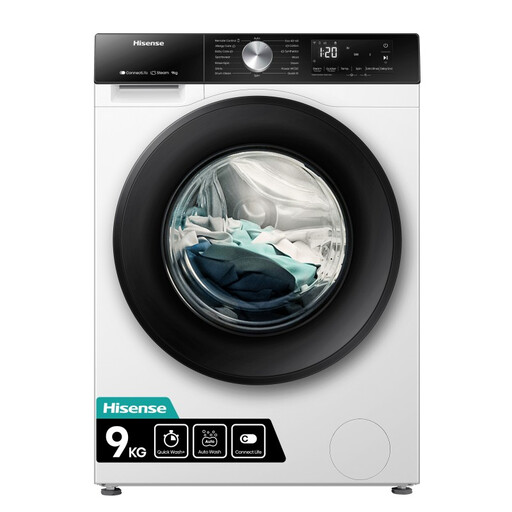
Why This Model Stands Out The Hisense 3S Series washer-dryer is a well-designed solution for households that value efficiency and smart control. With an A energy efficiency rating for the wash cycle, it positions itself as an economical appliance. Control via the ConnectLife app offers modern convenience, enabling remote monitoring and real-time updates on the cycle's progress.
Pros
Who is it for? This model is ideal for tech-savvy users and small families looking for a washing machine with a dryer function with a 9 kg capacity, who want to take advantage of app control and energy-saving programmes.
View Details for the Hisense 3S Series Washer Dryer
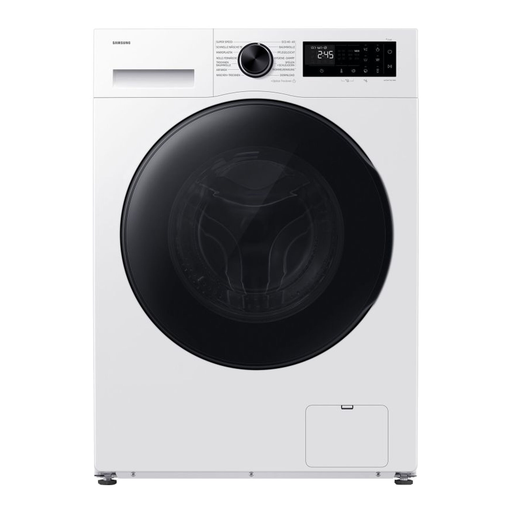
Why This Model Stands Out The Samsung washer-dryer combines intelligent technologies for thorough yet gentle laundry care. The AI Ecobubble technology creates a cushion of foam that penetrates deep into fibres even at low temperatures. A standout feature is the AI Energy Mode in the SmartThings app, which can reduce energy consumption by up to 70%, according to the manufacturer.
Pros
Who is it for? This appliance is aimed at eco-conscious and busy households looking for a fast and efficient laundry solution. Its comprehensive smart features and special programmes, like the microplastic cycle, make it a future-proof choice.
View Details for the Samsung WD9BHG5U34BEEG Washer-Dryer
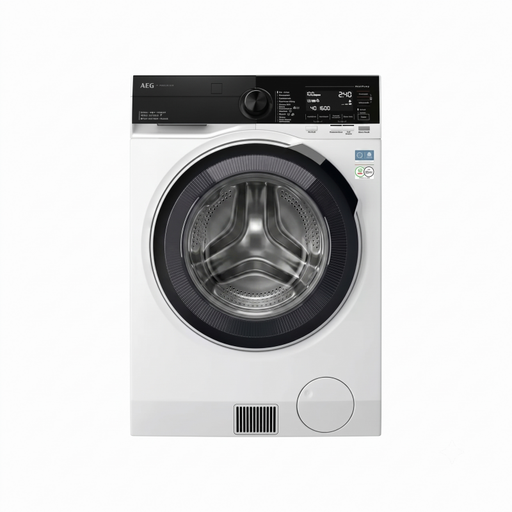
Why This Model Stands Out The AEG 9000 Series washer-dryer is equipped with heat pump technology, which allows it to dry at lower temperatures. This is gentle on delicate fabrics and significantly reduces energy consumption, reflected in its B energy efficiency rating for the combined cycle. Additionally, the ProSense technology automatically adjusts water and energy consumption to the actual load size.
Pros
Who is it for? This premium model is the right choice for larger families or discerning users who demand the highest standards of fabric care and energy efficiency. The heat pump technology is a clear differentiator and justifies its position in the upper price segment.
View Details for the AEG 9000 Series Washer-Dryer
Washer-dryers aren't just available as front-loaders. For particularly narrow spaces or if you prefer loading from the top, top-loader models are a great option.
Discover our selection of top-loader washer-dryer combos to find the perfect appliance for your space.
A washer-dryer is a combo appliance that performs the wash cycle just like a conventional washing machine. For the subsequent drying process, the appliance heats air and circulates it inside the drum to extract moisture from the laundry. This moist air is then cooled, causing the water to condense and be drained away through the waste hose. The entire process takes place in the same drum.
In the past, washer-dryers were often considered more energy-intensive, especially for drying. However, modern units, particularly those with an A energy efficiency rating (for the wash cycle) or models with heat pump technology, have significantly closed this gap. While two separate, highly efficient appliances might still be slightly more economical overall, a washer-dryer offers unbeatable advantages in terms of space-saving and convenience, as there's no need to transfer laundry between machines.
Most washer-dryers operate on the condenser principle, where air is heated by a heating element. This is effective but energy-intensive. A washer-dryer with heat pump technology, like the featured AEG model, uses a closed-loop refrigeration circuit to heat the air. This technology operates at much lower temperatures, which is gentler on fabrics and can reduce energy consumption for drying by up to 50%. Heat pump washer-dryers are more expensive to purchase, but they pay for themselves over time through lower electricity costs.