
Lieferung heute & morgen

Qualitätsgarantie

Willkommens-Angebote freischalten: KOSTENLOSE Lieferung | Bis zu 80 % RABATT | Kostenlose 30-Tage-JoyPlus-Testphase
App herunterladen
Purchasing a new washing machine is a major household decision. With a vast array of models, technical specifications, and features, the selection process can quickly become overwhelming. Factors like energy consumption, noise level, capacity, and special programmes play a crucial role in long-term satisfaction. This guide is designed to help you understand the features of modern appliances and make an informed decision that perfectly suits your individual needs.
As your Joybuy Product Recommendation Specialist, I have compiled objective information to give you a clear overview of the relevant criteria and selected models for 2026.
Before you decide on a model, several fundamental criteria should be considered. These will help you narrow down the selection to appliances that truly fit your lifestyle and your home.
Since 2021, the new EU energy label has been in effect, rating the efficiency of washing machines on a scale from A (very efficient) to G (less efficient). An energy-efficient washing machine with a Class A rating not only saves electricity but often water as well. Pay attention to two key values on the label:
Some appliances even exceed the requirements for Class A. A label like "A-20%" means the appliance uses 20% less energy than the threshold for Class A.
The right size and design depend on your available space and household size.
Capacity is measured in kilograms (kg) and should match your laundry volume:
Modern washing machines offer more than just standard programmes. Features like a washing machine with a steam function can make daily life easier by refreshing clothes and reducing wrinkles, which minimises ironing. For households in poorly soundproofed apartments or open-plan living spaces, a quiet washing machine is essential. Look for the noise emission during the spin cycle, specified in decibels (dB(A)), and the corresponding noise emission class (A-D). A smart washing machine with Wi-Fi connectivity allows you to control and monitor the wash cycle via an app.
Here, we present three models that are suited for different needs due to their specific features.
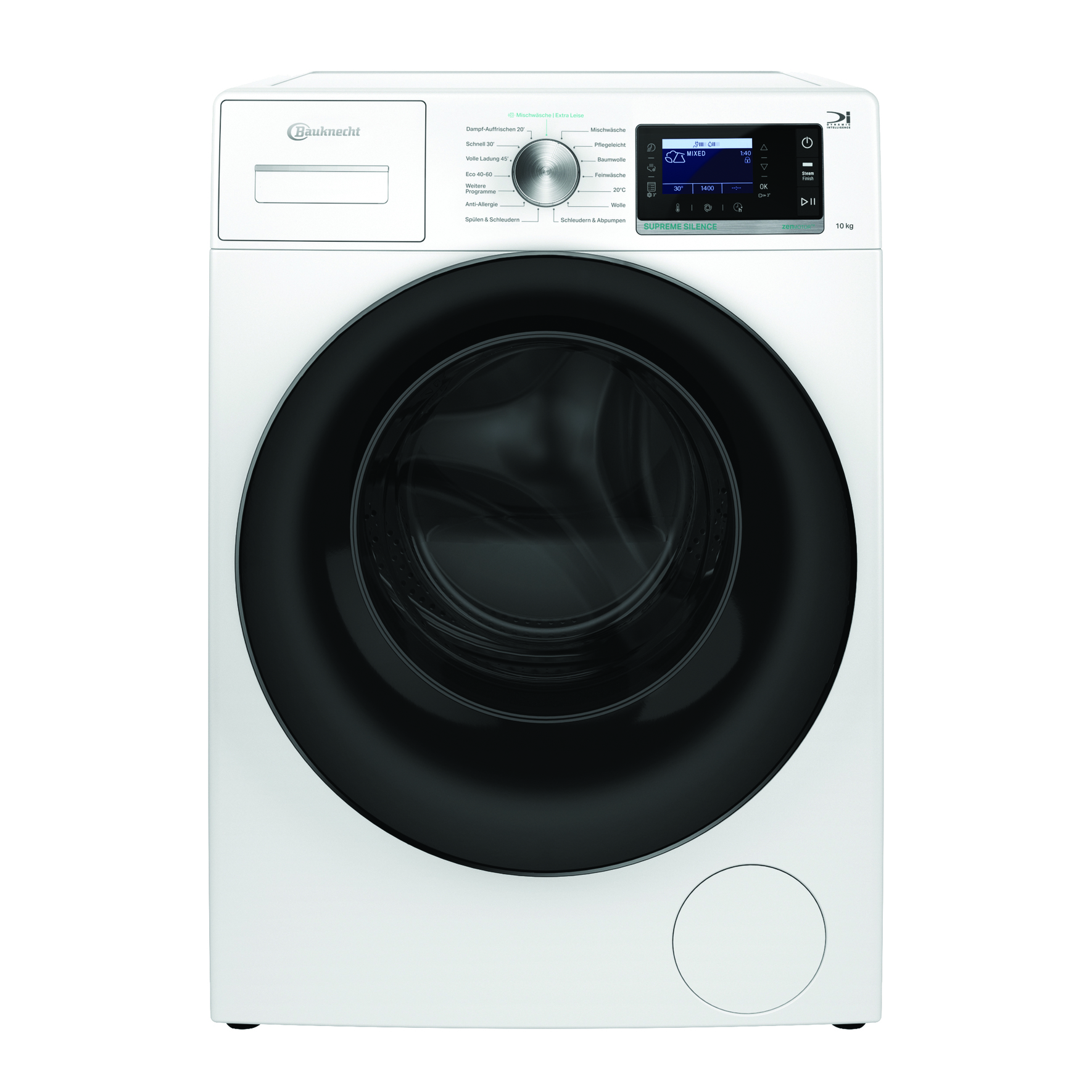
Why it stands out: This model from Bauknecht combines a large capacity with exceptionally quiet operation. It surpasses the Class A energy efficiency rating by 20%, leading to significant savings on running costs.
Advantages:
Who it's for: Large households and families who have a lot of laundry and value extremely quiet operation, for instance, for running washes at night or in open-plan kitchens.
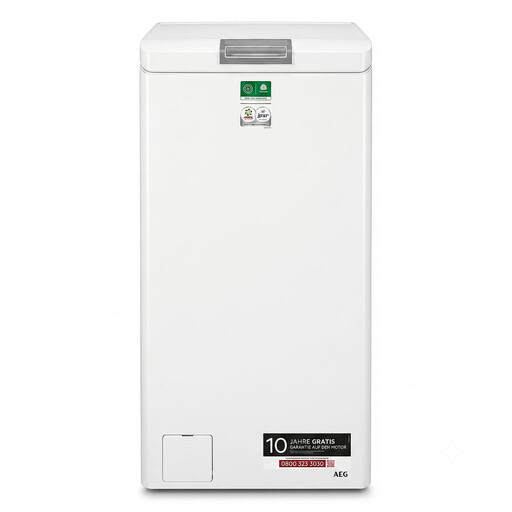
Why it stands out: This AEG top-loader washing machine is the solution for space constraints. At just 40 cm wide, it fits into small bathrooms or alcoves without compromising on performance. The PowerCare technology ensures a thorough clean even in short programmes.
Advantages:
Who it's for: Individuals in apartments with limited space who are looking for a narrow yet powerful washing machine. Ideal for single or two-person households.
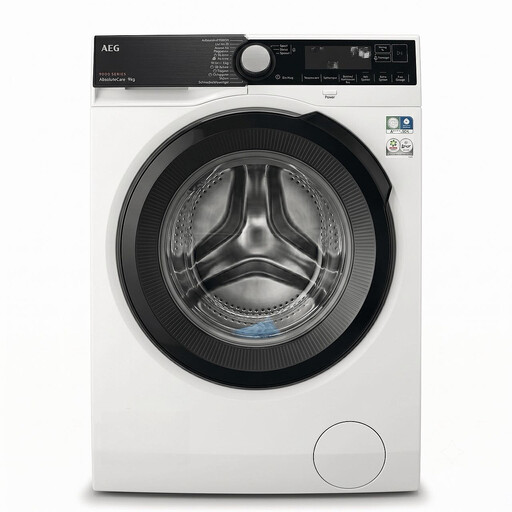
Why it stands out: This smart washing machine from the AEG 9000 series is designed for advanced fabric care and connectivity. The SoftWater technology softens the water before the wash cycle, which protects colours and improves cleaning performance at low temperatures.
Advantages:
Who it's for: Tech-savvy users and households that place the highest value on the care of delicate and coloured textiles and want to take advantage of smart home appliance control.
The models presented here cover common requirements. However, if you are looking for appliances with specific features, such as an integrated heater for special hygiene needs or specialised programmes, it's worth taking a look at our broader range.
? Discover more washing machines with heaters here
1. What exactly does the energy efficiency class mean for washing machines? The energy efficiency class, shown on a scale from A to G, indicates how economical an appliance is in its consumption of electricity and water. The rating is based on the "eco 40-60" programme. The kWh value on the EU label refers to 100 wash cycles, while water consumption is specified per cycle. A Class A appliance is the most efficient and helps keep running costs low.
2. How loud can a quiet washing machine be? The noise level is specified in decibels (dB(A)) for the loudest part of the programme, the spin cycle. A noise emission class of A on the energy label (usually under 73 dB(A)) indicates particularly quiet appliances. Models with special silent programmes can further reduce the noise level throughout the entire wash cycle, often to below 60 dB(A), which is about the volume of a normal conversation.
3. Is a washing machine with a steam function worth it? A steam function offers several practical benefits. It can quickly refresh lightly worn clothes and remove odours without needing a full wash cycle. Additionally, the steam smooths the fibres, leading to significantly fewer wrinkles and considerably reducing the ironing effort, especially for shirts and blouses. Some programmes also use steam for hygienic purposes to reduce bacteria and allergens.