Do you find that your freshly washed laundry no longer has that fresh scent you expect, or that the washing machine itself has an unpleasant odour? This is a common problem, often caused by a build-up of detergent, fabric softener, and limescale inside the machine. Especially at low wash temperatures, bacteria and biofilms can form in the drum, hoses, and other hard-to-reach areas.
As your Joybuy Product Recommendation Officer, I've taken a close look at the market for washing machine hygiene cleaners. This article is designed to provide you with objective guidance to help you make an informed decision for the care of your appliance. We'll explore how different cleaners work and present a selection of products to help you keep your washing machine clean and your laundry fresh.
What to Look for When Choosing a Washing Machine Cleaner
Choosing the right product depends on your individual needs and the condition of your washing machine. Here are some criteria to help you decide.
1. Active Ingredients: Disinfectant or Acid-Based?
The cleaner's formula is crucial for its effectiveness. Products can be broadly divided into two categories:
- Cleaners with biocides: These products are specifically designed to eliminate bacteria and germs. They are particularly suitable if a strong, musty smell indicates a bacterial problem. When using biocidal products, always follow the manufacturer's safety instructions.
- Acid-based cleaners (e.g., citric acid): These formulas primarily specialise in descaling the washing machine. Limescale deposits, especially on the heating elements, can reduce the appliance's efficiency and increase energy consumption. Citric acid is also effective against dirt and soap residue and acts as a natural odour remover for the washing machine.
2. Purpose: Intensive Deep Clean or Regular Maintenance?
Consider whether you need to tackle an acute problem, like a strong odour or visible deposits, or if you want to take preventative measures to ensure your machine's longevity.
- For an intensive clean: Highly concentrated formulas designed for use every few months are ideal for this. They dissolve stubborn grime and limescale.
- For regular maintenance: If you want to clean your washing machine and keep it fresh, milder products for more frequent use are a great choice. They prevent the build-up of odours and deposits, especially if you often wash at low temperatures.
3. Form: Powder, Liquid, or Tabs?
Washing machine cleaners are available in various forms. Powder often comes in more eco-friendly cardboard packaging and can be easily added directly to the drum. Liquid cleaners allow for flexible dosing and can sometimes also be used for cleaning the exterior of the detergent drawer or the rubber seal.
Effective Cleaning Product Recommendations
Based on the criteria above, we have compiled a selection of products that cater to different needs.
Frosch Citrus Washing Machine Hygiene Cleaner 250ml
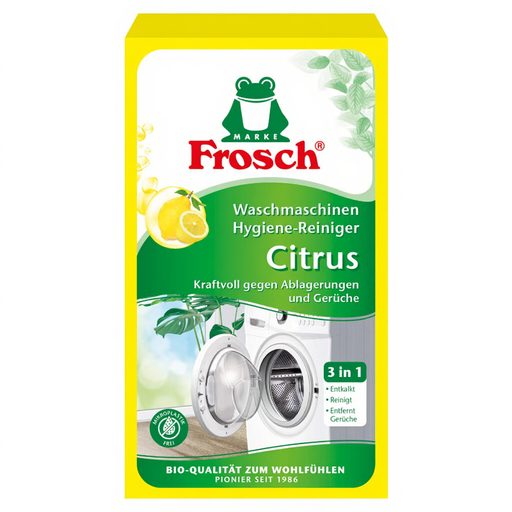
- Why it stands out: The 3-in-1 formula combines cleaning, descaling, and odour elimination in one step. The formula is based on citric acid, making it a gentle option for regular maintenance that is kind to materials.
- Benefits:
- Effectively removes limescale, dirt, and deposits from the drum, pipes, and heating elements.
- Specially developed for households that frequently use cold wash cycles.
- Microplastic-free formula and packaging made from 95% recycled paper.
- Who is it for? For eco-conscious users looking for a reliable, citric acid-based solution for regular machine care and descaling. Ideal for preventing odours and maintaining machine performance.
Sagrotan Washing Machine Hygiene Cleaner 250ml
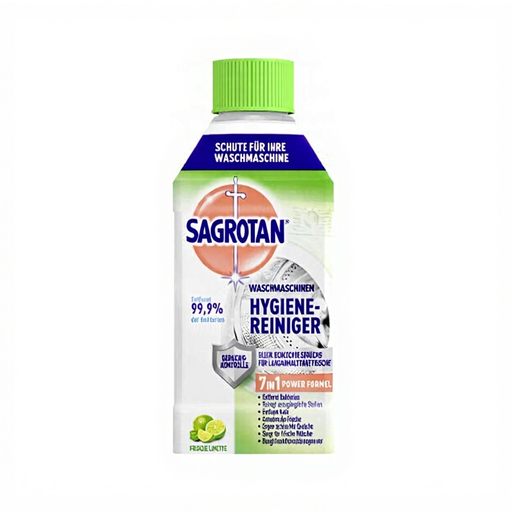
- Why it stands out: This product is a biocidal cleaner that specifically targets the elimination of bacteria. According to the manufacturer, it removes 99.9% of bacteria, thus tackling the root cause of unpleasant odours.
- Benefits:
- Has a disinfecting effect and also cleans hard-to-reach areas of the machine.
- Removes limescale deposits and ensures hygienic cleanliness.
- Can also be used diluted to clean the exterior of the detergent drawer and rubber seal.
- Who is it for? For users who want an intensive, disinfecting deep clean, especially if the washing machine smells or for older machines that haven't been cleaned in a long time. Recommended for use every 2 months. Important note: Use biocidal products with care. Always read the label and product information before use.
Jeden Tag Washing Machine Hygiene Cleaner 250 ml
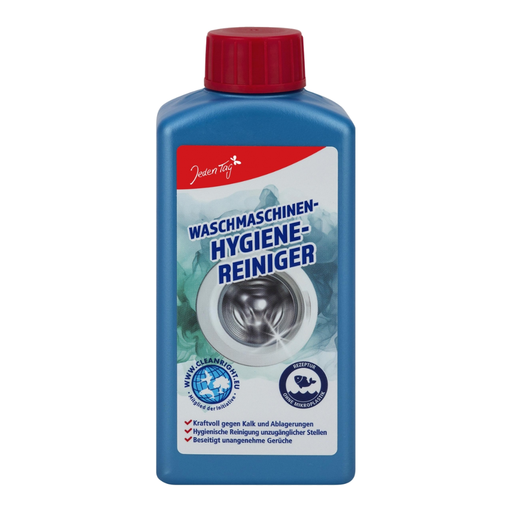
- Why it stands out: This liquid cleaner offers a straightforward solution for regular machine maintenance without the use of biocides. It focuses on removing residues and preventing odours.
- Benefits:
- Easy to use by adding it directly to the detergent drawer or drum.
- Formulated for regular use to maintain machine hygiene.
- Does not contain biocides, making it an option for users who prefer this.
- Who is it for? For budget-conscious users looking for a simple and effective solution for the regular basic care of their washing machine to prevent odour build-up.
Looking for more options?
Wasn't the right product for your needs listed above? Every washing machine and household has different requirements. If you'd like to explore more specialised cleaners or different formulas, you can find a wider selection in our broader category.
Discover all washing machine cleaning products
Frequently Asked Questions (FAQ)
How often should you use a washing machine hygiene cleaner?
The frequency of use depends on the product and how you use your washing machine. Intensive cleaners like the one from Sagrotan are often recommended for use every 2-3 months. Preventative care products like the Frosch cleaner can be beneficial monthly, depending on your washing habits (e.g., frequent cold washes). Always follow the recommendations on the product packaging.
What should I do if the washing machine still smells after cleaning?
If the washing machine smells even after you've used a cleaner, the odours might be coming from other areas. Manually check the following parts:
- The lint filter: Hair, lint, and small foreign objects can collect here and start to decay.
- The rubber door seal: Water and dirt can accumulate in the folds. Wipe it dry regularly.
- The detergent drawer: Remove it and clean it thoroughly to get rid of old detergent residue. Additionally, after each wash cycle, leave the door and the detergent drawer slightly ajar to allow residual moisture to evaporate.
Can you also use home remedies like vinegar to clean the washing machine?
While home remedies like vinegar or pure citric acid can dissolve limescale, they should be used with caution. Acetic acid, in particular, can attack and damage the rubber seals and hoses of the washing machine over time, making them porous. Specialised washing machine cleaners are formulated to be compatible with the materials inside the appliance and provide a safer and often more effective clean, as they also work against grease and dirt films that acids alone cannot dissolve.


