
Lieferung heute & morgen

Qualitätsgarantie

Willkommens-Angebote freischalten: KOSTENLOSE Lieferung | Bis zu 80 % RABATT | Kostenlose 30-Tage-JoyPlus-Testphase
App herunterladen
Purchasing a new washing machine is a major decision for any household. But the market is flooded with marketing promises and technical specs that often confuse more than they clarify. Many buyers invest in features they never use or overlook crucial details that later result in high running costs.
As your Joybuy Product Recommendation Officer, I'm here to help you spot these pitfalls. We'll focus on the facts that truly matter, so you can find an appliance that perfectly fits your daily routine, available space, and budget.
Before we look at the important features, let's highlight three typical mistakes you should avoid:
To make an informed decision, you should focus on a few essential technical features. These determine the performance, running costs, and longevity of your future washing machine.
The capacity, specified in kilograms (kg), should be based on your household size.
Also, check if the appliance is built-under compatible if it needs to be integrated into a kitchen unit. This usually requires the lid to be removable.
A new EU energy label has been in effect since 2021. The former A+++ class no longer exists. The scale now ranges from A (very efficient) to G (less efficient). An Energy Efficiency Class A rating is now the gold standard for low running costs.
Look for two values on the label:
A brushless inverter motor (often called a BLDC or Direct Motion motor) also contributes to efficiency. It is not only more economical but also makes the appliance a quiet washing machine, which is a particular advantage in open-plan living areas or for running washes at night.
Instead of countless special programs, a few useful additional functions are what count.
Here are some models that represent a considered choice for different needs, based on objective criteria.
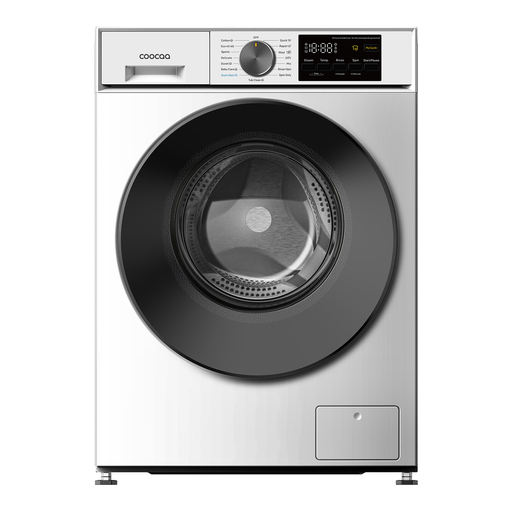
Why This Fits Their Persona: With a 7 kg capacity and a slim depth of just 44 cm, this model is ideal for one to two-person households and also fits into narrow niches in the bathroom or kitchen.
You're not investing in an oversized machine. The capacity is perfectly matched, which avoids half-empty wash cycles and the resulting waste of water and energy.
Energy Efficiency Class A-10% and a BLDC motor ensure low running costs. The steam function offers a hygienic benefit that is often only found in more expensive appliances.
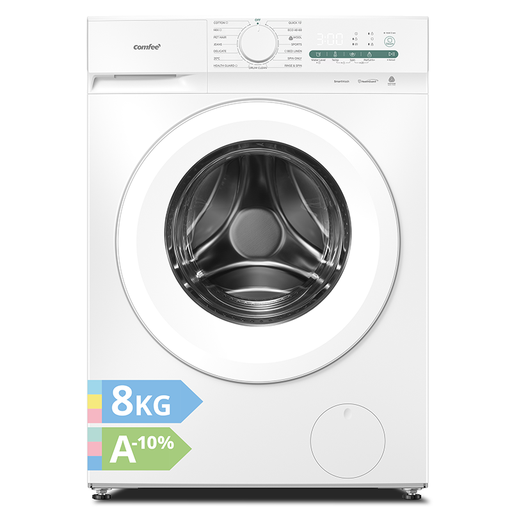
Why This Fits Their Persona: This model is an all-rounder for family life. With an 8 kg capacity, it handles typical laundry volumes, while the special pet hair program and steam function specifically address the challenges of households with children and pets.
Instead of a confusing array of programs, this appliance focuses on practical functions. You're not paying for extras you don't need, but for solutions like pet hair removal.
The combination of a pet hair program and a steam function for allergen reduction is a powerful argument. The Energy Efficiency Class A-10% keeps running costs low.
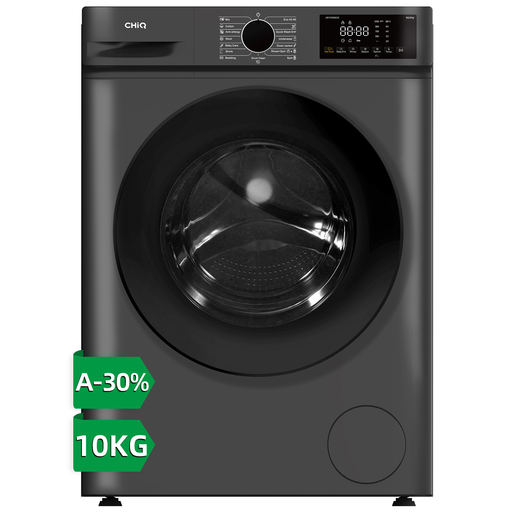
Why This Fits Their Persona: With a 10 kg capacity, this machine is designed for large families or shared living spaces. The focus is clearly on efficiency: Energy Class A-30% means that, according to the manufacturer, it consumes approx. 30% less energy than the threshold for Class A.
This model debunks the misconception that large capacity automatically means high costs. Thanks to its high energy efficiency, running costs remain under control even with frequent use.
The Energy Efficiency Class A-30% is the standout feature and leads to a significant reduction in electricity bills. The large 530 mm drum also accommodates bulky items like duvets.
We've compiled a complete, up-to-date list of products that fully meet these strict selection criteria and German safety regulations.
Energy Efficiency Class A, according to the new EU label (since March 2021), identifies the most economical appliances on the market. Unlike the old scale where almost all devices were A+, A++, or A+++, Class A is now a true distinguishing feature again. Look for the "kWh/100 cycles" value on the label to directly compare electricity consumption.
As a rule of thumb:
A steam function is particularly beneficial for two groups: