
Lieferung heute & morgen

Qualitätsgarantie

Willkommens-Angebote freischalten: KOSTENLOSE Lieferung | Bis zu 80 % RABATT | Kostenlose 30-Tage-JoyPlus-Testphase
App herunterladen
A good reusable water bottle is a daily companion—at the office, during sports, or while travelling. But the market is crowded, and many products don't live up to their promises. As a Joybuy Product Recommendation Officer, I analyse product information daily to help you make informed decisions. In this guide, I'll show you which critical features to look for and how to avoid common purchasing pitfalls.
Many buyers are disappointed with their new bottle after a short time. This is often due to two widespread weaknesses that are rarely mentioned in product advertising.
To avoid making the wrong choice, you should focus on objective, technical features rather than marketing promises.
The choice of material is fundamental to your satisfaction. Both options have specific pros and cons.
The lid is the most common point of failure. A good closure is not only leak-proof but also practical for daily use.
Not every bottle is suitable for every purpose.
Based on these objective criteria, we have identified a few models that are particularly well-suited for different user profiles.
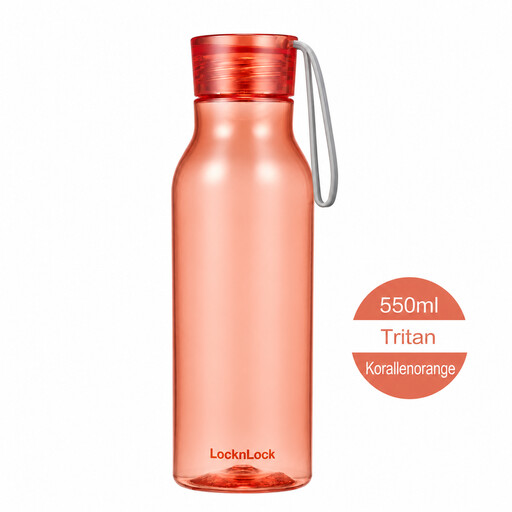
Why this model is a great fit: Ideal for daily use at school, university, or the office. This bottle offers reliable core functionality without unnecessary extras. It's lightweight, handy, and a pragmatic solution for anyone looking for a simple and safe reusable bottle.
The simple screw-top lid with a clearly defined silicone seal is less prone to defects than complex mechanisms. The Tritan material is a high-quality, BPA-free plastic that does not impart any aftertaste.
Very lightweight (approx. 110 g) and highly transparent for easily monitoring the fill level. The wrist strap enhances portability.

Why this model is a great fit: For anyone who needs high insulation performance but doesn't want to carry extra weight in their backpack or gym bag. This stainless steel bottle combines the benefits of a thermos flask with an optimised weight.
It addresses the problem of leaky lids with a Safe Flow Lid with Safety Lock, which prevents accidental opening. The double-walled stainless steel construction ensures long-lasting insulation performance and taste neutrality.
According to the manufacturer, it is up to 48% lighter than comparable products. The insulation keeps drinks hot for up to 10 hours or cold for up to 20 hours.
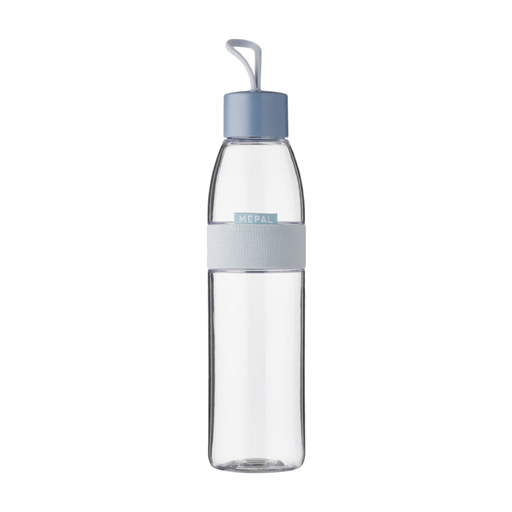
Why this model is a great fit: For anyone who doesn't want to give up carbonated drinks on the go. This bottle has been specially designed to withstand the pressure while remaining completely leak-proof.
It is explicitly designated as a bottle for carbonated drinks. The closure is designed to withstand overpressure, which can lead to leaks or even damage in standard bottles. It is also 100% leak-proof.
Its suitability for carbonated drinks is a clear unique selling point. The practical loop ensures that the lid won't get lost.
The models presented here are just a snapshot. If you have specific requirements for size, material, or design, you can find more vetted products in our full collection.
There's no one-size-fits-all answer; it depends on your priorities. Stainless steel is extremely durable, hygienic, taste-neutral, and ideal for insulating hot and cold drinks. However, it is heavier and usually more expensive. High-quality plastic (e.g., Tritan) is lightweight, shatter-proof, and more cost-effective, making it a great choice for sports and daily transport. However, it does not offer an insulation function.
Regular cleaning is crucial. Rinse the bottle with warm water after each use. For a thorough cleaning, use a bottle brush and mild washing-up liquid. Always let the bottle and lid air dry separately to prevent moisture build-up. For stubborn odours, a mixture of water and a spoonful of baking soda or vinegar, left to soak for a few hours, can help.
No. The pressure created by carbonation can damage the closure and cause leaks in bottles not designed for it. For sparkling water and other carbonated drinks, only use bottles that are explicitly marked as suitable by the manufacturer. These feature a specially designed, pressure-resistant seal.