
Lieferung heute & morgen

Qualitätsgarantie

Willkommens-Angebote freischalten: KOSTENLOSE Lieferung | Bis zu 80 % RABATT | Kostenlose 30-Tage-JoyPlus-Testphase
App herunterladen
A reusable water bottle is a practical companion for everyday life, sports, or travel. But the selection is vast, and not every model delivers on its promises. A leaky bottle in your bag or a drink that loses its temperature after a short time are common frustrations. This guide highlights the criteria that truly matter and shows you how to find a water bottle that fits your needs.
Many purchasing decisions are influenced by marketing claims that don't hold up in practice. Pay special attention to these three points to avoid making a bad buy:
To make the right choice, you should focus on objective features. The following three aspects are crucial for the functionality and longevity of your bottle.
The material affects weight, robustness, insulation capability, and taste.
The lid is the most common weak point. Pay attention to the design that best suits your intended use.
If you want to maintain the temperature of your drinks, an insulated bottle is the right choice. The key here is double-walled vacuum insulation. A vacuum between the inner and outer stainless steel walls significantly slows down heat or cold transfer. Models with an additional copper coating on the inside can further enhance this performance.
Instead of an overwhelming list, we present models tailored to specific use cases.
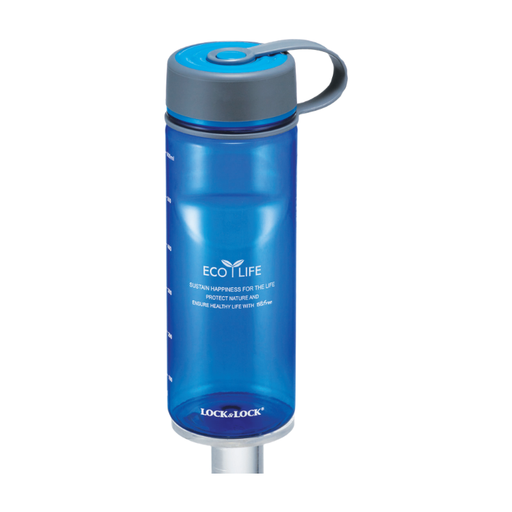
Why it's a great fit: This bottle is a straightforward and lightweight companion for the office, university, or daily errands. At 650 ml, it's large enough to keep you hydrated for several hours without being too heavy. The integrated carry handle makes it easy to transport.
It bypasses the "leak-proof" trap with a simple yet effective screw-top lid featuring a solid silicone gasket. Instead of a complex mechanism that can wear out, it relies on a proven and reliable solution.
Lightweight, BPA-free plastic material and a secure, easy-to-clean lid. The carry handle adds extra portability.

Why it's a great fit: Made from 18/8 stainless steel, this bottle is designed for active users. It's durable enough for the gym or outdoor activities. The insulation keeps drinks cool throughout your entire workout. Its large 26 oz (769 ml) capacity is ideal for longer sessions.
It addresses the material trap by using durable 18/8 stainless steel that withstands impacts and remains taste-neutral. The 2-in-1 lid also offers a flexible solution for different drinking styles during sports (sipping via straw or chugging from the spout).
Robust stainless steel construction with double-walled vacuum insulation. The versatile 2-in-1 lid with a straw and spout is especially practical.
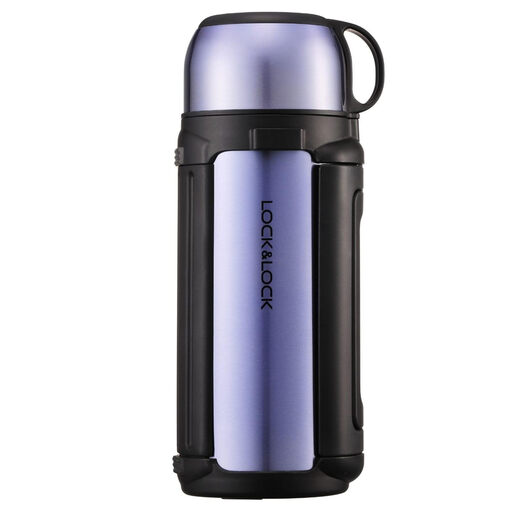
Why it's a great fit: With a 1.5-litre capacity, this insulated jug is ideal for family outings, picnics, or long workdays where you want to have hot coffee or tea ready for several people. Its high insulation performance and integrated cup make it a self-sufficient beverage system.
It counters the pitfall of exaggerated insulation claims with solid construction: the double-walled vacuum insulation is supported by a copper coating, according to the manufacturer. The large, secure screw-top lid effectively minimises heat loss.
Large capacity (1.5 L), high insulation performance for hot and cold drinks, a practical carry strap, and a drinking cup integrated into the lid.
The right water bottle should be functional, not just stylish. Models with an integrated handle for a secure grip are especially practical.
For daily cleaning, simply rinse the bottle and lid with warm water and mild dish soap. Use a bottle brush to reach the bottom and inner walls. Afterwards, let the bottle air dry completely before closing it. For stubborn odours, a mixture of water and baking soda left to soak overnight can help.
BPA (Bisphenol A) is an industrial chemical that was used in the manufacturing of certain plastics. Because it has been linked to health concerns, its use in food-contact materials like baby bottles is heavily restricted in the EU. The "BPA-free" label indicates that this substance is not present. It is an important safety standard that nearly all reusable water bottles meet today.
No, this is not recommended unless the manufacturer explicitly states that the bottle is suitable for it. The pressure created by carbonation can damage the closure and seals, leading to leaks. In the worst-case scenario, the lid can pop off under pressure. This is especially true for insulated bottles with complex sealing systems. For sparkling water, dedicated systems like soda makers with their designated bottles are the safer choice.