
Lieferung heute & morgen

Qualitätsgarantie

Willkommens-Angebote freischalten: KOSTENLOSE Lieferung | Bis zu 80 % RABATT | Kostenlose 30-Tage-JoyPlus-Testphase
App herunterladen
As a Joybuy Product Recommendation Officer, I analyse product information daily to provide you with clear, objective guidance in a vast market. When choosing a watercolour pencil set, many artists and creatives face a challenge: manufacturer promises are grand, yet the quality in practice varies significantly. An unsuitable set not only leads to frustration but is also a wasted investment. This guide will show you what to look for to find the right pencils for your art.
The most common pitfalls when buying are:
To avoid these problems, you should check three central parameters before buying. These define a set's suitability for demanding artistic work.
The quality of a water-soluble coloured pencil is only revealed upon contact with water. High-quality artist-grade watercolour pencils contain finely ground pigments that dissolve completely and without residue. The result is a transparent, luminous colour application, similar to that of classic watercolour from a pan.
Pay attention to the description of blendability. Phrases like "fully water-soluble" or "dissolves without residue" are indicators of higher quality. Cheaper pencils often contain more fillers that do not dissolve, creating a grainy, uneven result.
Lightfastness is an objective measure of how long a colour retains its original vibrancy when exposed to light. For professional watercolour pencils, this value is essential. Renowned manufacturers like Faber-Castell or STAEDTLER often mark the lightfastness of their pencils with a star system or refer to standards like the Blue Wool Scale.
Invest in lightfast coloured pencils to ensure your works remain vibrant for years to come.
The choice of the right tool depends on your workflow. Both options, the classic pencil and the modern marker, offer specific advantages.
Based on these criteria, we have identified products that are suited for different artistic needs.
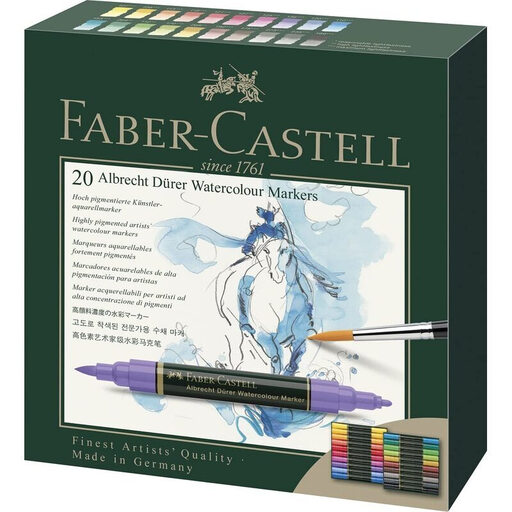
Why This Fits Their Persona: Ideal for artists who work on the go. The markers are ready to use immediately, and the dual tip allows for both broad strokes and fine details without changing tools. The sturdy case protects the pens during transport.
The highly pigmented, water-based ink dissolves cleanly, avoiding chalky residue. The high lightfastness, according to the manufacturer, protects the colours from fading, and the sturdy tips resist fraying.
Dual tip (brush and fibre tip) for maximum flexibility. According to the manufacturer, the ink does not bleed through the paper, enabling clean work.
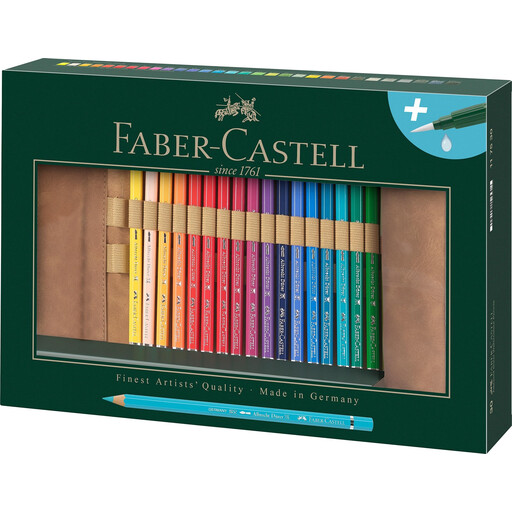
Why This Fits Their Persona: For artists who appreciate the control and feel of a classic pencil. Ideal for detailed drawings, glazes, and complex layering techniques in the studio. The roll-up case is practical and protects the leads.
These pencils are known for their high lightfastness, ensuring the longevity of the artwork. The thick 3.8 mm lead is break-resistant thanks to a special bonding process and, according to the manufacturer, dissolves completely in water.
Fully water-soluble pigments for classic watercolour effects. The thick, break-resistant lead allows for both fine lines and rich colour laydown.
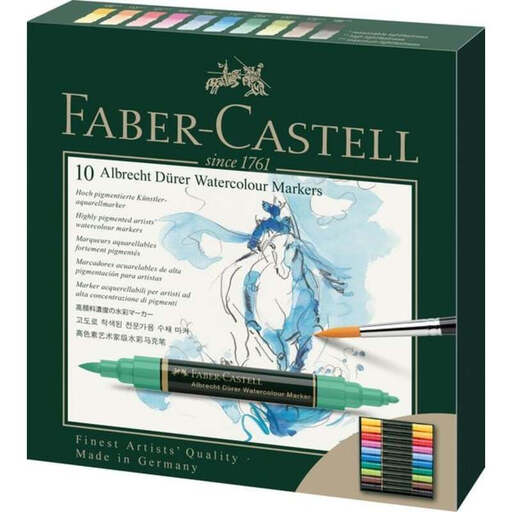
Why This Fits Their Persona: This set offers a cost-effective entry into a professional system. It contains the same high-quality ink and dual tips as the larger sets, allowing beginners to experience the benefits of artist-grade materials without a high initial investment.
Instead of buying a large set with inferior pigments, this product provides access to genuine, lightfast artist pigments. This prevents the frustration caused by fading colours or poor blendability.
Professional ink quality and a dual tip in a compact, budget-friendly format. A well-curated colour selection to get started.
We have compiled a complete, up-to-date list of products that meet these strict selection criteria and quality standards.
Watercolour markers with a dual tip should always be stored horizontally. This ensures that the ink flows evenly to both tips and prevents one side from drying out. Classic watercolour pencils are less demanding but should be kept in a case or box to protect the leads from falls and associated breakage.
The main difference lies in the application. Watercolour pencils are applied dry, like regular coloured pencils. The colour can be precisely placed, layered, and blended before being activated with a wet brush. Watercolour markers contain liquid, water-based ink and are ready to use immediately. They are excellent for direct, painterly colour application and spontaneous sketches.
Yes, using watercolour paper is highly recommended. Standard drawing paper will buckle when it comes into contact with water and often allows colours to bleed through. Watercolour paper has a heavier weight (typically 200 g/m? or more) and a special sizing that keeps the water on the surface. This allows the pigments to spread cleanly and form vibrant washes without damaging the paper.