
Lieferung heute & morgen

Qualitätsgarantie

Willkommens-Angebote freischalten: KOSTENLOSE Lieferung | Bis zu 80 % RABATT | Kostenlose 30-Tage-JoyPlus-Testphase
App herunterladen
The selection of wet cat food is vast, and choosing the right product can be a challenge. Many cat owners are looking for a balanced diet that meets the specific needs of their pet, whether that means a high meat content, special formulas for sterilised cats, or simply a tasty variety in their bowl.
This article serves as a guide. It introduces different types of wet food for cats, highlighting their composition and intended uses. The goal is to provide you with a factual basis for your purchasing decision.
To make an informed decision, a few basic criteria are helpful when selecting wet food.
The declaration on the packaging provides important information about the ingredients. A high meat content is preferred by many cat owners, as cats are natural carnivores. Look for a clear list of meat types and animal by-products. Another key aspect is taurine, an essential amino acid for cats, which should be present in sufficient quantities.
Additionally, grain-free cat food is available, which is an alternative for pets with corresponding intolerances or for owners who prefer a grain-free diet.
Not every cat has the same nutritional requirements. Age, activity level, and health status play a crucial role. Metabolism changes, especially after neutering, which can increase the risk of becoming overweight. Special food for sterilised cats is adapted to these changed energy requirements and often contains ingredients to support urinary health.
The packaging format of wet food ranges from cans and trays to convenient pouches. A cat food multipack is ideal if you want to offer your cat variety with different flavours or build up a stock. Larger packaging units are often more cost-effective and reduce packaging waste.
Here you will find a selection of products that cover different requirements and preferences. The descriptions are based on the manufacturer's information.
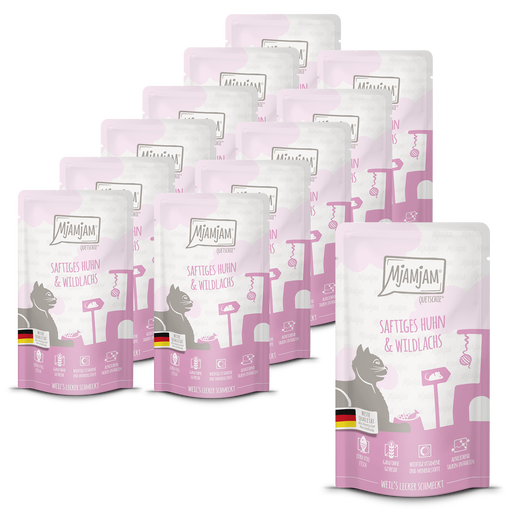
What makes it special This food is distinguished by its high meat and fish content, totalling 71.5%. According to the manufacturer, MjAMjAM Petfood GmbH, the production process is completely free of grains, sugar, preservatives, flavourings, and synthetic binding agents. The composition of chicken and salmon provides proteins and essential fatty acids.
Facts at a glance
Who it's for This product is aimed at cat owners who value a protein-rich and natural diet. It is an option for anyone specifically looking for grain-free cat food or wet food with salmon.
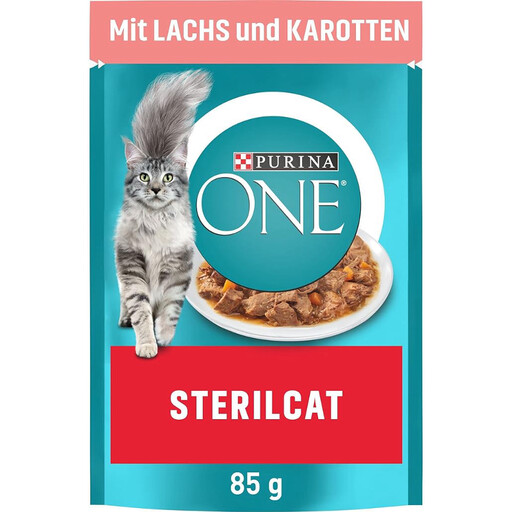
What makes it special Purina ONE SterilCat was specially developed for the nutritional needs of neutered and sterilised cats. According to the manufacturer, the formula is designed to help maintain a healthy metabolism and facilitate weight management. Reduced mineral levels are also intended to promote urinary tract health.
Facts at a glance
Who it's for This food for sterilised cats is designed for owners whose pets have adjusted nutritional needs. It is a choice for those seeking targeted support for weight management and urinary health.
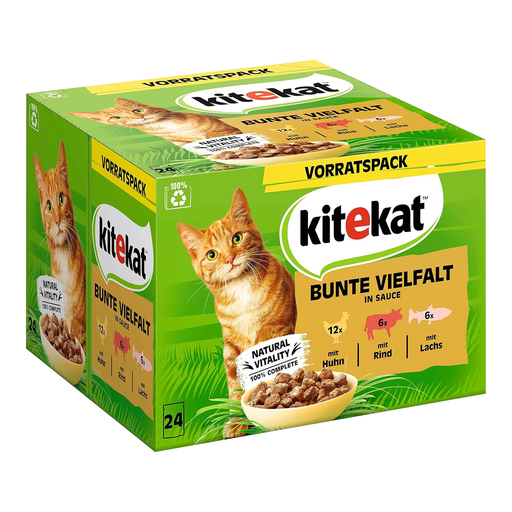
What makes it special The KITEKAT cat food multipack offers a varied diet with three flavours: beef, chicken, and salmon. It is designed as a complete food for adult cats, providing the animal with necessary nutrients and vitamins. The practical 85g pouches make daily feeding easier.
Facts at a glance
Who it's for This product is a great choice for budget-conscious cat owners who are looking for a straightforward feeding solution and want to offer their cat daily variety in its bowl.
The combination of salmon and chicken is popular with many cats. If you would like to discover more products with these ingredients, you can find a wider selection of wet food specialising in these flavours in our Salmon & Chicken category.
The recommended amount of food varies depending on the product, as well as the cat's weight, age, and activity level. As a general guideline, an adult cat weighing approx. 3–5 kg needs about 200–400 g of wet food per day, divided into at least two meals. Always follow the feeding recommendations of the respective manufacturer on the packaging.
Grain-free food is not strictly necessary for every cat. It is primarily a good option for cats with a diagnosed grain intolerance or sensitivity. For most cats, the quality and digestibility of the protein sources are more crucial than the absence of grain.